
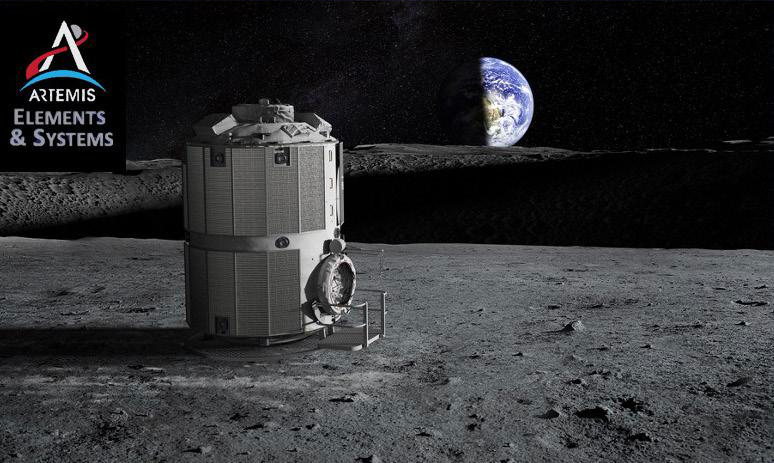
NASA announced a new initiative on Tuesday, September 8, to gather proposals for advancing technologies needed for operations on the Moon. The effort is focused on addressing gaps in capabilities such as generating power, extracting oxygen, and producing materials essential for building structures and supporting life on the lunar surface.
The effort is formally known as the NextSTEP-3 Broad Agency Announcement Appendix A: Lunar Enabling Infrastructure Accelerator. NASA says the program is intended to advance technologies that could support a future Moon Base in the lunar South Pole region. The agency had issued a draft version of the solicitation in June before seeking formal proposals.
Greg Stover, who leads NASA’s Advanced Research and Technology Division, said the agency is pushing forward development of critical tools for long-term human exploration at the Moon. NASA is seeking work in five major technology areas. These include vertical solar arrays, oxygen production from lunar soil, radioisotope power systems, advanced manufacturing, and nanomaterials.
Vertical solar arrays could provide power generation, energy storage, and distribution systems for crews and equipment on the lunar surface. NASA is also interested in technologies that can extract oxygen from regolith, the layer of rock and dust that covers the Moon. Oxygen contained in lunar material could eventually reduce the amount of material that missions need to bring from Earth.
Another area involves radioisotope Stirling generators. NASA says these systems could provide electricity in dark, dusty, or remote locations where solar power may be difficult to use. The technology converts heat into electrical power that can support spacecraft and surface systems.
Manufacturing is another major part of the program. NASA wants technologies that could allow more materials and components to be produced away from Earth. According to the agency, advancing manufacturing capabilities could reduce dependence on resupply missions while giving lunar crews greater flexibility.
One area of interest involves creating innovative nanomaterials to improve the commercial availability and quality of materials that can be used in lunar exploration. NASA says nanomaterials could help address challenges involving weight, performance, and the demanding environment encountered during space exploration.
The proposals are expected to focus largely on technologies that still need engineering work, risk reduction, and ground-based testing. NASA’s goal is generally to mature the selected technologies to Technology Readiness Level 5 or 6. That means the systems would move closer to being demonstrated in environments relevant to actual missions.
The program is separate from another NextSTEP-3 effort focused on larger Moon Base demonstrations. Appendix A concentrates on technology development while Appendix B is aimed at integrating and demonstrating more mature systems. NASA says technologies proposed for Appendix B generally should already have completed basic component development.
The competition is open to private companies, universities, nonprofit organizations, and international partners participating through U.S.-led teams. NASA says the approach is intended to encourage competition while strengthening U.S.-led lunar technology development.
The agency may use information gathered from the resulting contracts to shape future procurement plans and strategies, according to miragenews.com. NASA specifically said technical data and results from demonstrations could help guide future acquisition decisions.
This announcement comes from NASA and is part of ongoing efforts to prepare for sustainable human presence on the Moon. The NextSTEP program has been used for more than a decade to work with commercial partners on technologies for human space exploration. NASA issued the first NextSTEP Broad Agency Announcement in 2014 and later awarded more than 50 contracts through NextSTEP-2 appendices.
IMAGE: NASA / Wikimedia Commons (Public domain)
This article passed automated originality and source-verification checks before publishing.