
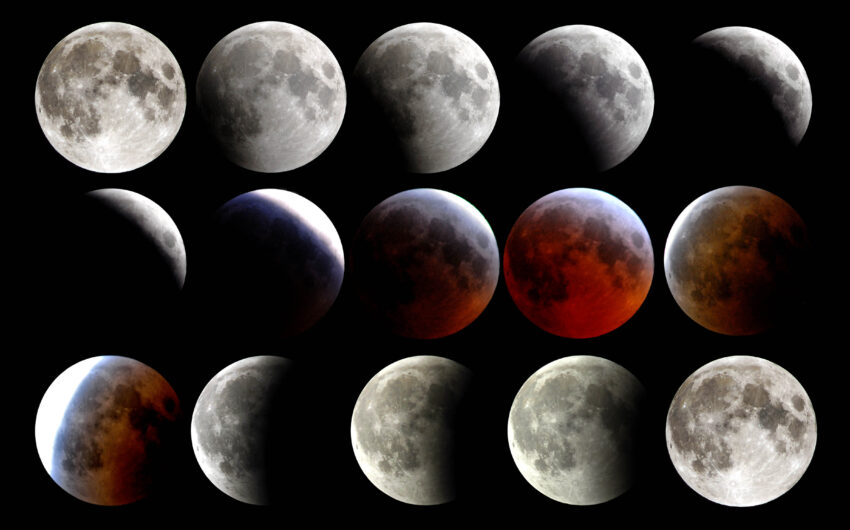
Skywatchers across North and South America will get a chance to view a partial lunar eclipse on the evening of August 27. The event occurs when Earth passes between the sun and moon, casting its shadow onto the lunar surface. During the eclipse, about 96% of the moon’s surface will be covered by Earth’s shadow, making it a deep partial eclipse. The full moon will rise in the eastern sky just before midnight EDT on August 27, and the eclipse will peak shortly after that time.
This eclipse is visible to more than three billion people around the world, including those in Europe, Africa, and the Middle East, according to the Chicago Tribune. The partial phase of the eclipse will last over three hours, while the entire event from start to finish will take more than five and a half hours.
The moon will appear red or orange during the eclipse, a phenomenon known as a blood moon, according to a report from mynorthwest.com. Unlike a solar eclipse, no special equipment is needed to view this lunar eclipse, though it may be cool outside and a blanket could help.
The event follows a total solar eclipse that recently passed over Greenland, Iceland, and Spain. This is the second lunar eclipse of the year, with the first one occurring in March. The next total lunar eclipse visible from North and South America won’t be until 2029.
NASA astronauts aboard the International Space Station will also have a view of the eclipse from space. The eclipse begins when Earth’s shadow touches the moon and ends when it fully leaves the lunar surface. At its peak, about 96.2 percent of the moon will be in Earth’s darkest shadow, called the umbra.
The eclipse is part of a pattern where solar and lunar eclipses occur in pairs as celestial bodies align.
IMAGE: Lunar eclipse March 2007.jpg