
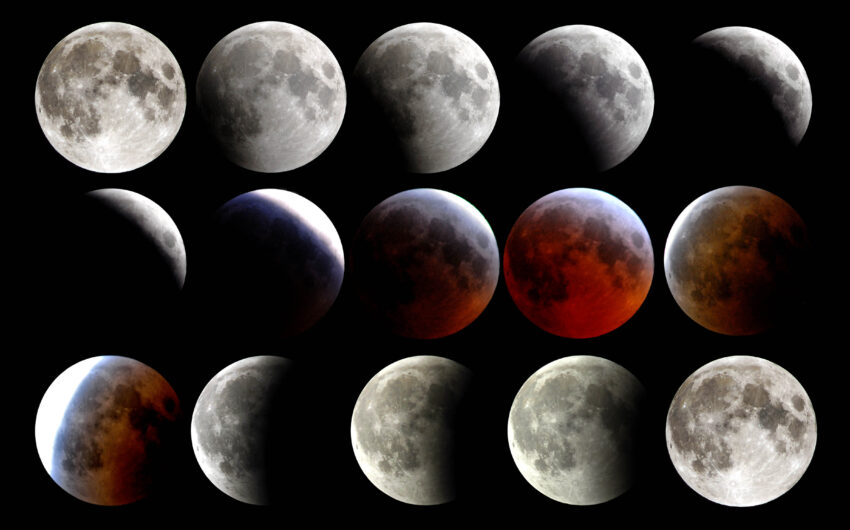
The moon will appear deep red and orange during an upcoming total lunar eclipse that is drawing attention from skywatchers around the world. This event, often called a blood moon, happens when Earth moves directly between the sun and the moon, casting a shadow on the lunar surface. The eclipse will be visible to people in Asia, Australia, the Pacific Islands, and the Americas at the same time.
The moon will be fully in Earth’s shadow for a short period, and viewers can expect to see it take on a dark red color. This is the final eclipse in a series of three total lunar eclipses that have occurred in recent months. The first of these eclipses took place in March 2025, followed by another in September 2025.
The next total lunar eclipse won’t happen until December 31, 2028, making this one especially special for those who can see it. People don’t need a telescope or binoculars to enjoy the view, though these tools can help show more details. The visibility of the eclipse may depend on local weather conditions, as clouds could block the view.
For those who are able to see it, the peak of the eclipse will occur around a specific time depending on where they live. The moon will begin to leave Earth’s shadow after reaching its darkest point, and a partial eclipse will follow. To find exact times for your area, people can check the website Time and Date.
The March full moon has many names across different cultures, including snow crust moon and sore eye moon. This year, there will be two full moons in May, making it a total of thirteen full moons for the year. After this eclipse, another one will occur in August 2026 as a total solar eclipse visible from parts of Europe and North America.
The next solar eclipse will be followed by a partial lunar eclipse in August 2027, visible across Europe, Africa, and Western Asia. In February 2027, an annular solar eclipse will take place, where the moon appears smaller and leaves a ring of sunlight visible. The most exciting eclipse of the year is expected to happen in August 2027, with a total solar eclipse visible across Spain and North Africa.
This event is being called the eclipse of the century due to its long duration and wide visibility. The total phase will last for over six minutes, giving people a rare chance to see the sun’s corona. Whether watching from home or traveling for the best view, these celestial events provide a moment to pause and reflect on the universe.
The upcoming eclipse will be visible in many regions, including parts of the Americas, Europe, and Africa. A rare phenomenon called selenelion will occur, where the sun and moon are both visible in the sky at the same time. This happens when the moon rises while the sun is still up, creating a unique sight for those who can see it.
The next lunar eclipse visible from the Americas will be in June 2029, so this one is especially important for those who live nearby. A deep partial lunar eclipse will occur in August 2026, with up to 96% of the moon covered by Earth’s shadow. The eclipse will look very similar to a total lunar eclipse, with the moon appearing deep red.
People in the Americas will see the moon rise already within Earth’s shadow, making it an especially dramatic sight. In Europe and Africa, the eclipse will occur before dawn on August 28. Viewers in western Europe will see the moon low in the sky during the final part of the eclipse.
The eclipse can be safely viewed with the naked eye, without needing special equipment. There will be a full guide to help people prepare for the event and capture it on camera. Online viewing options will also be available for those who cannot observe the eclipse in person.
The eclipse season is part of a larger pattern, with solar and lunar eclipses often occurring together. These events offer a rare chance to connect with the night sky and appreciate natural wonders.
IMAGE: A series of images taken aboard the amphibious assault ship USS Boxer (LHD 4) shows the moon during a full lunar eclipse. The Boxer Expeditionary Strike Group (ESG) is operating in the Persian Gulf conducting Maritime Security Operations (MSO) in support of U.S. 5th Fleet.. Photo: U.S. Navy photos by Mass Communication Specialist Seaman Joshua Valcarcel / Wikimedia, taken 2007-03-03, Public domain