
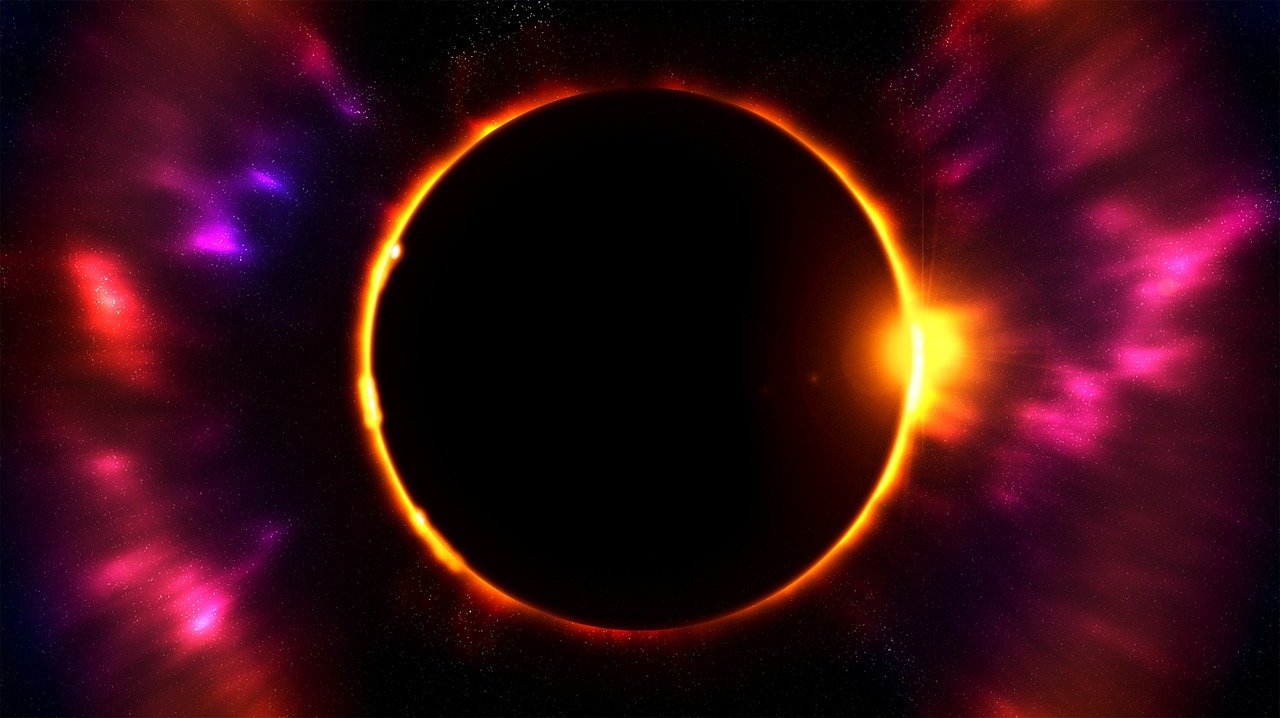
The skies in August 2026 will host a rare celestial event as a full solar eclipse takes place on the twelfth. This eclipse will occur when the moon moves directly between Earth and the sun, blocking sunlight from reaching parts of the planet. The path of totality will stretch from the Arctic down through the Atlantic Ocean, passing over sparsely populated areas in eastern Greenland and western Iceland.
A few populated regions will see the total eclipse, with Spain’s southern coast being one of the most notable. The moment of totality will happen just before sunset in Spain, around 8:30 pm Central European Time. The eclipse will not only be visible in Spain but also in parts of Portugal and other northern areas like Canada, Iceland, and northern Russia.
For those in the path of totality, the sun will be nearly completely covered, creating a dramatic and brief moment of darkness. The moon’s shadow will travel about 5,130 miles (8,260 kilometers) across the Earth during the event, mostly over open ocean. The eclipse will be visible in a narrow band, but it will last only a few minutes in the most populated areas.
The eclipse’s peak moment will occur near Iceland’s west coast, where it will last longer before fading into the Mediterranean. In cities like Dublin and Oslo, viewers will see a large portion of the sun covered, with 94% and 83% coverage respectively. Special safety equipment is required for viewing the eclipse, including certified eclipse glasses or filters.
Eclipse enthusiasts are also planning to capture the event with cameras and even aboard a cruise ship in Greenland. Michael Zeiler, an experienced eclipse chaser, will be on a ship in a fjord to record possible aurora during the eclipse. Scientific teams from organizations like ESA will be observing the eclipse from Spain and Iceland to study the sun’s corona.
NASA and other institutions plan to launch more than 60 high-altitude balloons during the eclipse to study atmospheric changes. A special NASA aircraft will also fly through the path of totality, capturing images of the sun’s outer atmosphere. The eclipse will be followed by a partial lunar eclipse on August 27 and 28, visible across a wide region of the Earth.
During this lunar eclipse, up to 96% of the moon’s surface will be in Earth’s shadow. The partial lunar eclipse will be visible from Europe, Africa, Asia, and the Pacific Ocean. In addition to the eclipses, August will also bring a peak of the Perseid meteor shower.
The new moon during the solar eclipse will make it easier to see meteors in the night sky. Stargazers can also look for a close pairing of Jupiter and Mercury early in the morning before dawn. Other celestial highlights include Mars, Venus, Saturn, Uranus, Neptune, and even Pluto in the night sky.
Astronomy events will be held in parks and observatories across the region to help people enjoy these celestial moments. The Perseid meteor shower will be especially bright this year, with no moonlight interfering with the view. The full sturgeon moon will undergo a deep partial lunar eclipse on August 27-28, visible from the D.C. region.
Photographers can use apps like Solar Snap to safely capture images of the solar eclipse with smartphones. The August sky will also offer views of planets like Mercury, Venus, and Saturn as they move through the night. The eclipse will be a rare chance for scientists to study how Earth’s atmosphere reacts during such a short but intense event.
The event will also be a cultural moment, bringing together people from around the world to witness nature’s rare alignment. The next total solar eclipse visible in Spain will not happen until August 2027, when it will last nearly six minutes. This upcoming eclipse is especially significant for Spain, as the country hasn’t seen a total solar eclipse since 1912.
Eclipse watchers are encouraged to prepare in advance, including checking safety guidelines and planning viewing locations. The August 2026 skies will offer a mix of rare events, from eclipses to meteor showers and planetary alignments. Whether viewing from Spain or elsewhere, the eclipse will be a moment of awe for all who see it.
IMAGE: josephwoodall2 / Pixabay