
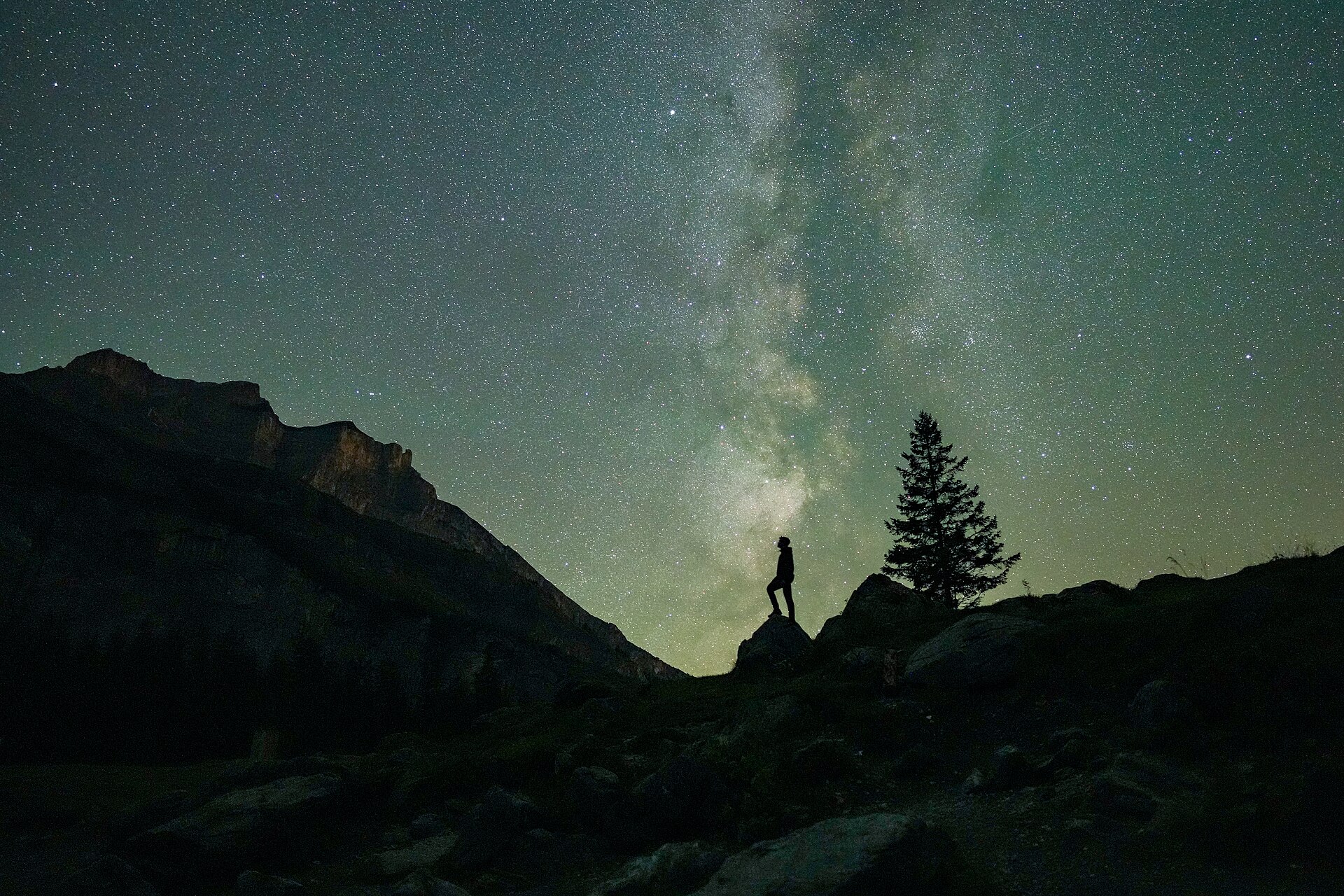
The Perseid meteor shower will be visible this week, offering viewers an opportunity to witness up to 50 to 100 meteors per hour during peak viewing times. This annual event happens when Earth passes through debris left behind by Comet Swift-Tuttle, creating a spectacular display in the night sky. Astronomers expect this year’s Perseids to be especially bright due to a new moon occurring on Wednesday night, which will make the sky darker and more conducive for viewing.
The best places to watch the meteor shower are locations with minimal light pollution and clear skies, according to experts like Andrew Fraknoi from the University of San Francisco. Fraknoi recommends turning off artificial lights or heading to parks or wooded areas away from city centers for optimal viewing conditions, according to nbcbayarea.com. Several watch parties are scheduled in the Bay Area, including events at Oakland’s Chabot Space and Science Center and Berkeley’s Lawrence Hall of Science.
The Meritage Resort and Spa in Napa is also hosting a high-end watch party on Wednesday night with guidance from local astronomers. While San Francisco lacks official watch parties, Fraknoi notes that the city’s foggy conditions make it less ideal for viewing. No telescopes are needed to observe the Perseids, and astronomers advise against using such equipment as they restrict a view of the sky.
It typically takes about ten to fifteen minutes for eyes to adjust to darkness before meteors become visible, according to Fraknoi. Meanwhile, more than 140 million miles away from Earth, NASA’s Perseverance rover on Mars captured a rare celestial event in early July, according to a report from thedebrief.org. The rover’s Mastcam-Z camera recorded Earth briefly disappearing behind the Martian moon Phobos during twilight skies on the Red Planet.
This phenomenon, known as an occultation, was captured in a sequence of composite images taken during Perseverance’s 1,907th Martian day. The camera system was designed for high-resolution panoramic images of the Martian landscape but also offers insights into astronomical events. NASA processed the images to reduce background light and highlight the motion of Earth and Phobos in their orbits around Mars.
The sequence shows Earth moving diagonally downward while Phobos drifts upward in the sky, with the event lasting only a few seconds. This rare view of Earth as a small point of light behind Phobos is unlike any sunset seen on Earth, though similar events can be observed from Earth during lunar occultations. Occultations help astronomers study the movement and positions of celestial bodies, making such events valuable for scientific research.
Perseverance has previously captured images of lunar eclipses and the Martian moon Deimos appearing in the early morning skies. The rover’s recent images also show subtle color variations in the Martian twilight, from blue-gray to red tones, offering a nuanced look at the planet’s environment. Perseverance has been exploring Mars for over five years and continues to provide new insights into the Red Planet’s geology and celestial phenomena.
The timing of such images requires careful timing, along with a bit of good fortune, according to Mark Lemmon, a co-investigator on the Mastcam-Z team at the Space Science Institute.
IMAGE: Giles Laurent / Wikimedia Commons (CC BY-SA 4.0)