
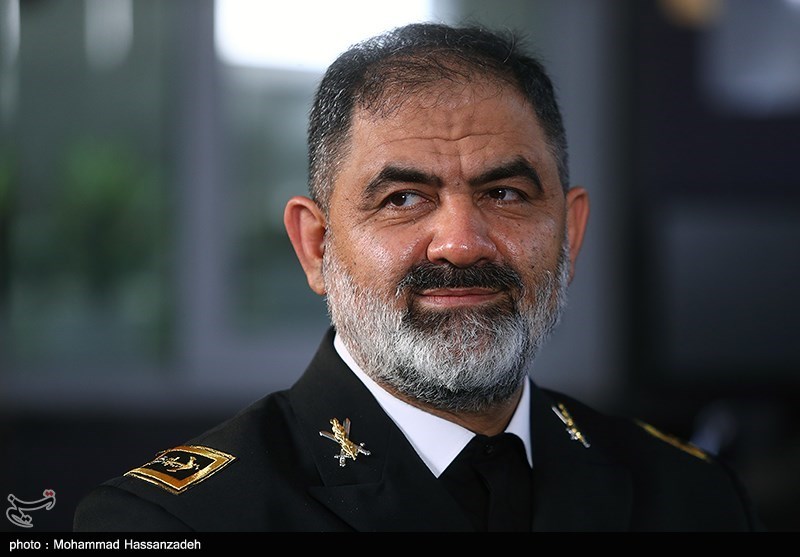
Iranian Navy commander Shahram Irani has vowed to break the American blockade of Iranian ports as US forces report disabling another commercial vessel and regional oil exports continue to decline.
Iranian Navy commander Admiral Shahram Irani claimed on Friday, November 27, 2026, that the American naval blockade of Iranian ports demonstrates that the United States has already lost the war. Speaking during an interview with Iranian state television, Irani said his country’s naval forces were working to break the blockade and remove American forces from regional waters. His remarks came as the United States announced that it had disabled another commercial vessel in the Gulf of Oman.
The US military subsequently rejected several of Irani’s claims concerning Iranian operations against American forces. The competing statements reflect continued tensions between Washington and Tehran despite months of diplomatic efforts to resolve the conflict. Meanwhile, restrictions on commercial shipping continue to disrupt regional oil exports and increase costs for international trade.
Iranian Navy Commander Challenges American Blockade
During his interview with the Islamic Republic of Iran Broadcasting, Irani argued that a naval blockade would normally be imposed before a war rather than during one. He presented the continuing American blockade as evidence that Washington had failed to achieve its military objectives. However, his interpretation does not independently establish the outcome of the conflict.
Irani maintained that Iranian ports remained operational despite American restrictions and that his country’s naval forces continued to provide protection for commercial vessels. He accused Washington of attempting to weaken Iran’s economy by targeting its oil exports and maritime transportation network.
The commander also claimed that Iranian forces had successfully recovered two previously seized oil tankers. According to Iranian state-funded broadcaster Press TV, he described the country’s naval operations as part of a broader effort to resist American military and economic pressure.
US Military Rejects Iranian Claims
Among Irani’s most significant allegations was that Iranian forces had successfully struck the USS Abraham Lincoln aircraft carrier near the beginning of the war. He also claimed that Iranian operations against the US Fifth Fleet headquarters in Bahrain had inflicted extensive damage and disrupted its command capabilities.
US Central Command, commonly known as CENTCOM, subsequently denied the aircraft carrier allegation and rejected Irani’s account of Iranian forces recovering the seized tankers. Iran International reported on November 28 that the American military had also disputed claims concerning US charges for commercial vessels passing through the Strait of Hormuz.
Independent evidence establishing the extent of the damage Irani described was not available. Iranian state media reports also differed over when the alleged aircraft carrier strike occurred. These conflicting accounts make it particularly important to distinguish statements by military officials from independently verified events.
US Forces Disable Commercial Vessel
The latest confrontation involving commercial shipping occurred on Thursday, November 26, when American forces disabled the Palau-flagged Pacific Archer in the Gulf of Oman. CENTCOM said the vessel had attempted to violate restrictions on maritime traffic involving Iranian ports. The military reported that the civilian crew was unharmed.
The United States initially imposed its blockade in April. Restrictions were temporarily lifted during diplomatic negotiations before being reinstated in July. According to the Associated Press, the Pacific Archer was at least the 15th publicly disclosed vessel disabled by American forces since the blockade began.
CENTCOM has maintained that commercial vessels receive warnings before military action is taken. Nevertheless, previous incidents involving civilian ships have resulted in fatalities and drawn international criticism.
Iran Maintains Restrictions on Strait of Hormuz
Iran has continued to assert authority over maritime traffic through the Strait of Hormuz, demanding that commercial vessels obtain permission before passing through the waterway. The strait connects the Persian Gulf with the Gulf of Oman and serves as a major transportation route for international energy supplies.
Iran’s Islamic Revolutionary Guard Corps claimed on Friday that two tankers had attempted to pass through the strait without authorization. Iranian officials said one vessel struck a naval mine while the other turned back. The Associated Press reported that these claims could not be independently verified.
The continuing restrictions have created uncertainty for commercial shipping companies and their employees. Ship operators must consider the safety of their crews, insurance requirements, potential delays, and the financial consequences of operating in waters affected by military activity.
Regional Oil Exports Decline
Disruptions to commercial shipping are having measurable consequences for regional energy exports. According to estimates from energy research firm Rystad Energy, regional oil flows averaged approximately 13 million barrels per day during the first two weeks of November. That represented a decline of around 20% from October, when exports had approached prewar levels of between 15 million and 16 million barrels per day.
The decline reflects several factors, including security threats affecting tanker movements and disruptions to alternative oil transportation infrastructure. Restrictions on Iranian exports are also part of a broader pattern of uncertainty affecting energy producers throughout the Persian Gulf.
The economic effects extend beyond oil markets. Businesses that depend on international shipping face increased transportation costs and difficulties maintaining reliable delivery schedules. These pressures can eventually affect manufacturers, retailers, and consumers far beyond the Middle East.
Diplomatic Efforts Continue
The Trump administration continues to evaluate its options regarding the conflict, including the possibility of renewed military action. Israeli officials have reportedly encouraged Washington to resume strikes against Iran or permit Israel to undertake further attacks against Iranian nuclear and missile facilities.
Meanwhile, officials from Persian Gulf countries, Pakistan, and Turkey have pursued diplomatic efforts aimed at preventing a broader resumption of hostilities. Countries throughout the region have substantial economic and security interests in restoring dependable commercial shipping and avoiding further damage to critical infrastructure.
President Donald Trump has previously indicated that the United States achieved its principal military objectives while also threatening additional action against Iran. Tehran continues to challenge the American blockade and insists that it will maintain control over maritime activity in the Strait of Hormuz.
As of November 28, no agreement to end the blockade or fully restore unrestricted commercial shipping had been announced.
IMAGE: Image of Shahram Irani, Commander of the Navy, visiting Tasnim News Agency. Photo: Mohammad Hassanzadeh / Wikimedia, taken 2021-11-24, CC BY 4.0