
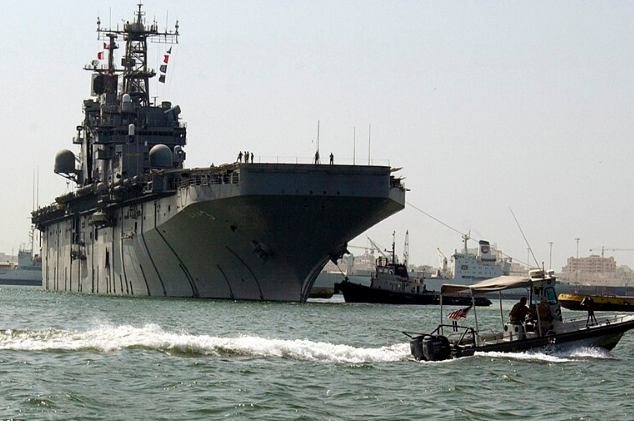
Bahrain reports intercepted Iranian attacks and a fire at a civilian industrial facility, while Tehran claims its forces targeted American military installations amid renewed regional tensions.
Iran’s Islamic Revolutionary Guard Corps claimed responsibility for missile and drone attacks targeting American military facilities in Bahrain on Saturday, November 21, 2026, as the kingdom reported a fire at a civilian industrial site and several intercepted aerial attacks. Iranian accounts identified multiple military locations, but the extent of any damage to U.S. installations remained unverified.
Bahrain’s authorities said air defenses intercepted incoming threats and that falling debris caused property damage without reported casualties. The Interior Ministry issued public safety alerts while emergency crews responded to the industrial fire. The events marked another escalation in fighting involving Iran, the United States and Gulf countries.
Iran Claims Strikes on U.S. Positions
Iran’s semiofficial Fars news agency initially reported that Revolutionary Guard forces attacked facilities used by American troops at Sheikh Isa Air Base and Juffair. Juffair is an area of Manama associated with the U.S. naval presence.
A subsequent statement carried by Iranian state media described a combined missile-and-drone operation against U.S. military positions at Al-Riffa and Awali. The Revolutionary Guard claimed it had destroyed two Patriot air-defense radars at those locations.
Those claims could not be independently verified. In particular, the Iranian statements named different targets, and neither the reported destruction of the radars nor damage to the facilities at Sheikh Isa and Juffair was confirmed by U.S. authorities in the reporting available Saturday.
Iran characterized the operation as retaliation for American military actions and what it called repeated violations of Iranian airspace. The claims reflect Tehran’s account of its motives, not independently established findings about U.S. flights.
Bahrain Reports Fire and Interceptions
Bahrain’s Interior Ministry said an Iranian attack caused a fire at a civilian industrial facility on November 21. Civil defense personnel were deployed to contain the blaze, and officials initially reported no injuries.
The ministry warned residents about a potential threat and advised them to seek a safe location. It later announced an all-clear before issuing another warning as the security situation developed.
Bahrain’s defense force said its air defenses intercepted several Iranian aerial attacks. It acknowledged material damage from debris but reported no casualties. The public statements did not establish that the military installations Iran named had been struck successfully.
The distinction matters because an intercepted weapon may still create danger on the ground. Debris can damage buildings or start fires even when air-defense systems stop an incoming missile or drone from reaching its intended target.
Officials had not released a comprehensive damage assessment for the latest attacks. The exact location and function of the industrial facility were also not detailed in the initial Interior Ministry statement.
Earlier Drone Attack Prompted U.S. Strike
Saturday’s confrontation followed a separate incident on November 17, when Iran said its drones targeted a U.S.-operated radar installation at Sheikh Isa Air Base. Bahrain reported intercepting the attack, while the U.S. military said no American personnel were injured and no U.S. equipment was damaged.
Later that day, American aircraft struck an Iranian Revolutionary Guard missile-launch site on Qeshm Island, near the Strait of Hormuz. A U.S. official said precision weapons were used in response to threats against American forces and assets.
The Associated Press reported that the November 17 incident was the third Iranian attack on American military targets in Bahrain over five days. Iran had previously claimed to target radar facilities during strikes earlier in the month.
Those earlier episodes and Saturday’s new claims should not be treated as one attack. American statements about successful interceptions and the absence of injuries on November 17 do not by themselves establish the outcome of the November 21 operation.
Why Bahrain Matters to the U.S. Military
Bahrain is a small island kingdom in the Persian Gulf with a major role in American regional military operations. It hosts the headquarters of the U.S. Navy’s Fifth Fleet and U.S. Naval Forces Central Command.
The Navy’s presence helps support maritime security operations across Gulf waters and nearby shipping routes. The Strait of Hormuz, between Iran and Oman, is particularly important because large volumes of the world’s oil and gas shipments normally travel through it.
Military facilities and radar systems in Bahrain contribute to regional monitoring and defense. Attacks directed at those sites therefore have implications beyond the island, particularly during a conflict affecting commercial vessels and neighboring states.
The renewed confrontation follows the war that began with U.S. and Israeli strikes on Iran on February 28, 2026. Iran has since launched attacks across the region, while American forces have carried out operations against Iranian military targets.
That wider conflict is the background for the latest exchange, although each government’s assertions about individual attacks require separate verification.
Regional Governments Call for Restraint
The November 17 strikes drew condemnation from Egypt, Qatar, Saudi Arabia and the United Arab Emirates, which described attacks on Bahrain as a threat to its sovereignty and regional stability.
Qatar has also been involved in efforts to mediate an end to the broader conflict. Its officials warned that continued attacks could undermine negotiations already struggling to make progress.
The exchange of strikes adds pressure to diplomatic efforts because military retaliation can create new incidents before earlier claims have been resolved. Civilian warnings and damage in Bahrain show that even attacks described as targeting military assets can affect surrounding communities.
The immediate questions concern what the November 21 attacks actually struck, whether any U.S. military equipment was damaged and whether additional retaliation will follow. Iranian officials claim success, but Bahrain has emphasized interceptions and debris damage. A verified assessment of the American installations was not publicly available in the reports reviewed for this article.
IMAGE: United States Navy with the ID 040725-N-7034S-003 CC0