
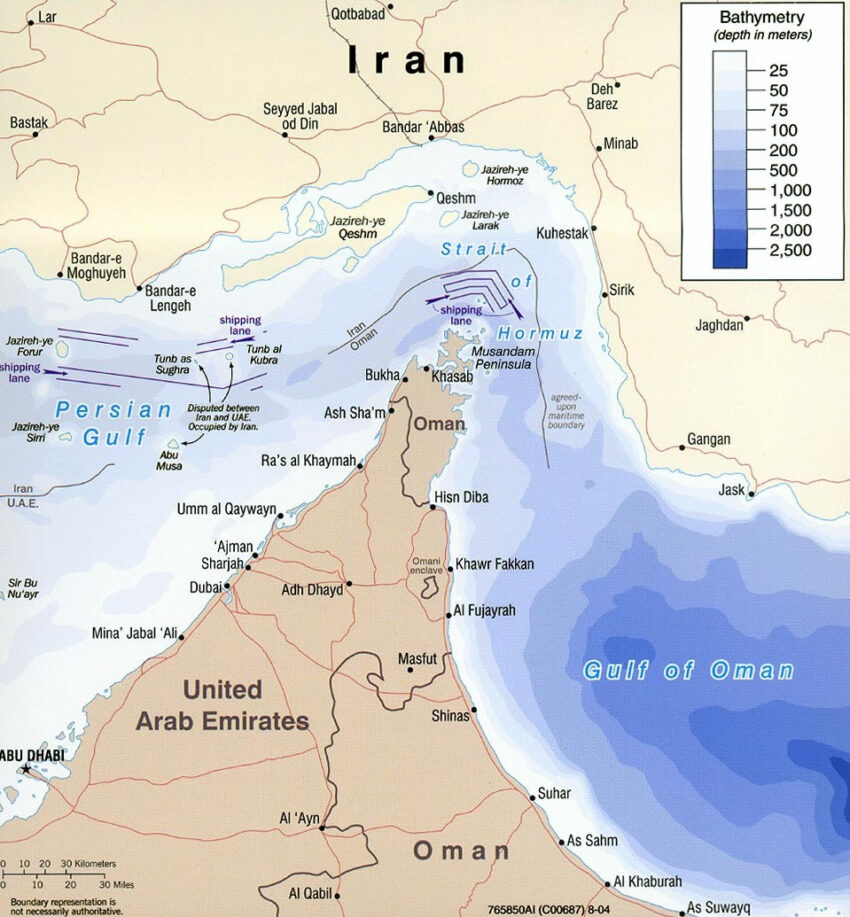
The U.S. military engaged in an incident in the Gulf of Oman involving a ship that was attempting to bypass a blockade of Iranian ports. The vessel was sailing near Pakistan’s coast when a fire broke out aboard it. There were 17 crew members aboard the ship at the time of the incident.
The U.S. Central Command reported that it had redirected 55 ships that tried to run the blockade, according to the South China Morning Post. In addition to redirecting vessels, the command also boarded two ships during the operation.
The U.S. military acted to enforce restrictions on shipping in the region as part of its broader strategy against Iran. The Gulf of Oman has been a key area for monitoring maritime traffic and enforcing international sanctions. The U.S. military has been active in the region to maintain control over shipping lanes and limit Iran’s naval access. This operation is part of ongoing efforts by the United States to pressure Iran through maritime restrictions. The U.S. government has emphasized its commitment to maintaining freedom of navigation in the region. The incident highlights continued friction between U.S. forces and Iranian maritime activities in the Gulf.
The vessel involved in the incident was identified as the Vela Nova, a Panama-flagged container ship. U.S. Central Command said a Navy MH-60 helicopter fired two Hellfire missiles after the crew ignored repeated warnings to stop. The missiles disabled the ship’s steering system, and a small fire following the strike was extinguished. All 17 crew members were accounted for and no injuries were reported. The ship was approximately 71 nautical miles, or 131 kilometers, off the coast of Pakistan when it was struck, according to Reuters.
The blockade has been imposed in stages. U.S. Central Command initially enforced restrictions on shipping to and from Iranian ports from April 13 through June 18. During that period, U.S. forces redirected more than 140 vessels, disabled nine ships that did not comply with orders and allowed more than 50 commercial vessels carrying humanitarian aid to pass. The blockade was reinstated on July 14 after the earlier arrangement broke down.
Since the blockade resumed, U.S. forces have redirected another 55 vessels. Three ships have been disabled and two have been boarded as part of the renewed operation, according to reporting citing U.S. Central Command. More than 20 U.S. warships have been deployed in the region for blockade enforcement and other military operations.
The confrontation is taking place as commercial shipping through the nearby Strait of Hormuz remains severely disrupted. Only six ships passed through the strait on Monday, compared with prewar traffic of approximately 130 to 140 vessels per day, according to Reuters. The strait is one of the world’s most important energy routes, and prolonged disruption has increased concerns about oil supplies and shipping costs.
Diplomatic efforts to reopen the Strait of Hormuz have also encountered difficulties. Iran and Oman have been working on an agreement establishing shipping routes through the strait, but Iranian officials have said the waterway will remain restricted unless the United States meets several conditions. U.S. officials have indicated that Washington could lift its blockade of Iranian ports if unrestricted commercial shipping through the strait is restored. The continuing dispute leaves military forces and commercial vessels operating in one of the world’s most closely watched maritime regions.
IMAGE: Photo: Wikimedia, taken 2012-02-19, Public domain