
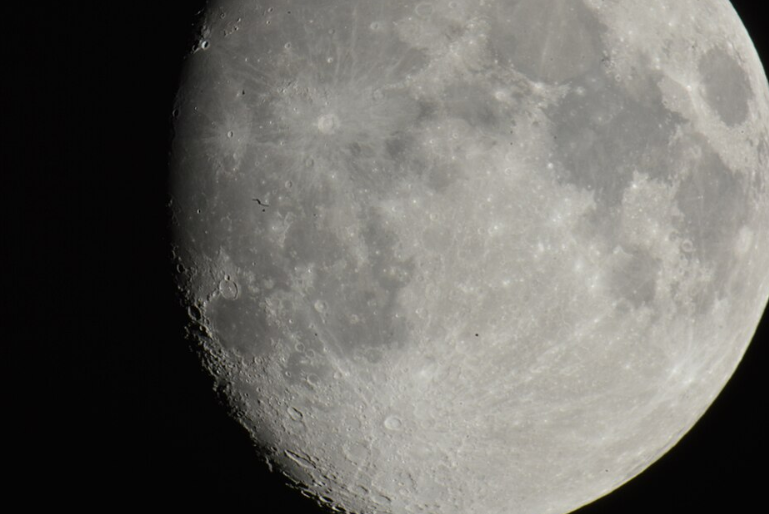
The Moon is appearing almost completely full in the night sky. It is currently in the Waxing Gibbous phase, with roughly 98% to 99% of its visible surface illuminated. This phase happens just before the Full Moon, and it makes the Moon look very bright. The next Full Moon will come on September 26, so the Moon is only one day away from reaching its full phase.
People can see the Moon without any special tools, but telescopes and binoculars offer a closer look, according to Primetimer. With the naked eye, viewers can spot dark areas like Mare Crisium, Mare Fecunditatis, and Oceanus Procellarum, according to a report from Mashable. Binoculars can help show features such as Posidonius, Alphonsus, and Mare Frigoris. A telescope can reveal smaller craters and more detail across the lunar surface.
The Apollo 12 and Apollo 16 landing regions are on the side of the Moon that faces Earth, but the equipment left by the astronauts is far too small to be seen through Earth-based telescopes. NASA’s Lunar Reconnaissance Orbiter has photographed equipment and tracks at Apollo landing sites from lunar orbit.
The Moon does not produce its own visible light, but reflects sunlight toward Earth. As the Moon orbits Earth, different amounts of its sunlit half are visible to us, creating the various phases. This cycle takes about 29.5 days to complete from one New Moon to the next. The cycle moves through New Moon, Waxing Crescent, First Quarter, Waxing Gibbous, and Full Moon. After the Full Moon, it goes through Waning Gibbous, Third Quarter, and Waning Crescent before returning to New Moon.
The Moon is currently at the bright end of this cycle, so it looks very full. For those planning to look at the night sky this weekend, tonight is a good time to do so if skies are clear. The Waxing Gibbous phase happens when more than half of the Moon is lit, but it has not yet reached full phase. Each night before the Full Moon, the illuminated portion generally grows larger. Because of this, there is not much visual difference between tonight’s Moon and tomorrow’s Full Moon.
The Moon’s appearance changes throughout the month due to how much of its sunlit side is visible from Earth. NASA tracks these changes through its lunar phase resources, which help people know what to expect in the sky. The Moon’s orbit around Earth causes this repeating pattern of illumination. A complete phase cycle takes about 29.5 days.
For those who enjoy stargazing or learning about space, this is a good time to look up and take in the sky. The Waxing Gibbous phase on September 25, 2026, gives viewers a bright look at many of the Moon’s surface features. Whether using binoculars or just the naked eye, people can enjoy the appearance of the nearly full Moon. The Full Moon will arrive on September 26 at 16:49 UTC.
IMAGE: Author carszym CC4