
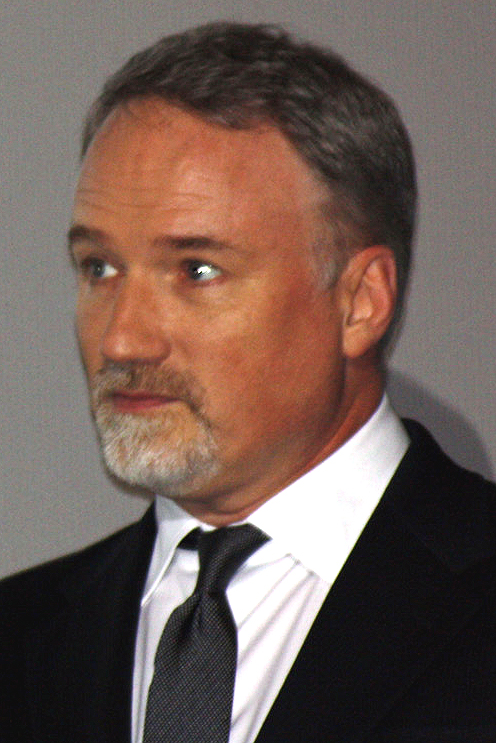
The director’s support for artificial intelligence has drawn attention after early reviewers questioned the use of AI-generated imagery in his new Brad Pitt film, which reaches IMAX theaters November 25.
Director David Fincher is defending the use of artificial intelligence in filmmaking as his new movie, The Further Mis-Adventures of Cliff Booth, faces criticism over apparent AI-generated imagery. The film stars Brad Pitt and continues the story introduced in Quentin Tarantino’s 2019 movie Once Upon a Time… in Hollywood. Early screenings have sparked debate about whether the technology belongs in major Hollywood productions.
Fincher has expressed support for exploring new filmmaking tools, although he has not specifically confirmed that the disputed scenes were created using generative AI. His comments appeared in a November 19, 2026, interview with the Los Angeles Times. The controversy comes just days before the film’s scheduled IMAX release on November 25.
Fincher Explains His Position on AI
Fincher has built a career around carefully controlled visuals, digital effects, and innovative production techniques. His films include Se7en, Fight Club, The Social Network, and Gone Girl. He has frequently embraced technology to achieve visual results that would be difficult through traditional methods.
In his recent interview, Fincher questioned whether filmmakers should reject emerging tools simply because they are unfamiliar. He compared the history of painting, which stretches back thousands of years, with the relatively brief history of motion pictures. His argument centered on the freedom to experiment rather than preserving older methods without change.
“I’m not a Luddite, so I don’t fear the unknown,” Fincher said.
The director also questioned why filmmakers should refuse technology that allows them to alter images more easily. He described the ability to change details such as an actor’s eye color during production. However, his remarks were about filmmaking technology generally, not a detailed explanation of how AI was used in Cliff Booth.
Early Screenings Spark Backlash
The controversy intensified after early viewers began discussing scenes that appeared to contain AI-generated imagery. Independent filmmaker Patrick Tomasso criticized the film on social media, saying he was disappointed by what he believed was extensive generative AI use. He argued that the technology distracted from an otherwise promising sequel.
Film critic Giovanni Lago also raised concerns in his review for Next Best Picture. He described apparent AI-generated imagery in important sequences as distracting and questioned its visual quality. Those reactions prompted broader discussions about how much artificial intelligence should be used in filmmaking.
Some criticism focused on whether computer-generated material replaced work traditionally performed by artists and visual effects teams. Other observers questioned whether AI-produced images could maintain the visual consistency expected from an expensive Hollywood production. These concerns reflect a growing debate about the boundaries between digital assistance and replacing creative work.
The film reportedly includes a generative supervisor credit, according to entertainment coverage of its early screenings. That credit suggests specialized technology was involved in production, but it does not establish which scenes used generative AI. Netflix has not publicly provided a complete breakdown of the technology used in the finished movie.
Reviewers Disagree About the Results
Not every reviewer who noticed possible AI imagery considered it a significant problem. Chris Bumbray of JoBlo described sequences featuring fictional television appearances by Scott Caan’s character, Charlie Peters. The scenes place the character alongside performers associated with the period, including Robert Wagner.
Bumbray suggested that those sequences might involve AI-assisted effects, although he did not independently confirm the exact production techniques. He compared the approach to Once Upon a Time… in Hollywood, which digitally inserted Leonardo DiCaprio’s fictional actor Rick Dalton into footage from The Great Escape. That earlier movie used conventional visual effects to recreate the appearance of older Hollywood productions.
The comparison highlights an important distinction in the debate. Digital effects have long allowed filmmakers to change backgrounds, recreate historical locations, and combine performances with archival footage. Generative AI introduces different questions because some systems can create new images rather than simply modify existing material.
Other critics have praised the new film despite concerns about its visual effects. Early reviews have highlighted Pitt’s performance, Fincher’s direction, and Tarantino’s screenplay. As of November 20, the movie held an 84 percent positive rating on Rotten Tomatoes, although that figure may change as more reviews arrive.
Netflix’s AI Investment Draws Attention
Netflix’s involvement has brought additional scrutiny because the streaming company has invested in artificial intelligence technology. Earlier in 2026, Netflix acquired InterPositive, a filmmaking technology company founded by actor and director Ben Affleck. Reports indicated that the deal could be worth as much as $600 million.
Bloomberg previously reported that Fincher used technology developed by InterPositive on an upcoming production starring Pitt. That reporting has since become part of the discussion surrounding The Further Mis-Adventures of Cliff Booth. However, the company’s involvement does not establish that the scenes criticized by reviewers were generated entirely through AI.
InterPositive develops tools intended to help filmmakers with post-production tasks. AI-assisted processing can involve adjusting lighting, changing backgrounds, or refining footage already captured by a camera. Those applications are not necessarily identical to generating complete images or performances from text instructions.
The distinction matters because the term artificial intelligence covers several different filmmaking techniques. A production may use AI to enhance existing footage without replacing actors or creating entire scenes. Until Netflix or the filmmakers explain the specific methods used, the extent of generative AI in Cliff Booth remains uncertain.
Hollywood Continues Debating Creative Control
Fincher is not the only prominent director exploring artificial intelligence. Steven Soderbergh, Danny Boyle, Ben Affleck, and Ava DuVernay have also faced questions about the technology in their projects. Their approaches have attracted different reactions depending on how AI was used and whether audiences felt it served the material.
The wider discussion includes concerns about employment, artistic ownership, and the reliability of AI-generated images. Artists worry that some applications could reduce opportunities for performers, animators, and visual effects workers. Supporters argue that carefully controlled tools can help filmmakers accomplish tasks that might otherwise be too costly or time-consuming.
Fincher’s position reflects his longstanding willingness to experiment with digital filmmaking. He previously discussed using AI-assisted techniques during restoration work on Se7en. His comments suggest he views technological development as part of cinema’s continuing evolution, even as critics question particular applications.
Cliff Booth Heads to Theaters and Netflix
The Further Mis-Adventures of Cliff Booth returns Pitt to the role that earned him an Academy Award for Best Supporting Actor. Quentin Tarantino wrote the screenplay, while Fincher directs the new installment. The story takes place in 1977, several years after the events of the original film.
The supporting cast includes Elizabeth Debicki, Scott Caan, and Yahya Abdul-Mateen II. The movie will receive an exclusive two-week IMAX theatrical engagement beginning November 25, 2026. Netflix plans to release it for streaming on December 23.
The approaching release will allow a wider audience to examine the images that have generated controversy. Netflix has not yet publicly explained which disputed sequences, if any, were created through generative AI. That unanswered question remains central to the debate surrounding Fincher’s latest film.
IMAGE: Director David Fincher at the french premiere of his movie The Girl with the Dragon Tattoo in Paris. Photo: Elen Nivrae from Paris, France / Wikimedia, taken 2012-01-03, CC BY 2.0