
American universities are being asked to review their research partnerships with institutions in China and other countries, as part of a new government initiative. The schools must complete their audits and end any problematic arrangements within two weeks or risk losing federal research funding.
Some of the institutions named in the directive include Harvard University, MIT, and Johns Hopkins University, according to The Associated Press. These schools have not yet responded to requests for comment about the audit process.
Sarah Spreitzer, a vice president at the American Council on Education, expressed concern over the government’s approach. She said the government’s actions imply wrongdoing without any evidence, and that many institutions have already moved away from certain partnerships.
Spreitzer noted that her organization helped create the list of institutions under review and has always worked with federal agencies on national security issues. The list includes mostly Chinese universities, such as the University of Science and Technology of China and the Academy of Military Medical Sciences. Several Iranian and Russian institutions also appear on the list, according to the directive.
The original version of this list was developed during President Trump’s first term with help from the American Council on Education. In the years since, most member schools of the council have ended their research ties with those institutions.
The government’s actions are part of a broader effort to reduce China’s influence in American academic and research settings, according to a report from chinadaily.com.cn. In recent years, the US government has increased scrutiny of Chinese scientists and researchers, accusing them of threatening national security. The Justice Department launched the China Initiative in 2018 to identify potential spies among Chinese researchers, which led to racial profiling. Though the program was ended in 2022 due to concerns about its impact on US competitiveness, new efforts continue.
The House Select Committee on China has also required some universities to provide data on Chinese students admitted into science and engineering programs. These policies have led many US institutions to reduce their collaborations with Chinese universities and limit the number of Chinese students they admit.
The Pentagon has now asked 30 universities to audit their foreign research partnerships, especially with Chinese institutions. This latest move is justified as a way to protect national security and federal investments in research.
However, the short two-week deadline for completing these audits raises concerns about whether meaningful reviews can be done. Critics say the process may be more about political pressure than actual security concerns. They argue that such actions could harm academic freedom and discourage international collaboration in science.
The Pentagon has also previously labeled Confucius Institutes in the US as foreign missions and taken steps to shut them down. The current audit is seen by some as a continuation of these broader efforts to limit China’s influence in US academic settings.
Some experts warn that this approach could damage the openness of scientific research and harm long-term innovation. They say that scientific progress depends on sharing knowledge and working together across borders. Instead of restricting collaboration, they suggest the US government should support open research practices that benefit both nations.
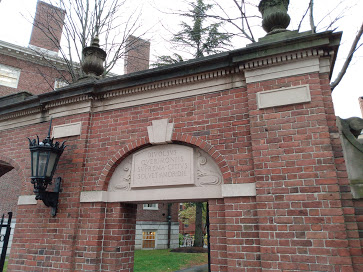
IMAGE: Harvard University, Cambridge, Massachusetts, USA. David Adam Kess / Wikimedia Commons (CC BY-SA 4.0)
This article passed automated originality and source-verification checks before publishing.