
The U.S. government has committed significant financial resources toward advancing artificial intelligence applications in scientific research and critical mineral processing. A major component of this effort is the Genesis Mission, an initiative led by the Department of Energy that aims to build a powerful platform integrating AI, supercomputing, quantum systems, and advanced instruments. This program brings together federal agencies, academic institutions, and industry partners to accelerate breakthroughs in energy, national security, and scientific discovery.
One company selected for funding under this mission is Aclara Technologies Inc., a subsidiary of Aclara Resources. The firm has received support from the Department of Energy to develop AI technologies that optimize the separation of rare earth elements. This project focuses on improving efficiency, product quality, and operational stability in processing these critical materials. The initiative is part of a larger effort to secure America’s supply chain for essential minerals used in modern technology.
The funded project, titled “AI-Enabled Process Optimization for Multi-Feed Rare Earth Separation,” will create an AI-assisted digital twin. This system will help manage complex solvent extraction circuits under changing conditions. It will use data from Aclara’s pilot plant at Virginia Tech and combine it with simulations developed by Argonne National Laboratory. The goal is to make rare earth processing more stable, increase recovery rates, improve purity, and reduce the need for manual oversight.
The collaboration involves multiple organizations including Aclara Technologies Inc., Virginia Tech, and Argonne National Laboratory. These partners bring together industrial know-how, national lab capabilities, and academic research to demonstrate how AI can be applied at commercial scale in rare earth processing. The project is designed to support the development of next-generation tools for separating heavy rare earths.
Beyond Aclara’s work, the Genesis Mission has awarded more than 278 projects from over 5,000 applications. These initiatives span various scientific fields including nuclear physics, atmospheric studies, biomedical research, and energy grid reliability. One of the largest grants goes toward nuclear energy, with $60 million allocated to a project called Prometheus. This program intends to use AI in designing, licensing, manufacturing, and operating nuclear reactors.
The funding comes from multiple federal agencies, including the Department of Energy, National Science Foundation, and NASA. The initiative is part of a broader strategy to reshape how the U.S. allocates its approximately $200 billion in annual research spending. Government officials aim to shift support away from traditional university-based grants toward individual researchers and AI-specific programs.
The Genesis Mission was established by an executive order signed by President Trump in November. It represents one of the largest coordinated efforts in federal science funding since the Apollo missions. The initiative seeks to position the United States at the forefront of global scientific innovation through AI-driven research. Officials believe that investing in this area will help maintain American technological leadership, especially amid growing competition from China.
In addition to government support, private technology companies have pledged contributions to the effort. Major firms like Google, Microsoft, and OpenAI have committed financial resources and technical capabilities. These include cloud computing credits, AI tokens, and engineering services that researchers can use in their experiments.
The program also includes a focus on training scientists and building new infrastructure for AI research. Officials expect this investment to lead to faster discoveries and more efficient scientific workflows. The mission aims to create tools that allow researchers to test hypotheses, automate tasks, and explore complex problems at an unprecedented scale.
Some researchers are already seeing the impact of these efforts. Teams at Stony Brook University received grants to study applications of AI in nuclear physics, microelectronics, and atmospheric science. These projects involve partnerships with national laboratories and other institutions. The funding supports both fundamental research and practical outcomes that could benefit public health, energy systems, and environmental monitoring.
The Department of Energy has emphasized the importance of making AI accessible to researchers across the country. Scientists will gain access to supercomputers, datasets, and specialized tools needed for conducting large-scale AI experiments. This access is intended to level the playing field and encourage innovation from a wide range of participants.
This push toward AI in science reflects broader changes in how federal funding is distributed. The administration wants to reduce reliance on traditional university grant structures and instead support individual researchers who are working on cutting-edge AI projects. Critics have raised concerns about potential shifts in peer review processes, but officials say the goal is to encourage bold and creative research.
Overall, the Genesis Mission represents a significant commitment by the U.S. government to use artificial intelligence as a tool for advancing national priorities. The investment in rare earth processing shows how AI can be applied to strategic industries. At the same time, broader funding for scientific research points to long-term goals of innovation and competitiveness.
The initiative is part of a larger effort to ensure that American science remains strong and responsive to global challenges. By combining public and private resources, the government hopes to accelerate progress in areas that matter most to national security, economic growth, and quality of life.
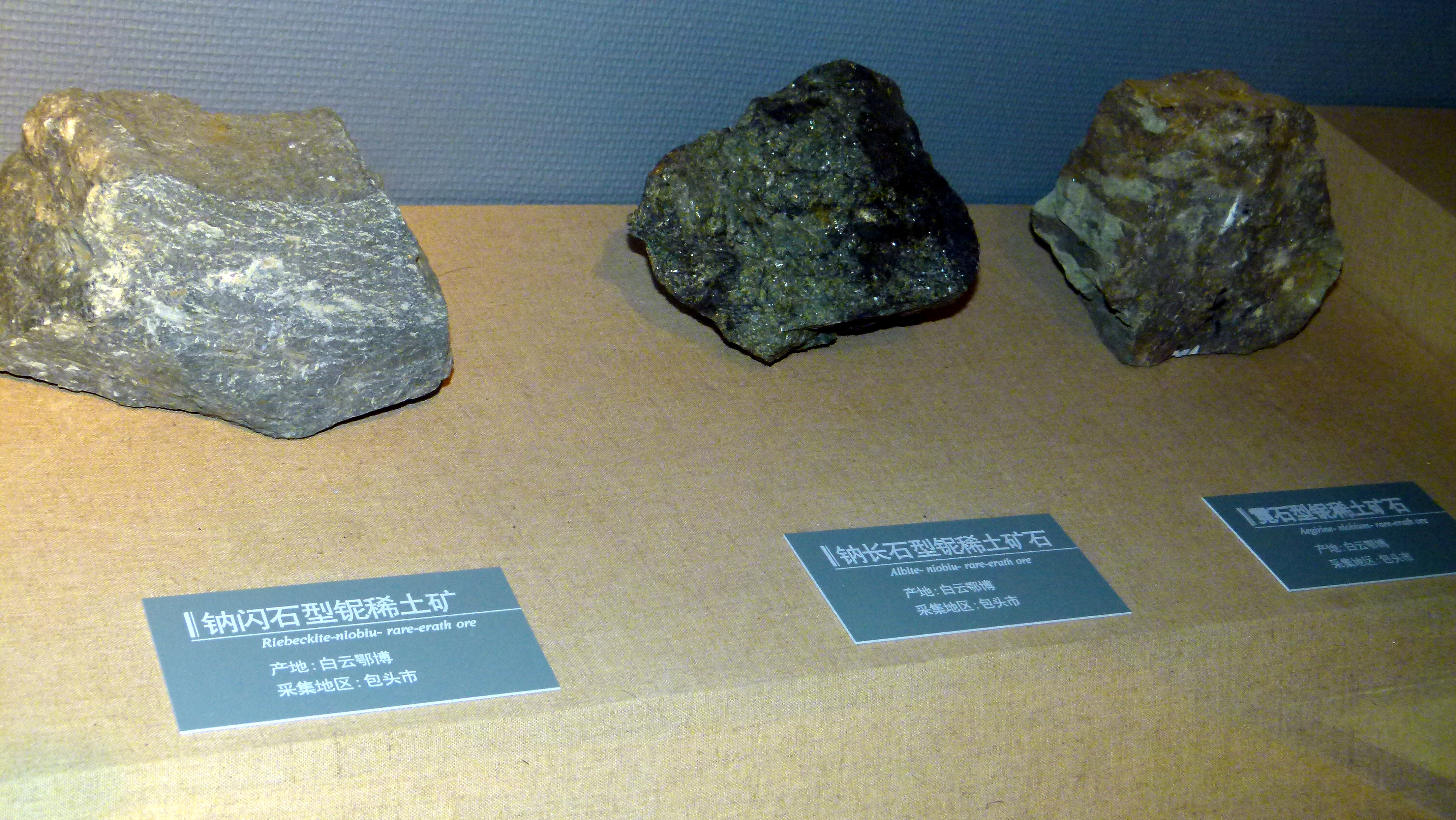
IMAGE: Brücke-Osteuropa / Wikimedia Commons (CC BY-SA 3.0)
This article passed automated originality and source-verification checks before publishing.