
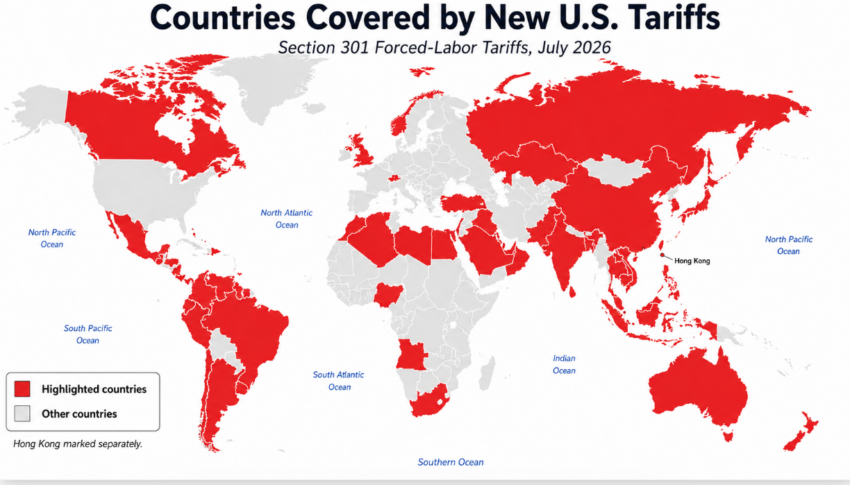
The United States is implementing new tariffs on imports from 60 countries starting Friday. These taxes range from 10% to 12.5%. The move comes as temporary 10% levies expire at midnight. The administration says these trading partners have not properly enforced bans on goods made by forced labor.
The tariffs are being imposed under Section 301 of the Trade Act of 1974. This law allows for longer-lasting duties in response to unfair trade practices. The government had concluded that these countries do not adequately prevent forced labor in their exports to the U.S. Some nations have taken steps to improve enforcement, which may lead to lower rates for them.
Subject: Actions by the United States in the Investigations under Section 301 of the Trade Act of 1974 of the Acts, Policies, and Practices of 60 Economies Related to the Failure of Each Economy to Impose and Effectively Enforce a Prohibition on the Importation of Goods Produced with Forced Labor
The new tariffs will cover 99.4% of U.S. imports. They replace temporary levies that were introduced after a Supreme Court ruling struck down most of Trump’s earlier tariffs. The court found the president had improperly used emergency powers to impose tariffs on many countries.
Some products are exempted from the new taxes. These include oil, gas, fertilizer, and items that qualify for duty-free status under the USMCA trade agreement. Goods already subject to other tariffs like steel and aluminum are not included in these new duties.
The administration argues that forced labor is a human rights issue and also gives unfair advantages to countries that do not enforce bans. The move is part of Trump’s broader effort to bring back protectionist policies after legal setbacks. He has long supported tariffs as tools for reviving U.S. manufacturing and reducing trade deficits.
Economists warn that tariffs can raise consumer prices and slow economic growth. Americans are already dealing with high living costs, so the timing is risky. The new levies will be paid by importers, who usually pass the cost to consumers through higher prices.
The forced labor tariffs mark a significant step in Trump’s trade agenda. They follow other recent actions like 25% duties on Brazilian imports and 50% tariffs on Canadian goods. These measures are part of a larger push to renegotiate trade deals and pressure foreign countries into compliance.
Some experts question the effectiveness of using tariffs as a solution to forced labor. They say enforcement mechanisms must be strong and transparent. Countries need time to build meaningful import ban systems. The administration has not provided detailed information about how it identifies forced labor in goods.
The new tariffs are part of an ongoing effort to address trade practices that the U.S. views as unfair. The government says it is committed to using tariffs alongside negotiations to support American workers and shrink the trade deficit. Some countries have already begun updating their policies in response to the threat of these taxes.
The announcement comes as tensions continue in the Middle East. Iran-backed rebels are threatening shipping routes, which could further disrupt global oil supplies. The U.S. is also involved in military actions related to Iran. These developments add pressure to an already volatile region.
In addition to trade issues, the administration is dealing with other challenges. A resolution passed by the House calls for halting U.S. military action in Iran. This is the second time such a vote has occurred. Lawmakers are expressing concern about the conflict’s costs and lack of clear goals.
The tariffs also come ahead of the November midterm elections. Political analysts note that new trade policies can be risky during election years. The administration is balancing economic concerns with political timing.
The forced labor investigation is one of several ongoing probes by the U.S. Trade Representative’s office. Another investigation looks at whether countries have built up manufacturing excesses that hurt American businesses. That probe has not yet concluded.
Some international partners are responding to the new tariffs. India, for example, has adjusted its trade policies to include forced labor bans. European Union regulations on forced labor are also influencing global standards.
The administration’s approach to tariffs reflects a broader strategy of using economic pressure to achieve foreign policy goals. It is not the only tool being used. Diplomatic efforts and military actions are also part of the mix.
The new levies signal that Trump’s trade policies remain aggressive even after legal obstacles. The president continues to assert that tariffs are necessary for protecting American interests. He has indicated he will use negotiation as well as economic measures to resolve trade disputes.
The U.S. government is not alone in addressing forced labor issues. International organizations and other countries are also working on related problems. The U.S. approach may influence global standards, but it also raises questions about enforcement and fairness.
As the new tariffs take effect, importers will need to adjust their operations. Companies that rely on goods from targeted countries may face higher costs. Consumers could see price increases in some products. The impact will vary depending on how much of a product’s cost is tied to imports.
The administration has not provided an estimate of how much revenue the new tariffs will generate. Some officials have suggested that the focus is more on sending a message than maximizing income. The goal is to encourage compliance with U.S. labor standards.
Trump’s approach to trade continues to evolve. Past actions like the 2018 tariffs on steel and aluminum were controversial. The current strategy shows a shift toward more targeted measures based on specific violations. This may be an attempt to avoid legal challenges while still applying pressure.
The forced labor tariffs are part of a broader campaign by the administration to reshape global trade. They reflect concerns about worker rights, national security, and economic competitiveness. The government believes that these actions will help secure American jobs and industries.
Critics argue that the measures may harm international relations. Some say they could lead to retaliatory actions from other countries. The effectiveness of tariffs in solving forced labor issues remains uncertain.
The administration’s position is that these tariffs are necessary to uphold U.S. values and protect domestic workers. It emphasizes that countries must comply with international standards or face consequences. The government has not ruled out further actions if compliance does not improve.
As the situation develops, more details about enforcement and implementation may emerge. The U.S. will need to work closely with trading partners to ensure fair application of these new rules. The success of the tariffs will depend on how well they are enforced and whether they lead to real changes in labor practices.
IMAGE: President Donald Trump being sworn in on January 20, 2017 at the U.S. Capitol building in Washington, D.C. Melania Trump wears a sky-blue cashmere Ralph Lauren ensemble. He holds his left hand on two versions of the Bible, one childhood Bible given to him by his mother, along with Abraham Lincoln’s Bible.. Photo: The White House / Wikimedia, taken 2017-01-20, Public domain
This article passed automated originality and source-verification checks before publishing.