
The Democratic Republic of Congo is experiencing its 17th Ebola outbreak, with the current strain being the Bundibugyo variant. The virus has spread to five provinces and now affects more than 2,400 people. Over 930 deaths have been recorded since the outbreak was declared in May. Uganda has reported 20 cases and two deaths, mostly linked to travel from the DRC.
Health authorities are concerned about how quickly the disease is spreading. More than 80% of new infections are occurring outside known contact tracing lists, indicating that transmission chains are not being fully identified or stopped. The number of confirmed cases continues to rise rapidly, with the outbreak now considered the third largest in history. The fatality rate for this strain ranges from around 25% to 40%, according to medical experts.
The World Health Organization has declared this outbreak a Public Health Emergency of International Concern. Efforts to control it are being hindered by ongoing conflict, limited health infrastructure, and reduced access to areas where the virus is spreading. Aid workers have noted that funding cuts in recent years have weakened response capabilities. These reductions have affected the ability to train healthcare staff, provide necessary supplies like gloves and body bags, and maintain cold chain logistics for sample transport.
The United States has implemented travel restrictions on individuals from the DRC, Uganda, and South Sudan who have been in these areas within the past 21 days. Entry screening measures are also in place at airports. The CDC has deployed more than 120 personnel to the affected regions and is working with international partners to manage the situation.
There are currently no approved vaccines or specific treatments for the Bundibugyo strain of Ebola. Researchers are testing a new oral drug called NV-387, which may offer broad-spectrum antiviral protection against multiple strains. This medication could be an important tool in fighting the outbreak, especially given its ease of administration and potential to avoid viral escape that often occurs with antibody treatments.
The situation in the DRC is further complicated by violence and instability. Healthcare workers have been attacked while trying to provide care. The lack of trust between communities and aid organizations also makes it harder to trace contacts and treat patients effectively. In some areas, people are dying at home without proper medical attention, which increases the risk of further spread.
International support is crucial for containing this outbreak. The Africa CDC estimates that $1.4 billion is needed to stop the disease from spreading further. So far, only about $110 million has been pledged by African countries. Without more funding, health systems will struggle to respond effectively. The global risk remains low, but the potential for a larger epidemic exists if containment efforts are not strengthened.
The CDC continues to monitor the outbreak closely and is preparing for possible cases in the United States. While the risk to the general public is currently assessed as low, officials remain alert to any changes in the situation. Travelers to affected regions are advised to take precautions and avoid non-essential trips. The medical community is working urgently to develop better tools for treating and preventing Ebola infections.
Healthcare workers on the ground report that they are doing everything possible to save lives and prevent further transmission. They emphasize the importance of public health measures such as early detection, contact tracing, safe burial practices, and providing supportive care. The international community is being urged to step up funding and support for response efforts. Without this assistance, the outbreak could become even more severe.
This outbreak highlights the need for better global preparedness and investment in public health systems. Past experiences with Ebola have shown that early intervention and strong coordination among countries are essential. The current situation shows how quickly a local outbreak can escalate into a regional emergency when resources are limited or when political instability prevents effective response.
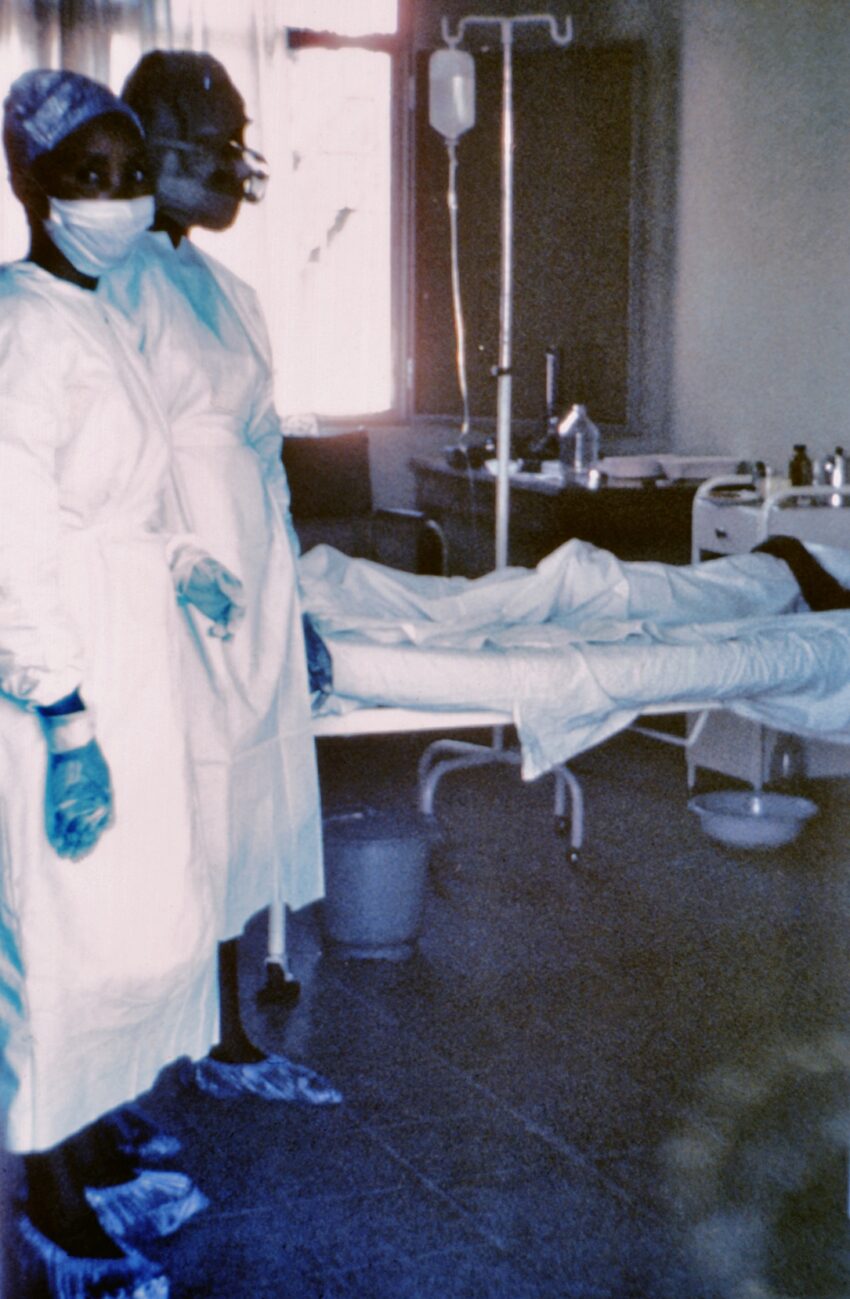
IMAGE: This 1976 photograph shows two nurses standing in front of Ebola case #3, who was treated, and later died at Ngaliema Hospital, in Kinshasa, Zaire.
Ebola hemorrhagic fever (Ebola HF) is a severe, often-fatal disease in humans, chimpanzees, gorillas and orangutans that has appeared sporadically since its initial recognition in 1976.. Photo: Photo Credit:
Content Providers(s): CDC/Dr. Lyle Conrad / Wikimedia, Public domain
This article passed automated originality and source-verification checks before publishing.