
The Democratic Republic of Congo is dealing with one of the fastest-growing Ebola outbreaks on record. The disease has spread quickly across multiple provinces, with more than 2,400 confirmed cases and nearly 1,000 deaths reported so far. The outbreak began in May and is caused by a rare strain known as Bundibugyo virus. There is no approved vaccine or specific treatment for this variant.
Health officials say the situation remains serious due to ongoing conflict and instability in the region. Areas affected include Ituri, North Kivu, South Kivu, Haut-Uele, and Tshopo provinces. The outbreak has also spread into neighboring Uganda, where several cases have been confirmed. Security challenges make it difficult for medical teams to reach communities and track down new infections.
The World Health Organization noted that the current outbreak is moving faster than any previous one in the country. It took more than ten months for the 2018–2020 outbreak to reach two thousand cases, but this one has grown much quicker. The virus spreads through close contact with infected bodily fluids and contaminated surfaces. Symptoms include fever, fatigue, muscle pain, headache, vomiting, diarrhea, and sometimes bleeding.
Medical teams are working hard to respond, but gaps remain in surveillance and care. Many patients arrive at treatment centers too late for effective care. Some areas have seen no secondary cases after initial infections were detected, which shows progress in containment efforts. Still, the number of new infections continues to rise rapidly.
Humanitarian organizations and health workers are trying to expand testing, contact tracing, and community engagement. They also aim to improve access to safe burial practices and medical care. The situation is especially difficult in regions affected by armed conflict, where movement restrictions limit access for staff and patients alike.
The international response has included training efforts involving thousands of people. The DRC government and global partners are working together to increase the number of trained personnel who can help identify and isolate cases. Despite these steps, many areas still lack sufficient resources or safe conditions to manage the outbreak effectively.
The risk to the general public in countries outside of the affected region remains low. However, health authorities continue to monitor travelers from impacted areas. Some nations have implemented travel restrictions and quarantine measures to prevent further spread. A humanitarian worker who had been working in the DRC has been evacuated to London for observation after possible exposure. The individual is not showing symptoms but is being closely monitored.
Efforts are ongoing to bring medical services closer to communities, especially those that are hard to reach due to conflict or displacement. Health workers are also trying to manage other health emergencies such as cholera and malaria, which add pressure to an already strained system. The rainy season may increase the risk of malaria cases, further complicating response efforts.
The outbreak has highlighted how complex it is to control diseases in unstable regions. Coordination between local authorities, international agencies, and humanitarian groups is essential. Without strong support and timely action, the number of infections could continue to grow. Experts warn that delays in responding may lead to more deaths and a harder-to-control situation.
Medical teams are doing their best to keep up with the outbreak. They are working around the clock to provide care, track contacts, and educate communities about prevention. The goal is to stop transmission before it spreads further. Until then, health officials remain vigilant and focused on saving lives in the most affected areas.
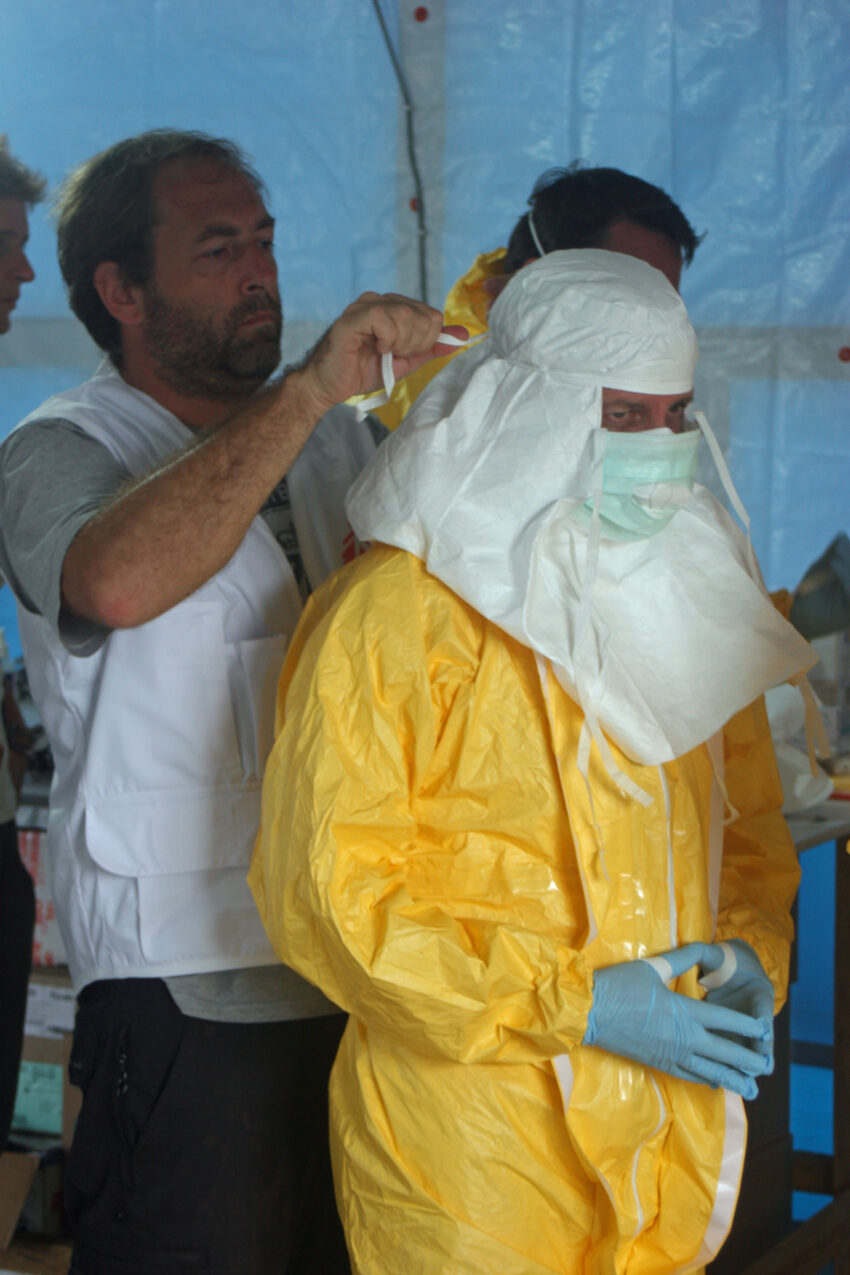
IMAGE: A Médecins Sans Frontières/Doctors Without Borders (MSF) staff member ties the face mask of Dr. Tom Kenyon, Director of CDC’s Center for Global Health, before Dr. Kenyon enters the Ebola treatment unit (ETU), ELWA 3. MSF operates the ELWA 3 ETU, which opened on August 17.
Photographer: Athalia Christie
For more information on Ebola and what CDC is doing, please visit: www.cdc.gov/vhf/ebola/. Photo: CDC Global/Athalia Christie / Wikimedia, taken 2014-08-27, CC BY 2.0
This article passed automated originality and source-verification checks before publishing.