
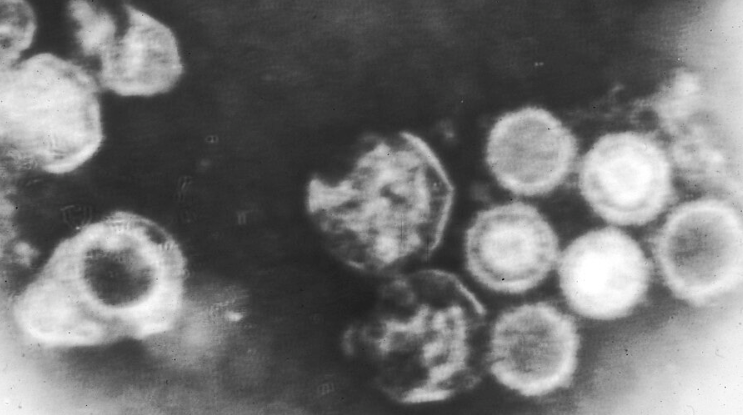
Researchers at the University of Vermont found that genetic differences influence how the immune system responds to chronic herpesvirus infections, potentially helping explain why only some infected individuals develop multiple sclerosis.
Scientists investigating the connection between Epstein-Barr virus and multiple sclerosis have identified genetic differences that could help explain why some individuals are more vulnerable to the neurological disease. Research involving laboratory mice found that an inherited ability to control a related herpesvirus influenced whether immune cells accumulated in the brain, even before autoimmune inflammation developed.
The study was published online on November 23, 2026, in the Proceedings of the National Academy of Sciences. Immunologist Dimitry Krementsov led the research at the University of Vermont, working with colleagues from Duke University and Dartmouth College.
Genetic Differences Influence Immune Responses
The researchers examined several genetically distinct strains of mice to investigate how inherited characteristics affect immune responses during long-term viral infections.
Instead of infecting the animals with Epstein-Barr virus, which naturally infects humans, the scientists used a related virus called murine gammaherpesvirus 68, or MHV-68.
The research revealed substantial differences between animals that successfully controlled the infection and those whose immune systems struggled to contain it.
In mice with weaker antiviral defenses, large numbers of immune cells accumulated within the central nervous system. Genetically resistant mice experienced considerably less immune-cell infiltration.
These differences suggest that inherited characteristics may influence biological processes associated with neurological autoimmune diseases.
Understanding Multiple Sclerosis
Multiple sclerosis, commonly known as MS, is a chronic immune-mediated disease affecting the brain, spinal cord, and optic nerves.
The disease damages myelin, a protective substance surrounding nerve fibers. Myelin helps electrical signals travel efficiently through the nervous system.
When this protective covering becomes damaged, communication between the brain and other parts of the body can become disrupted. Symptoms may include muscle weakness, fatigue, vision problems, difficulty walking, numbness, and problems with coordination.
The severity and progression of the disease vary considerably between individuals.
Researchers have identified several factors associated with MS susceptibility. However, determining how these factors interact to initiate the disease remains an important scientific challenge.
Epstein-Barr Virus Is Extremely Common
Epstein-Barr virus, or EBV, belongs to the herpesvirus family and is a common cause of infectious mononucleosis.
According to the Centers for Disease Control and Prevention, approximately nine out of every ten adults have antibodies indicating a previous or current EBV infection.
Many people acquire the virus during childhood without experiencing noticeable symptoms. Infections occurring during adolescence or adulthood can cause fever, swollen lymph nodes, and prolonged fatigue.
After the initial infection, EBV can remain within the body for life. The immune system normally helps prevent the virus from multiplying uncontrollably.
Despite the widespread occurrence of EBV infections, only a small proportion of infected individuals develop multiple sclerosis. Understanding this difference is central to the Vermont research.
Earlier Human Research Established a Strong Connection
Evidence linking EBV to multiple sclerosis gained considerable attention in 2022 when researchers published findings from a large investigation involving US military personnel.
The study, published in Science, examined a population of more than ten million individuals. Among them, 955 received an MS diagnosis during their military service.
Researchers determined that the likelihood of developing MS increased approximately 32-fold following EBV infection.
Blood tests also revealed changes in neurofilament light chain, a protein that can serve as an indicator of nerve damage. These changes appeared after individuals acquired EBV.
Although the findings provided compelling evidence that EBV contributes to MS development, they did not establish why most infected people remain unaffected.
The latest animal research examines one possible explanation involving inherited differences in antiviral immunity.
Immune Cells Enter the Brain Before Autoimmune Disease
T cells perform several important functions within the immune system. One group, known as cytotoxic T cells, helps identify and destroy infected cells.
Researchers have previously observed substantial numbers of these cells within damaged areas of the nervous system in people with multiple sclerosis. Their precise role in the disease remains under investigation.
In the new study, laboratory analysis showed that many T cells accumulating in the nervous systems of susceptible mice recognized components of the experimental virus.
The findings suggest that persistent viral infections can alter immune activity within the nervous system before an autoimmune condition becomes apparent.
However, the presence of these cells does not establish that they directly attack myelin. Researchers must determine whether they perform protective functions, contribute to tissue damage, or participate in both processes under different circumstances.
An Unexpected Finding Complicates the Picture
The scientists also examined the effects of infection in an experimental autoimmune condition known as experimental autoimmune encephalomyelitis, or EAE.
This condition is commonly used in animal research to investigate inflammatory processes associated with multiple sclerosis.
Unexpectedly, chronic infection slightly delayed the onset of the experimentally induced condition in one susceptible mouse strain. Removing B cells reversed this effect.
The finding demonstrates that the relationship between viral infections and autoimmune inflammation is complex. Increased immune activity within the nervous system does not necessarily translate into an immediate worsening of disease symptoms.
It also reinforces the importance of examining different immune-cell populations when investigating the relationship between herpesviruses and neurological disorders.
Future Research Will Focus on Protective Genes
Krementsov’s research team plans to investigate the inherited characteristics responsible for effective viral control.
Identifying protective genetic variations could help scientists understand why some immune systems manage chronic herpesvirus infections without producing extensive changes in the nervous system.
However, findings from mice cannot automatically be applied to humans. The experimental virus differs from EBV, and the induced autoimmune condition does not reproduce every aspect of multiple sclerosis.
Further human research will be necessary to determine whether similar genetic and immune mechanisms influence susceptibility to MS.
The study does not establish a new treatment, preventive therapy, or diagnostic test. Instead, it identifies biological processes that could guide future investigations into the relationship between persistent viral infections, inherited susceptibility, and neurological disease.
IMAGE: EBV Author Linda Bartlett (Photographer) Permission (Reusing this file) Reuse Restrictions None – This image is in the public domain and can be freely reused. Please credit the source and/or author listed above. CC0