
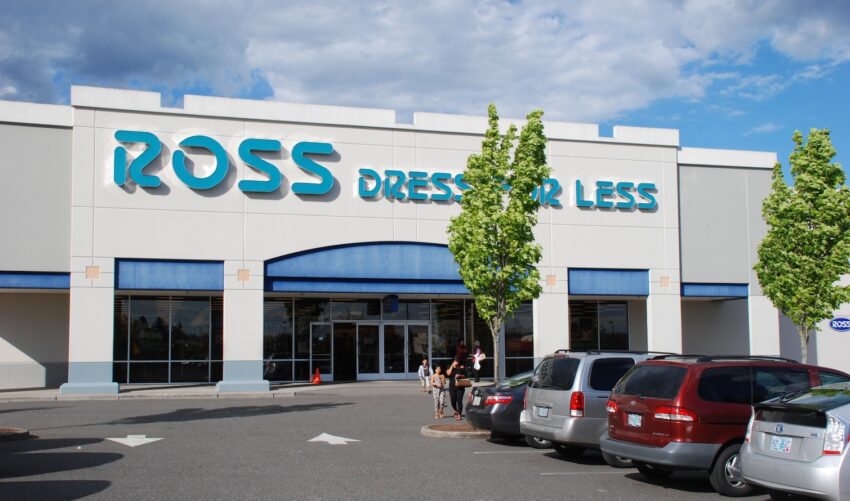
Ross Stores reports an 8% increase in comparable-store sales and stronger quarterly earnings, but cautious holiday guidance raises concerns about consumer spending.
Ross Stores reported another quarter of strong sales growth as American shoppers continued searching for discounted clothing and household merchandise. The off-price retailer announced November 19, 2026, that third-quarter revenue increased 12% to approximately $6.3 billion, supported by higher customer traffic and stronger sales at established locations. However, the company’s shares declined following the announcement as investors weighed its encouraging results against a more cautious outlook for the holiday shopping season.
The California-based retailer, which operates Ross Dress for Less and dd’s DISCOUNTS stores, recorded an 8% increase in comparable-store sales during the quarter ending October 31. Earnings reached $1.91 per share, exceeding the company’s earlier forecast of $1.75 to $1.83. Despite those results, Ross maintained its expectation that comparable-store sales would grow 4% to 5% during the fourth quarter, suggesting slower growth as the year ends.
The mixed reaction reflects broader uncertainty surrounding American consumer spending. While many shoppers continue purchasing clothing and home merchandise, persistent economic pressures have encouraged consumers to look for better prices. Ross has benefited from that demand, but investors remain cautious about whether its recent sales momentum can continue.
Strong Quarterly Results Highlight Demand for Discounts
Ross Stores generated approximately $6.3 billion in third-quarter revenue, compared with $5.6 billion during the same period in 2025. Net income increased to $606 million from $512 million, while earnings per share rose from $1.58 to $1.91. Comparable-store sales grew 8%, following a 7% increase during the corresponding quarter last year.
Chief Executive Officer Jim Conroy attributed the performance to customer traffic, marketing improvements and the company’s ability to offer recognizable brands at discounted prices. Management said its efforts to improve merchandise selection and the overall shopping experience continued attracting customers.
The company’s operating margin also improved, reaching 12.3%, compared with approximately 11.6% a year earlier. That result exceeded management’s earlier forecast and demonstrated that Ross could maintain profitability while handling higher operating expenses.
For the first nine months of fiscal 2026, Ross reported revenue of $18.5 billion, an increase of 15% from the previous year. Comparable-store sales grew 11% during that period, while earnings per share reached $6.59. Those results reflect continued demand across the retailer’s nationwide network.
Holiday Sales Forecast Raises Investor Concerns
Despite its stronger-than-expected third quarter, Ross maintained a relatively cautious outlook for the final three months of 2026. Management expects comparable-store sales to increase between 4% and 5%, compared with the 9% growth recorded during the previous year’s holiday quarter. The company also expects fourth-quarter earnings of $2.16 to $2.25 per share.
The forecast disappointed some investors who had expected stronger guidance following the company’s recent performance. Ross shares declined in trading after the announcement, reflecting concerns that spending on discretionary merchandise could slow during the important holiday shopping period.
On Friday, November 20, Ross Stores stock closed at $213.46, down 2.92% for the session. The closing price represented a decline from $232.51 on September 22, illustrating how investor sentiment changed despite continued growth in the company’s underlying business.
Reuters reported that higher domestic freight costs and pressure on consumer spending were among the factors influencing expectations. Ross faces the challenge of maintaining attractive prices while protecting profit margins against transportation expenses and other operating costs.
Madison Investments Highlights Ross Stores
Ross Stores has also attracted attention from professional investment managers searching for businesses capable of performing during uncertain economic conditions. Madison Investments discussed the retailer in its second-quarter 2026 investor letter for the Madison Mid Cap Fund, emphasizing its strong sales performance and relatively defensive business model.
The fund reported an 8.58% return for its Class Y shares during the second quarter, compared with a 13.83% gain for the Russell Midcap Index. Much of the broader market’s performance was driven by enthusiasm surrounding artificial intelligence and companies involved in developing data-center infrastructure.
Madison noted that Ross delivered one of its strongest comparable-store sales quarters in recent history, but its stock initially received less attention than faster-growing technology businesses. Investors seeking exposure to artificial intelligence were directing substantial capital toward companies expected to benefit from increased computing demand.
The investment manager reduced its Ross position during the second quarter after the stock’s earlier gains. However, selling some shares does not necessarily indicate that a fund expects a company’s business to deteriorate. Portfolio managers frequently adjust holdings to manage risk, maintain diversification or redirect capital toward other opportunities.
In its September 30 investment strategy letter, Madison identified Ross among the fund’s five largest positive contributors during the third quarter. The firm specifically cited a second consecutive quarter of double-digit comparable-store sales growth, showing that the retailer continued contributing positively to portfolio performance.
Artificial Intelligence Dominates Market Attention
Madison’s investment commentary also described the growing influence of artificial intelligence on stock market performance. Companies associated with semiconductor manufacturing, computing equipment and data-center construction attracted significant investor interest during the first half of 2026.
The fund warned that enthusiasm surrounding emerging technology could create risks when stock valuations rise faster than the underlying businesses can justify. Although artificial intelligence may transform many industries, investors cannot know with certainty which companies will ultimately generate the strongest financial returns.
Ross Stores represents a different type of investment opportunity. Rather than relying on technology breakthroughs or rapid expansion into new markets, the company’s business depends primarily on merchandise selection, store traffic and consumer demand for discounted products.
That distinction may appeal to investors seeking exposure to established retail operations. However, off-price retailers are not immune to economic weakness, particularly when households reduce spending on clothing, footwear and home furnishings.
The company also faces competition from other discount chains and conventional retailers offering promotions. Maintaining attractive merchandise at competitive prices remains essential to protecting customer loyalty.
Ross Continues Expanding Its Store Network
Alongside its sales growth, Ross Stores continued expanding its physical retail presence during 2026. The company opened 51 locations during the third quarter, including 41 Ross Dress for Less stores and 10 dd’s DISCOUNTS stores. Those additions completed its annual plan to open 115 new stores.
Expanding its store network allows Ross to reach additional communities while building on its established customer base. However, new locations also require investment in staffing, inventory and distribution, making consistent sales performance important to the company’s long-term strategy.
Ross has continued returning money to shareholders through stock repurchases and dividends. During the third quarter, the company repurchased approximately 1.4 million shares for $319 million under a two-year $2.55 billion authorization approved in March 2026.
The board also declared a quarterly cash dividend of 44.5 cents per share, payable December 31 to shareholders of record on December 8. These shareholder payments reflect management’s confidence in the business, although future repurchases and dividends remain subject to company decisions and financial conditions.
Economic Uncertainty Shapes the Outlook
Management raised its full-year earnings forecast following the third-quarter results. Ross now expects fiscal 2026 earnings per share between $8.75 and $8.84, up from its previous projection of $8.61 to $8.77.
However, the updated forecast includes approximately 60 cents per share in benefits from tariff refunds recognized during the second quarter. Those refunds totaled about $253 million and represent a financial benefit that should be distinguished from earnings generated through normal retail operations.
For Ross, the holiday shopping season will be an important test of whether consumers continue prioritizing discounted merchandise. Strong customer traffic suggests that shoppers remain interested in recognizable brands at lower prices, but slowing comparable-store sales growth could indicate that households are becoming more selective.
Investors will also watch the company’s operating margins, inventory levels and ability to manage transportation costs. Ross has demonstrated substantial sales growth during 2026, but its recent share-price decline shows that strong financial performance does not always translate into immediate stock market gains.
The company’s next earnings report will provide a clearer picture of holiday spending and whether Ross can sustain its momentum into 2027.
IMAGE: Ross “Dress for Less” clothing store in Tanasbourne Town Center, in eastern Hillsboro, Oregon.. Photo: Steve Morgan / Wikimedia, taken 2010-05-08, CC BY-SA 3.0