
Tesla reported its highest-ever quarterly vehicle deliveries during the second quarter of 2026, reaching 480,126 units. This marked a 25% increase compared to the same period last year. The Model 3 and Model Y made up the vast majority of these deliveries, with 467,762 vehicles accounted for by those two models alone. The company’s total revenue climbed to $28.24 billion, surpassing analyst expectations and marking a 26% increase from the previous year.
Despite strong sales numbers, Tesla’s operating income dropped significantly. It fell by 57% to around $400 million for the quarter. Adjusted earnings per share came in at just 33 cents, far below the 51 cents that analysts had forecast. The stock reacted negatively, falling approximately 4% after the results were released. This decline reflected investor concerns over the company’s ability to convert high sales volumes into strong profits.
Tesla’s automotive gross margin for the quarter was 16.3%, down from 19.2% in the first quarter of 2026. The average revenue per vehicle also decreased, falling to $42,730 from $45,345 the previous year. A major factor contributing to this drop was a sharp decline in regulatory credit revenue. This income source dropped to $146 million from $380 million in the first quarter and $439 million in the same period last year.
The company is investing heavily in future technologies, including artificial intelligence, robotaxis, and humanoid robots like Optimus. Research and development costs rose 49% to $2.37 billion during the quarter. Capital expenditures also surged to $5.8 billion, pushing free cash flow into negative territory at $1.1 billion. Tesla’s cash outflow exceeded its inflows by this amount.
Tesla’s energy storage business performed well in the second quarter. The company deployed a record 13.5 gigawatt-hours of battery capacity, showing growth from previous quarters. The number of active Full Self-Driving subscriptions also increased, reaching 1.48 million, up 56% year-over-year.
Investors are closely watching how Tesla will balance its current vehicle business with investments in new technologies like robotaxis and humanoid robots. While sales have rebounded after a difficult 2025, the company’s profitability remains under pressure due to margin compression and reduced income from regulatory credits. The future success of these new ventures will be key to determining whether Tesla can maintain its high valuation.
Elon Musk has continued to emphasize that the company’s long-term strategy lies in physical AI platforms such as robotaxis and Optimus. These initiatives require substantial capital investment, which is reflected in the company’s growing spending on infrastructure and development. Despite strong deliveries and energy growth, investors are questioning whether these investments will translate into sustainable profit margins.
Tesla’s financial performance in Q2 2026 shows a mixed picture. While the company achieved record sales and expanded its energy business, it struggled with profitability. The drop in regulatory credit revenue and increased spending on future technologies have put pressure on operating income. Analysts are watching closely to see how Tesla manages this transition from traditional EV sales to new AI-driven business models.
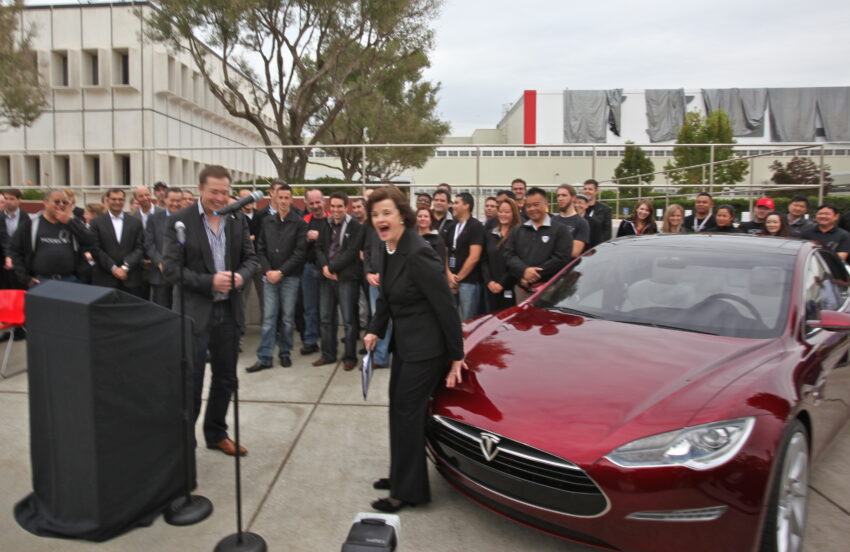
IMAGE: Senator Dianne Feinstein fetches a good laugh at the Tesla opening at the former NUMMI plant. Photo: Steve Jurvetson / Wikimedia, CC BY 2.0
This article passed automated originality and source-verification checks before publishing.