
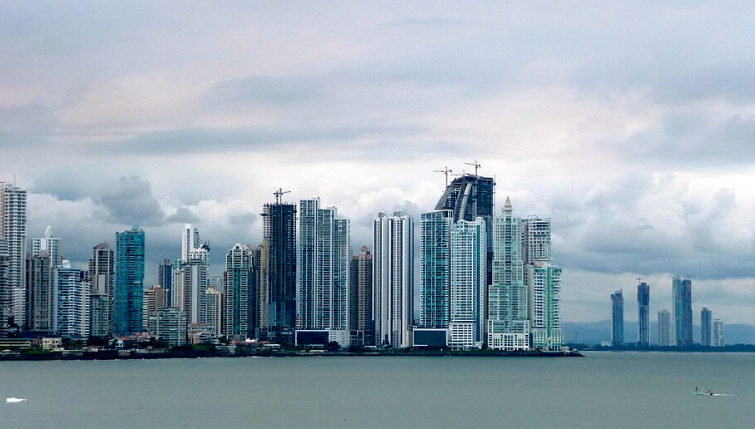
A powerful earthquake and a 6.6-magnitude aftershock struck Panama on October 9, damaging buildings and forcing evacuations. Authorities lifted tsunami warnings as emergency crews continued assessing the destruction.
Two powerful earthquakes, with magnitudes of 7.7 and 6.6, struck southern Panama on Friday afternoon, triggering a series of aftershocks and causing buildings to collapse near the epicenter. The initial quake was centered about seven miles southwest of the remote community of Pitaloza Arriba in Herrera province, according to the USGS. It occurred at a depth of about eight miles and was felt strongly across Panama and in neighboring countries.
Residents in Panama City, the capital, gathered outside their buildings while waiting for updates on the situation. One local resident described how the shaking knocked items from kitchen shelves, though he and his family were otherwise unharmed.
Seismologists recorded more than forty-five aftershocks, although many were too weak to be felt by people. Panamanian President José Raúl Mulino said authorities had not confirmed any deaths as of Friday evening. He called for calm among the population as emergency crews assessed the damage.
Images of damaged structures and cracks in roads added to the fear, especially after recent devastating quakes in neighboring countries. Two powerful earthquakes struck Venezuela in June and killed more than 6,500 people. A separate 7.4-magnitude earthquake in Colombia also killed hundreds of people.
Authorities said damage was mostly concentrated in central provinces including Veraguas, Herrera, and Los Santos. No significant damage had been reported in Panama City, which is known for its tall buildings. Officials reported damage to buildings in Penonomé including the cathedral and the Dos Continentes hotel.
Local news outlets also reported that a colonial-style church named San Atanasio in Los Santos province had partially collapsed. The church was declared a National Historic Heritage Site back in 1938.
In other areas, including Veraguas province, large cracks appeared along roadways. Tocumen International Airport in Panama City temporarily suspended operations after the first quake but resumed service later that day. The Panama Canal Authority said its operations were continuing normally, with inspections underway to check for damage.
The authority prioritized the safety of employees and vessels during the inspection process.
People stood outside buildings in Panama City after the quake struck on Friday. A tsunami warning was issued for coastal areas of Panama, Colombia, Ecuador, Nicaragua, and Guatemala. The warnings were later lifted as authorities continued monitoring coastal conditions.
Officials initially warned that dangerous waves could reach parts of Panama’s Pacific coastline. Coastal communities in Los Santos province were among the areas placed on alert. Emergency authorities urged residents to follow official instructions while the tsunami threat was being assessed.
Messages of support and offers for assistance poured in from across the region. President Mulino thanked fellow Latin American leaders for their support. U.S. Secretary of State Marco Rubio said the United States was closely monitoring the situation and stood ready to assist Panama.
Other regional leaders also extended their support. The last major earthquake to cause widespread damage in Panama occurred in 1991, when a powerful quake centered near Costa Rica killed twenty-three people and injured five hundred fifty-nine in Panama. Panama lies along the Ring of Fire, a zone where many of the world’s earthquakes occur due to tectonic plate interactions.
Earthquakes are common in Panama, especially near its border with Costa Rica and along its Pacific coast.
Experts said the impact of this event would depend on factors like depth, distance, soil conditions, and construction quality. They also noted that landslides, road disruptions, and power outages could complicate rescue efforts. The long-term economic effects of this quake could be significant due to damaged buildings and infrastructure.
The Azuero Peninsula was among the areas closest to the earthquake’s epicenter. The strongest shaking affected communities outside the more densely populated capital and canal region. Early estimates from the USGS suggested economic losses could reach between 1% and 10% of Panama’s gross domestic product.
Colombia expressed solidarity with Panama during this difficult time.
IMAGE: Source Own work Author Nico2panama CC3