
A new Mayo Clinic Q&A outlines how doctors decide between physical therapy and surgery and what patients can expect during recovery.
|
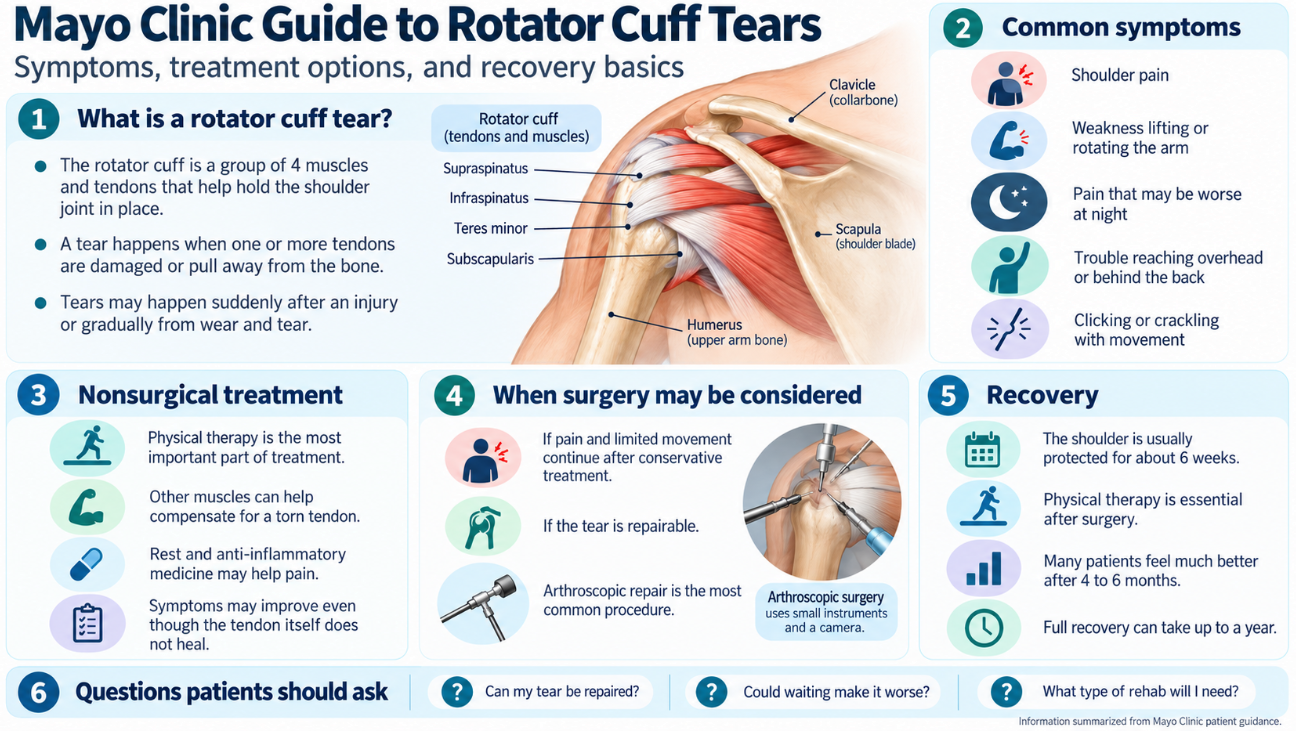
Mayo Clinic published new guidance October 2 explaining how rotator cuff tears are treated and when surgery may be considered. A rotator cuff tear involves damage to the group of muscles and tendons that connect the shoulder blade to the upper arm bone.
These muscles are essential for shoulder motion, strength, and stability. The severity of a tear can vary widely—with some causing little or no symptoms while others result in significant pain and loss of function. The cause of the tear plays a key role in how it should be treated.
Tears caused by gradual wear and tear often improve without needing surgery. The torn tendon itself does not heal through nonsurgical treatment but other muscles can compensate for the damage. When conservative treatments fail to relieve pain and movement issues surgery may be suggested.
Physical therapy is considered the most important part of nonsurgical treatment.
Pain can make starting therapy difficult at first. Some people find relief with over-the-counter anti-inflammatory drugs.
The most common surgical method is a tendon repair done through small incisions using a camera and special tools. Not all tears can be fixed with surgery—especially larger ones. Recovery after surgery requires patience and careful protection of the shoulder during the first six weeks.
Following the prescribed physical therapy program is also essential for healing. Patients should ask whether their tear can be repaired and if delaying treatment could make it worse over time.
This information comes from the Mayo Clinic Q&A which is an educational resource for patients. The advice given reflects common questions from patients to the Mayo Clinic healthcare team.
It is not a substitute for regular medical care.
IMAGE: DNR Art Department