
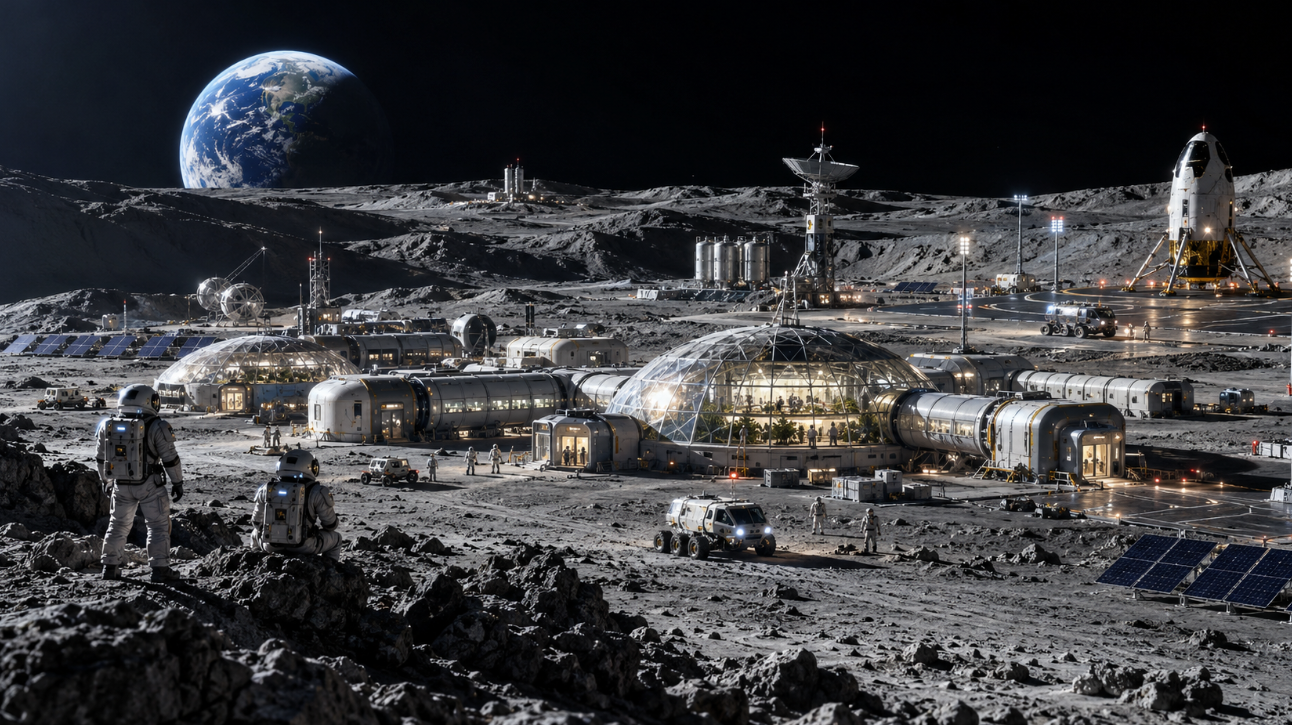
NASA’s Moon Base program will unfold in three phases near the lunar south pole as the agency works toward a permanent human presence beginning in the 2030s.
NASA has unveiled a roughly $20 billion initiative to construct a permanent human presence on the Moon. The Moon Base program is designed to move NASA from short lunar visits toward sustained operations. The effort was announced on March 24 2026 during an agency event called Ignition.
The base will be constructed near the Moon’s south pole region. Scientists believe that water ice exists in some of the permanently dark craters in this area. The location also has areas that stay lit for long times which could support solar energy systems.
The first phase of the project will last through 2029. During this time NASA will launch robotic missions to the lunar south pole. These uncrewed vehicles will carry rovers and scientific tools to explore the area.
The robots will help identify ideal spots for building the base.
They will also test new technologies and operations needed for lunar work. NASA plans to use these missions to improve mobility and communications while gathering more information about the lunar environment.
The second phase begins in 2029 and runs through 2032. This stage will focus on laying the groundwork for longer stays on the Moon. It will involve setting up early power systems as well as cargo transport and communication tools.
Living spaces for astronauts will also be developed during this phase. International partners will contribute significantly to this part of the project. Japan’s space agency JAXA is developing a pressurized rover.
This vehicle will let people live and work inside while traveling across the Moon’s surface.
The final phase starts in 2032. It will see the creation of a permanent lunar outpost where astronauts can live and work for extended periods. NASA will add larger living quarters as well as communication systems and transportation methods.
A separate NASA and Department of Energy effort calls for a lunar fission reactor to be deployed by 2030. The reactor is intended to provide continuous power even when sunlight is unavailable. That system could support later Moon Base operations.
NASA Administrator Jared Isaacman said the Moon base will help establish an enduring human presence beyond Earth. NASA also says the knowledge gained on the Moon will help prepare for future missions to Mars and other destinations.
IMAGE: DNR Art Department