
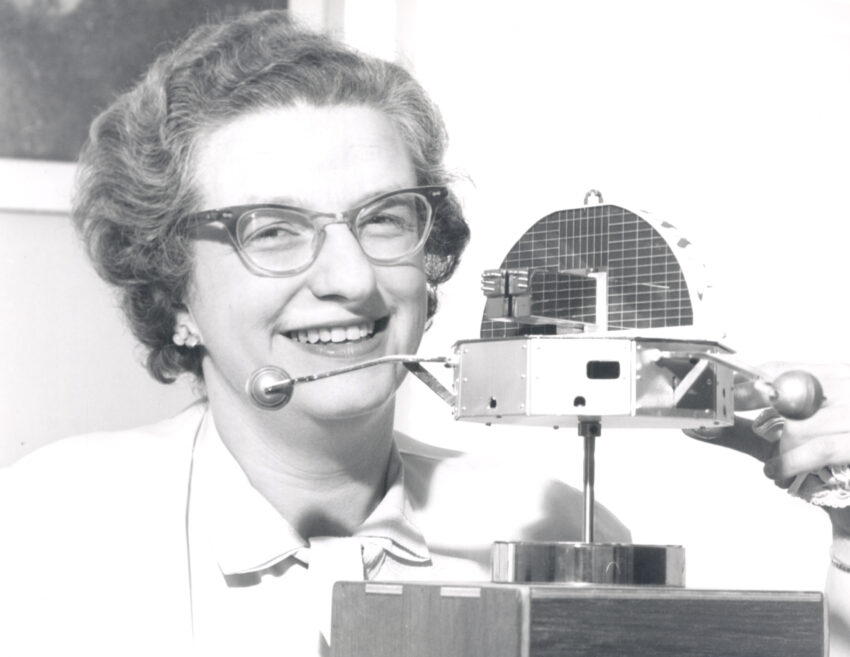
NASA’s Nancy Grace Roman Space Telescope is scheduled to launch on Sunday, August 30, aboard a SpaceX Falcon Heavy rocket from the Kennedy Space Center in Florida. The telescope will travel nearly 1 million miles from Earth, positioning itself in a location opposite the sun to begin its scientific observations. Named after Nancy Grace Roman, an influential American astronomer who served as NASA’s first chief astronomer, the mission aims to answer fundamental questions about dark matter and dark energy.
Roman will survey vast regions of the sky and capture images of over two billion galaxies to study how cosmic structures formed and evolved over time, according to NASA. The mission will also help determine how the universe has expanded since the Big Bang, which occurred about 13.8 billion years ago, according to a report from pakistantoday.com.pk. Scientists have long known that the universe’s expansion is accelerating, and dark energy is believed to be the driving force behind this phenomenon.
Recent findings from the DESI collaboration suggest that dark energy may change over time, which could challenge Einstein’s general theory of relativity. In addition to studying dark energy, the Roman telescope will search for worlds beyond our solar system. It is expected to find thousands of new exoplanets and provide the first statistical census of planetary systems similar to our own.
One of the telescope’s key instruments is the Wide Field Instrument, which will capture high-resolution images in optical and near-infrared light. These images may be affected by glare from stray light that scatters inside the telescope, which can distort what astronomers see. To address this issue, a team at NASA’s Ames Research Center developed software called ROSALIA that predicts and removes unwanted light from images.
ROSALIA helps astronomers adjust observation plans to reduce the impact of light glints that can mimic real cosmic features like planets or nebulae. The software also removes diffuse background light, which is important for observing the faintest parts of the universe and understanding how large structures formed. Another instrument on the Roman telescope is the Coronagraph Instrument, designed to directly image exoplanets around distant stars.
This instrument uses masks and mirrors to block out starlight, creating a dark zone where faint planets can be seen. Currently, the Coronagraph works best in single-star systems, but researchers at NASA Ames are developing a new technology called Multi-Star Wavefront Control to image planets in binary star systems. This new technology includes custom light-blocking masks and software that can suppress light from multiple stars, revealing planets hidden in those systems.
One of the nearest multi-star systems to Earth is Alpha Centauri, which contains a binary pair of Sun-like stars and a smaller red dwarf star. Although no confirmed planets exist around the Sun-like stars in this system, a candidate planet was identified by NASA’s James Webb Space Telescope in the habitable zone of Alpha Centauri A. The MSWC technology is part of a broader effort to enhance the Roman telescope’s capabilities through international collaboration.
NASA Ames also leads a working group that supports hardware development for the Coronagraph Instrument, helping to expand its functionality beyond baseline modes. The mission is expected to last five years, but the telescope may continue operating for up to ten years if fuel remains. Roman will complement other space telescopes like Hubble and Webb, working together to provide a more complete view of the cosmos, USA Today reported.
The telescope’s main camera can cover a much wider field of view than Hubble, making it a powerful tool for large-scale surveys. The mission is part of NASA’s flagship astrophysics program and follows in the footsteps of Hubble and Webb, both launched in the 1990s and 2020s respectively. Despite funding challenges during the Trump administration, Congress kept the project alive, ensuring its completion and launch.
Advanced computing at NASA’s Ames Research Center is also contributing to Roman’s success through data pipeline support and mission planning. The mission represents a major step forward in understanding the universe, from dark energy to distant planets that may harbor life.
IMAGE: Dr. Nancy Roman, one of the nations top scientists in the space program, is shown with a model of the Orbiting Solar Observatory (OSO). Dr. Nancy Roman received her PhD in astronomy from the University of Chicago in 1949. In 1959, Dr. Roman joined NASA and in 1960 served as Chief of the Astronomy and Relativity Programs in the Office of Space Science. She was very influential in creating satellites such as the Cosmic Background Explorer (COBE) and the Hubble Space Telescope (HST). She retired from NASA in 1979, but continued working as a contractor at the Goddard Space Flight Center. Throughout her career, Dr. Roman was a spokesperson and advocate of women in the sciences.. Photo: NASA / Wikimedia, Public domain