
Canada has announced it will match the 50% tariffs that the United States imposed on Canadian goods after trade negotiations collapsed late Friday night. The failure to reach a deal came just hours before the deadline for the new tariffs to take effect on $20 billion worth of Canadian products. Trade talks between Canada and the United States had lasted nearly two weeks, with both sides appearing optimistic about a resolution up until the final hours.
Canadian officials had hoped to convince the U.S. to eliminate the Section 338 tariffs entirely, which have never been used before in such a context, according to NBC News. They also sought lower rates on steel and aluminum under Section 232 of the Trade Act, which had previously been set at 25%.
Earlier in the week, American negotiators reportedly agreed to reduce tariffs on cars and metals from 25% to 15%. The collapse of negotiations was seen as a major setback for both countries, especially given the significant economic impact expected from the new tariffs.
Canada’s federal government faced pressure from provincial leaders during the talks, with some premiers urging stronger resistance to U.S. demands. Manitoba Premier Wab Kinew said the Canadian government should fight against President Trump’s stance, while Quebec Premier Christine Fréchette was still reviewing the situation as of Thursday.
The U.S. imposed the new tariffs under presidential authority granted by Section 338 of the Tariff Act of 1930. Trade Representative Greer criticized the proposed terms as unfair and uneconomic, calling into question the reliability of any agreement that might have been reached, according to a report from NPR. He emphasized that Canada has what the world wants, and that the U.S. had made new demands that disrupted earlier progress.
The decision by Canada to match the tariffs dollar for dollar signals a major escalation in trade tensions between the two nations, arkansasonline.com reported. Negotiators from both sides had worked hard and in good faith throughout the process, according to the Prime Minister.
The political consequences of this move may be even more significant than the economic ones, with some experts suggesting a broader impact on international trade relations. Canada’s response was widely seen as a firm stand against what many viewed as unreasonable U.S. demands.
The failure to finalize the deal leaves both countries in a difficult position, especially with regard to future trade cooperation and economic stability. This breakdown in negotiations is being described as a missed opportunity for Canada to deepen its partnership with the United States.
The situation has drawn attention from global markets and trade analysts who are watching how both nations respond in the coming weeks.
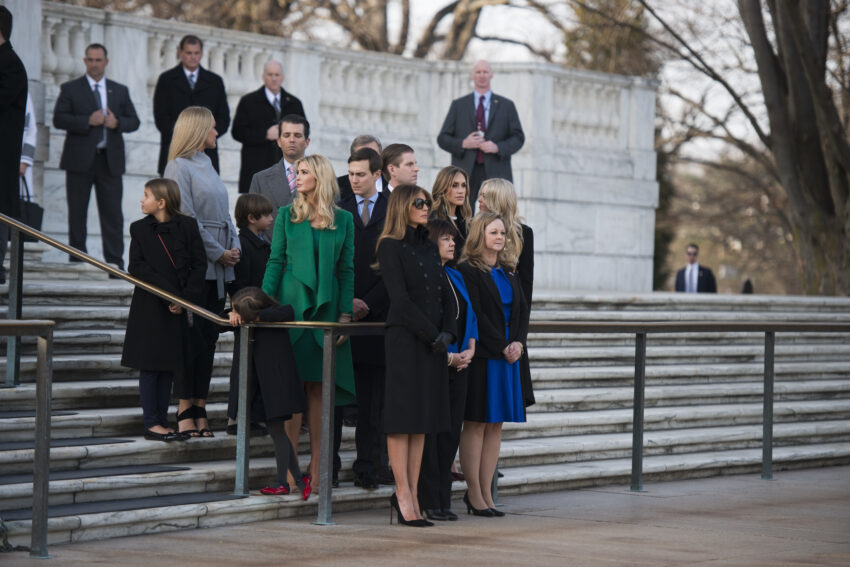
IMAGE: Families and guests of President-elect Donald J. Trump and Vice President-elect Mike Pence wait for the start of a wreath-laying ceremony at the Tomb of the Unknown Soldier in Arlington National Cemetery, Jan. 19, 2017, in Arlington, Va. Trump will be sworn-in as the 45th president of the United States during the Inauguration Ceremony Jan. 20, 2017, in Washington, D.C. (U.S. Army photo by Rachel Larue/Arlington National Cemetery/released)
Unit: Arlington National Cemetery
DVIDS Tags: Va.; Virginia; Arlington National Cemetery; Arlington; ANC. Photo: Rachel Larue / Wikimedia, taken 2017-01-19, Public domain