
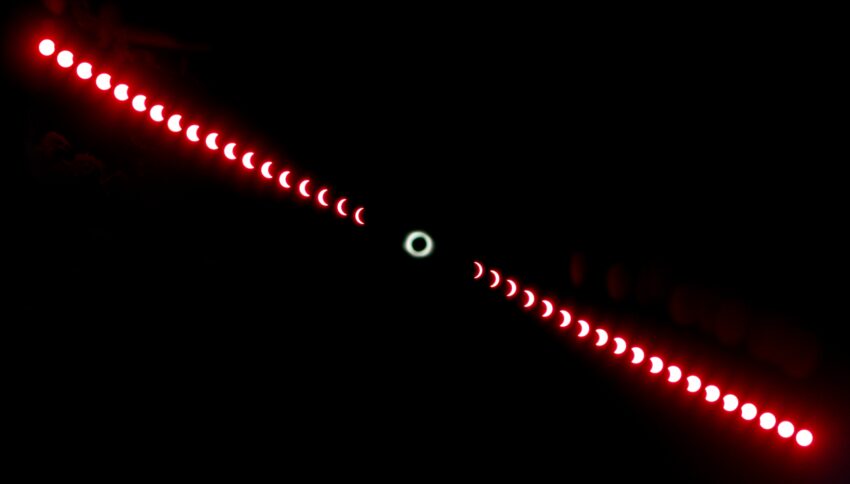
The sky darkened across parts of Europe on August 12, 2026, as a partial solar eclipse moved across the continent. This event was the first total solar eclipse to cross mainland Europe in 27 years since August 1999.
NASA reported that a partial lunar eclipse is scheduled for late August, according to USA Today. The lunar eclipse on August 27 and 28 was visible from various time zones, with about 96% of the moon’s face covered. Stargazers in different regions saw the early stages of the eclipse before the moon rose above the horizon.
The United States had recently experienced a solar eclipse earlier in the month, which was widely documented online. Some people were less impressed by this year’s eclipse compared to the spectacular one seen in 2024.
The eclipse was visible from space, where NASA astronaut Jessica Meir reported a partial eclipse with about 18% sun coverage. In Connecticut, a partial solar eclipse occurred on August 12, but it did not reach totality, according to a report from stamfordadvocate.com. The moon covered about 11% to 13% of the sun’s disk in that region.
Some residents attended a viewing event at Western Connecticut State University. Astronomy professor Noreen Grice estimated the view would be around 11% in Danbury. She said the university wanted to provide a safe way for people to observe the event.
Children were given coloring pages as a keepsake from the day. The next partial solar eclipse visible in Connecticut is expected to occur on Jan. 26, 2028.
A total solar eclipse passed over Connecticut in the morning of January 24, 1925. Crowds were expected to gather at East Rock, West Rock, and the Sleeping Giant during that earlier event.
However, frigid cold kept many indoors on that day. NASA provided a visualization showing where the partial eclipse and totality would be visible around the world.
IMAGE: The progression of en:Solar eclipse of August 1, 2008 in Novosibirsk, Russia. Time span between shots is 3 minutes.. Photo: User:Kalan / Wikimedia, taken 2008-08-01, CC BY 3.0