
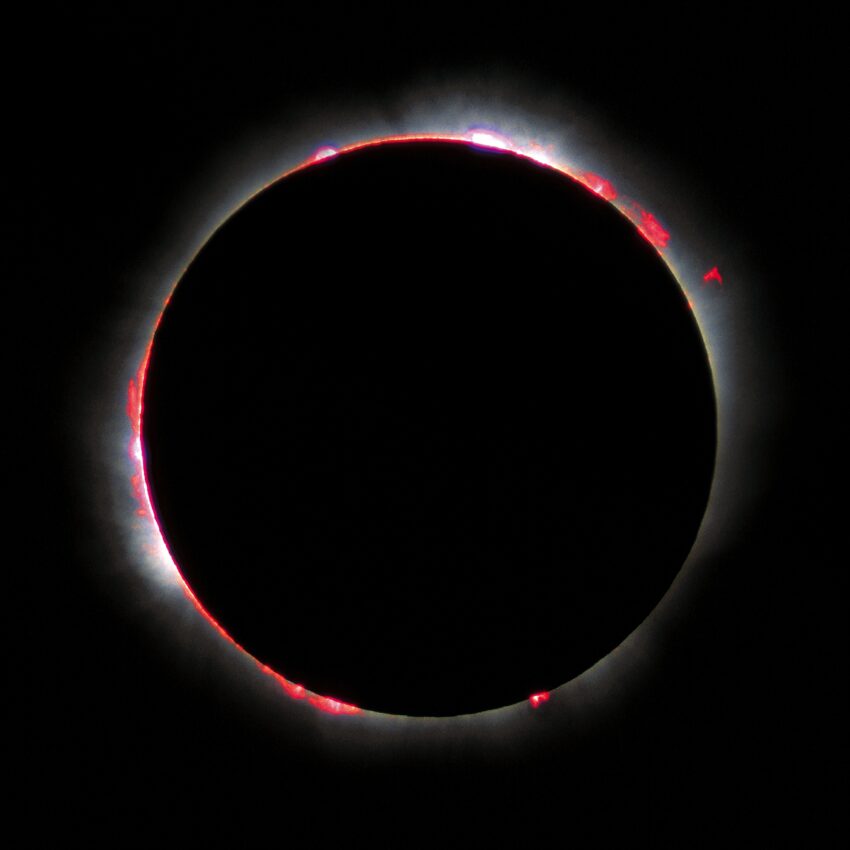
A total solar eclipse swept across parts of Europe on August 12, 2026, drawing large crowds to prime viewing areas. People in Spain and Iceland saw the moon completely cover the sun for a few moments, an event that had not happened in mainland Spain since 1905. In Spain, some viewers were in the path of totality near Berlanga de Duero, where the sky darkened and birds fell silent.
A British couple made a special trip to A Coruña in Spain, calling the experience a ‘once in a lifetime’ opportunity, according to Yahoo News. In Iceland, many people gathered to watch the eclipse, some of whom had seen one before in 1954. Ásta Sigurbjörg Guðjónsdóttir, who was 25 at the time, recalled that the moon gradually moved in front of the sun.
She said birds began chirping more as the eclipse took place, and that it felt terrifying to witness. The eclipse path moved from Russia’s Pronchishchev Peninsula, across the Arctic, and into sparsely populated areas of Greenland, according to a report from CNN. Later in the day, it reached more populated regions of Iceland and Spain, where crowds gathered with solar eclipse glasses.
The event lasted only a few minutes in most places, with totality ending just before sunset in Portugal and Spain. Many people who were not in the path of totality still saw a partial eclipse, which was visible for a short time. The next total solar eclipse will pass over southern Spain, North Africa, Saudi Arabia and Yemen on August 2, 2027.
For those in the United States, the next total solar eclipse will not occur until August 22, 2044. Solar eclipse glasses must meet the ISO 12312-2 safety standard to be safe for use. These glasses do not expire if they are undamaged and properly made, allowing them to be reused for future events.
The eclipse brought together people from all over Europe in a shared moment of awe and wonder. As the skies darkened, images of the eclipse were captured from various locations across Europe. After the eclipse ended, people looked forward to a Perseid meteor shower that would appear shortly afterward.
The meteor shower was expected to be visible in the Northern Hemisphere and was described as a dazzling display. Viewers across Europe were treated to a rare astronomical event that combined science, beauty, and wonder.
IMAGE: Total solar eclipse of August 11, 1999 in France.. Photo: Luc Viatour / Wikimedia, taken 1999-08-11, CC BY-SA 3.0