
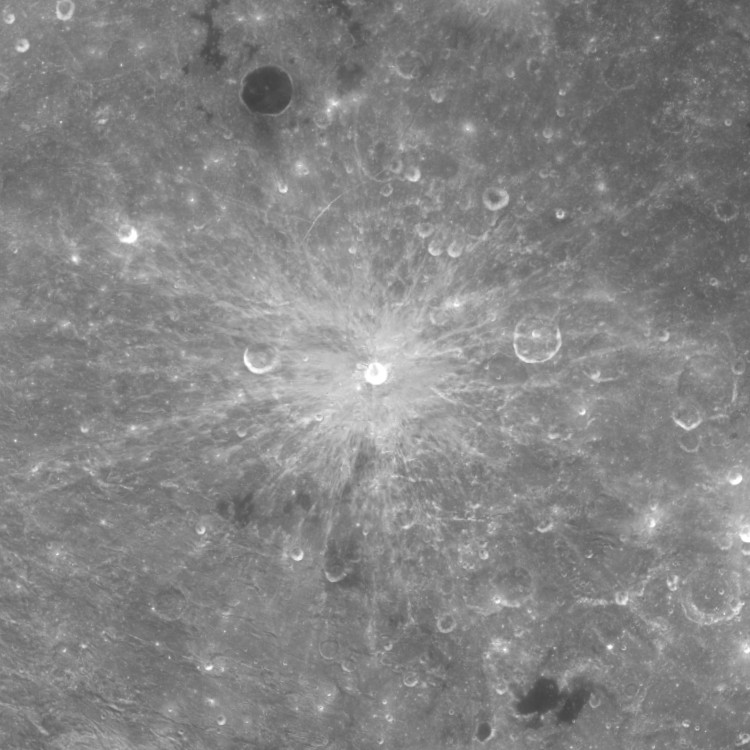
In the early hours of Wednesday morning, an upper stage of a SpaceX Falcon 9 rocket crashed into the Moon in an uncontrolled collision. The rocket had been launched in August 2026 with two lunar landers aboard, but its upper stage was left in a high elliptical orbit after the payload was released. The rocket stage impacted the lunar surface near the Einstein crater at about 5,400 miles per hour, creating a new crater and sending up a plume of dust and debris.
South Korea’s Danuri lunar orbiter captured images of the impact site, showing a darkened area with a bright spot in the center, indicating a newly formed crater, according to Gizmodo. The spacecraft had launched aboard a different Falcon 9 rocket exactly four years earlier and was designed to gather data for future lunar missions. Independent orbital analyst Bill Gray estimated the resulting crater would be between 66 and 98 feet (20 to 30 meters) wide based on the rocket’s mass and speed.
NASA also planned to observe the crash site with its Lunar Reconnaissance Orbiter, and additional images are expected in the coming days. The European Southern Observatory’s Very Large Telescope in Chile detected a sodium and lithium plume from the impact that lasted for several minutes, according to a report from The Conversation. The collision occurred near the Moon’s terminator line, where sunlight meets shadow, making it difficult to observe from Earth.
This event highlights the growing issue of space debris in orbit and how such objects can impact the lunar surface without causing damage to human infrastructure. The Moon has no atmosphere, so any debris that hits it will strike directly and leave behind traces of ejecta across the surface. Scientists are using this impact to better understand how craters form on the Moon and to study the behavior of the impacting object in lunar environments.
The Jodrell Bank Observatory in Cheshire was among the facilities around the world gathering observations of the collision. SpaceX said that for most missions, it performs controlled de-orbiting of the Falcon 9 second stage to ensure safe re-entry over ocean areas. However, for missions heading to the Moon, such as this one, a controlled de-orbit is not always possible due to mission constraints.
The impact was part of an international campaign to monitor and analyze the effects of artificial space objects on the Moon. With more countries planning long-term lunar missions, the risk of accidental impacts at historically or culturally significant sites is increasing. The Outer Space Treaty outlines that nations are responsible for damage caused by their space objects, including those on the Moon.
Benjamin Fernando of Los Alamos National Laboratory said that this impact could help in future seismic experiments and assessing risks from artificial space debris, The Guardian reported. The event underscores the need for better tracking and management of space junk to protect both Earth and lunar environments.
IMAGE: NASA / Wikimedia Commons (Public domain)