
Consumer prices rose more than expected in October 2026, sending Treasury yields higher and raising the possibility of a larger Federal Reserve interest rate increase in December.
U.S. consumer prices rose more than economists expected in October, increasing pressure on the Federal Reserve to consider another interest rate hike before the end of 2026. The November 10 inflation report showed a 0.4% monthly increase, while several central bank officials warned that persistent price pressures could require stronger action.
The inflation figures sent Treasury yields sharply higher and pushed major U.S. stock indexes lower. Investors also increased their expectations for a possible half-percentage-point interest rate increase at the Federal Reserve’s December 8–9 meeting.
The October Consumer Price Index rose 0.4%, compared with economists’ expectations of 0.3%. Core inflation, which excludes food and energy, increased 0.3%, exceeding forecasts of 0.2%.
The figures suggest that inflation remains difficult to control despite earlier increases in borrowing costs. They also raise questions about how aggressively the Fed should respond without damaging economic growth.
October Inflation Exceeds Economists’ Forecasts
The Bureau of Labor Statistics released its latest Consumer Price Index report on Tuesday, November 10. The data showed that overall consumer prices increased 0.4% in October after a larger 0.6% increase in September.
Shelter costs rose 0.3%, accounting for more than 30% of the monthly increase in the overall index. Food prices climbed 0.5%, while energy costs increased 0.7%.
Prices for groceries increased 0.4%, and restaurant meals became 0.5% more expensive. Gasoline prices rose 1.0%, adding to the cost pressures facing households.
Core consumer prices increased 0.3% for the third consecutive month. This measure receives particular attention because it removes the often unpredictable movements in food and energy prices.
The report also showed increases in medical care, recreation, education, motor vehicle insurance and household furnishings. Transportation services rose 0.8%, indicating that price pressures were not confined to one part of the economy.
Some categories provided relief. Used vehicle prices declined 1.2%, while communication costs also decreased.
One important limitation affects the latest inflation report. Because the government did not collect certain consumer price data during the October 2025 funding lapse, the Bureau of Labor Statistics could not publish standard 12-month inflation comparisons for many categories in October 2026.
As a result, the report does not establish a new overall annual inflation rate for October. The monthly figures still provide important information about current price pressures.
Waller Raises Possibility of a Larger Rate Increase
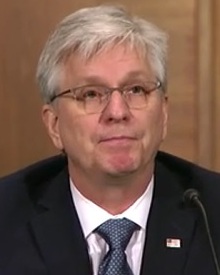
Federal Reserve Governor Christopher Waller delivered one of the strongest warnings about inflation on Tuesday. Speaking at a conference in London, Waller said recent data indicated that monetary policy might need to become more restrictive.
Waller had already supported considering a quarter-percentage-point increase at the December meeting. However, he said persistently strong inflation could justify a larger move.
He specifically identified a monthly core CPI increase of around 0.3% or higher as a reason to consider a 50-basis-point increase. The newly released inflation report met that threshold.
Waller argued that responding too cautiously could undermine public confidence in the Fed’s commitment to price stability. He emphasized that inflation remained well above the central bank’s 2% target.
The governor also pointed to the broadening of price increases across goods and services. He said the problem could not be explained solely by a few volatile categories.
A 50-basis-point increase would raise the federal funds target range from 3.75%–4.00% to 4.25%–4.50%. Such an increase would be twice the size of a conventional quarter-point adjustment.
Waller’s remarks did not represent an official Federal Reserve decision. Interest rate changes require approval by the Federal Open Market Committee, which includes other governors and regional Federal Reserve Bank presidents.
Lorie Logan Calls for Additional Tightening
Dallas Federal Reserve President Lorie Logan also supported further interest rate increases during remarks at an energy conference in Houston. She said the central bank needed to take additional steps to bring inflation under control.
Logan called for at least two more quarter-percentage-point increases, totaling 50 basis points. She also suggested that policymakers might need to act more quickly if inflation continued spreading throughout the economy.
Her remarks followed several years of inflation exceeding the Fed’s target. Logan warned that allowing elevated price pressures to persist could make restoring stability more difficult.
The Dallas Fed president emphasized the importance of maintaining confidence in the central bank’s ability to control inflation. She also acknowledged that policymakers must evaluate the effects of previous rate increases.
The Fed held its benchmark interest rate steady at 3.75%–4.00% during its October 27–28 meeting. Two officials dissented from that decision, preferring an immediate quarter-point increase.
That disagreement illustrated the growing debate over how quickly the Fed should tighten monetary policy. The November inflation report has intensified the discussion ahead of December.
Treasury Yields Surge as Stocks Decline
Financial markets reacted quickly to the inflation figures and comments from Federal Reserve officials. Investors sold U.S. Treasury securities, pushing government bond yields higher.
The benchmark 10-year Treasury yield climbed about 12.6 basis points to 4.988%, approaching the closely watched 5% level. The two-year yield increased approximately 18.4 basis points to 4.731%, its largest daily advance since April 2025.
Higher Treasury yields can influence mortgage rates, business financing costs and borrowing expenses across the economy. They also reduce the relative appeal of some stocks by increasing the returns available from government bonds.
Wall Street finished Tuesday lower. The Dow Jones Industrial Average declined 0.3%, while the S&P 500 dropped 0.4%.
The Nasdaq Composite fell 0.7%, reflecting pressure on technology shares. Nvidia was among the stocks facing selling pressure amid separate concerns about an internal investigation.
Oil prices also declined as investors reassessed geopolitical risks. Brent crude settled at $91.49 per barrel, while U.S. West Texas Intermediate crude finished at $86.04.
The combination of falling stock prices and rising bond yields demonstrated how strongly investors were responding to the possibility of additional monetary tightening.
Bowman Warns That Higher Rates Carry Risks
Federal Reserve Vice Chair for Supervision Michelle Bowman took a more cautious approach in remarks delivered Tuesday in Washington. She acknowledged that inflation remained elevated but emphasized the economic risks associated with tighter financial conditions.
Bowman said recent data suggested core Personal Consumption Expenditures inflation might rise to approximately 3.3% in October. That would remain substantially above the Fed’s 2% target.
She identified energy costs, tariffs and strong investment in artificial intelligence infrastructure as contributors to inflation. According to Bowman, these pressures could ease as supply conditions improve and geopolitical tensions diminish.
However, she also warned that higher borrowing costs and falling stock prices could weaken economic activity. Housing and small businesses could be particularly vulnerable to further increases in interest rates.
Bowman did not endorse an immediate rate hike in her November 10 remarks. Instead, she emphasized the importance of evaluating incoming economic information and monitoring financial market conditions.
Her position contrasts with the more forceful calls for tightening from Waller and Logan. The differences reflect competing concerns about inflation, employment and economic growth.
December Fed Meeting Becomes Critical
The Federal Reserve’s next policy meeting is scheduled for December 8–9. Officials will evaluate additional inflation and employment data before deciding whether to raise interest rates.
The central bank primarily measures progress toward its 2% inflation target using the Personal Consumption Expenditures Price Index rather than the Consumer Price Index. Nevertheless, the CPI report provides an important early indication of underlying inflation trends.
Investors have increased their expectations for a December rate increase, although the size of any adjustment remains uncertain. Market pricing after Tuesday’s report briefly suggested approximately a 15% probability of a half-point hike.
A smaller quarter-point increase remains another possibility. Policymakers could also decide to leave rates unchanged if economic conditions shift before the meeting.
Higher interest rates generally make borrowing more expensive, which can reduce consumer spending and business investment. That slowdown can help control inflation but may also weaken hiring and economic growth.
For American households, the latest report underscores the continued pressure from everyday expenses. Food, housing, insurance and transportation costs remain important concerns even as some prices stabilize.
The Fed will receive additional economic information before its December decision, including the November employment report and October PCE inflation figures. Those releases could influence whether officials choose a conventional quarter-point increase or consider the larger adjustment now being discussed.
IMAGE: Dr. Christopher J. Waller, Nominee to be a Member of the Board of Governors of the Federal Reserve System. Photo: U.S. Senate Committee on Banking, Housing, and Urban Affairs / Wikimedia, taken 2020-02-13, Public domain