
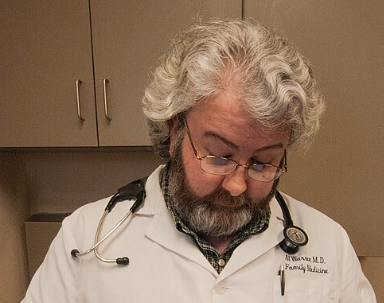
A proposed approach would allow artificial intelligence systems to preserve uncertain diagnostic possibilities for later review, although its clinical effectiveness remains unproven.
A researcher has proposed a new approach to clinical artificial intelligence that could prevent potentially important diagnostic possibilities from being discarded too early. Known as strategic dormancy, the method would allow computer systems to retain uncertain medical explanations without actively pursuing them. These possibilities could then be reconsidered when additional symptoms, test results or treatment responses become available.
The proposal was presented by Florian Odi Stummer in a perspective article published in the journal Data Research and Applications in November 2026. Stummer is affiliated with the Institute of General Practice and Family Medicine at University Clinics Halle in Germany and Apsley Business School in the United Kingdom. His analysis examines how decisions about retaining medical information could influence the reliability of future clinical AI systems.
The Problem With Premature Diagnostic Closure
Doctors frequently begin their assessments by considering several possible explanations for a patient’s symptoms. As additional information becomes available, they may eliminate certain possibilities while investigating others more closely. This process, known as differential diagnosis, allows medical professionals to revise their assessments when circumstances change.
Some artificial intelligence reasoning systems use a technique called pruning to reduce computational demands. This involves removing possibilities that receive low confidence scores or fail to meet certain selection criteria. Although pruning can improve computational efficiency, permanently removing an alternative could make it unavailable when subsequent evidence becomes relevant.
In medicine, prematurely settling on an explanation is known as premature diagnostic closure. Stummer argues that the design of clinical AI systems should account for uncertainty rather than treating every low-ranked possibility as unnecessary information.
How Strategic Dormancy Would Work
Strategic dormancy would preserve selected diagnostic possibilities in an inactive state instead of permanently deleting them. The system could concentrate its immediate resources on the most promising explanations while maintaining access to alternatives. Relevant new information could trigger a review of previously inactive possibilities.
Consider a hypothetical patient experiencing persistent fatigue. An AI system might initially prioritize common explanations while assigning lower confidence to a less common medical condition. If subsequent laboratory results support that alternative explanation, a system incorporating strategic dormancy could reconsider it.
The objective is not to investigate every conceivable diagnosis indefinitely. Instead, the proposed approach would establish criteria for determining which alternatives are worth preserving and under what circumstances they should be reconsidered.
Researchers Examine Synthetic Medical Records
Stummer analyzed 11,475 artificial patient records containing 309 different diagnostic conditions. The records were generated using Synthea, an open-source software platform that creates realistic but fictional medical histories. The software enables researchers to investigate healthcare information systems without accessing confidential patient records.
Using a frequency-based pruning strategy, the analysis removed conditions appearing in fewer than one percent of the simulated patient population. This eliminated 145 diagnostic conditions, representing 46.9 percent of the diagnostic vocabulary. Information associated with 2,796 simulated patients was affected.
Among the discarded conditions, 34 were associated with ongoing medication treatment. Another 116 appeared alongside more frequently occurring conditions and could therefore provide useful medical context. Some conditions belonged to both categories.
These findings demonstrate that uncommon conditions are not necessarily irrelevant. Removing information based solely on how frequently a condition appears can also eliminate details that may be important when interpreting a patient’s medical history.
Alternative Strategies Preserve More Information
The analysis examined whether different selection methods could retain medically relevant information without preserving every available condition. One method prioritized discarded conditions according to how frequently they were associated with prescribed medication. Retaining the 50 highest-ranked conditions preserved all 34 conditions associated with active medication treatment.
A second method used rules based on medication treatment and associations between uncommon and common diagnoses. This approach retained all 34 treatment-related conditions and all 116 conditions providing additional diagnostic context.
Under the original frequency-based strategy, 2,796 simulated patient records experienced information loss. The rule-based approach reduced that number to 30. However, it also retained 121 of the 145 conditions that would otherwise have been discarded.
The comparison illustrates the difficulty of balancing information preservation against computational efficiency. It does not establish whether an AI system using these rules would make more accurate diagnoses.
Software Error Undermined Earlier Findings
An important part of the published article addresses an error in an earlier evaluation of a reasoning architecture called Enhanced Mycelium of Thought, or EMoT. The system was designed to preserve inactive reasoning pathways and reactivate them when appropriate.
An earlier experiment appeared to show that disabling strategic dormancy substantially reduced the quality of the system’s responses. Subsequent investigation revealed that a software defect had removed every reasoning node that used the language model. As a result, the evaluation had assessed empty responses rather than functioning reasoning processes.
Further testing established that strategic dormancy had never activated during the original experiment. The earlier performance claim was consequently withdrawn. This correction means the experiment cannot be used as evidence that strategic dormancy improves reasoning quality.
Potential Benefits and Remaining Risks
The proposed approach could be particularly relevant to patients receiving long-term treatment for multiple medical conditions. Their health records may accumulate information over months or years, allowing previously overlooked details to become more significant. Retaining selected alternatives could also help reviewers understand which possibilities an AI system considered.
However, preserving too many alternatives could create additional problems. Clinicians might face unnecessary information, while poorly designed reactivation rules could repeatedly revive incorrect diagnostic possibilities. More comprehensive information retention does not automatically produce better medical decisions.
The technique may also offer limited benefits for straightforward clinical tasks. For example, coding a fracture already confirmed through medical imaging may require fewer alternative explanations than evaluating persistent symptoms with an uncertain cause.
Further Clinical Research Is Necessary
Stummer proposes testing strategic dormancy through simulations in which medical evidence becomes available gradually. Researchers could then evaluate whether retained alternatives help systems identify correct diagnoses without introducing unnecessary or incorrect revisions.
Additional research would need to examine real medical records and different healthcare systems. The findings from fictional patient histories may not reflect the complexities, inconsistencies and missing information commonly encountered in clinical practice.
No actual patients participated in the analysis, and no clinical AI system implementing the proposed approach was deployed in a healthcare environment. Strategic dormancy remains a research hypothesis, with its effects on diagnostic accuracy, patient safety and treatment outcomes yet to be established.
IMAGE: Source 20130306-OC-RBN-3932 Author U.S. Department of Agriculture CC0