
Artificial intelligence is changing how doctors approach diagnosis and treatment. These tools are being used in cancer care, including lung and breast cancers, to help identify disease earlier and guide therapy. The focus has shifted from just proving that AI works to showing real benefits for patients, clinicians, and health systems. Studies now look at how AI can improve survival rates, quality of life, and even reduce costs.
In lung and breast cancer care, AI tools are being integrated into routine practice. These systems help with screening, diagnosis, and treatment planning. They combine different types of data like imaging, pathology, and genetic information to give a more complete picture. Predictive models are also helping doctors anticipate how patients might respond to certain treatments or what side effects they could experience. The goal is to make care more precise and efficient.
AI tools are not limited to cancer care. In colon cancer diagnosis, artificial intelligence has made significant progress in recent years. Algorithms can now detect polyps during colonoscopy and distinguish between benign and malignant tissue better than traditional methods. These systems use deep learning techniques that analyze large amounts of data to find patterns humans might miss. The technology helps make diagnosis faster and more accurate.
Dental care is another area where AI is making a difference. Computer vision systems process x-rays and detect early signs of decay or bone loss. These tools can spot subtle changes that may not be visible to the human eye. By analyzing thousands of images, they learn to recognize patterns associated with dental problems. This leads to earlier intervention and better patient outcomes.
In emergency settings, AI is outperforming doctors in some cases. Systems have been shown to diagnose conditions more accurately than physicians, even identifying pancreatic cancer years before it would normally be detected. These tools can analyze medical scans and flag potential issues long before symptoms appear. This early detection could lead to better treatment options and improved survival rates.
AI is also being used in primary care settings, especially in areas with limited access to specialists. A tool called AI Consult reviews clinical notes and alerts healthcare workers to possible concerns. It uses prompts like green, yellow, and red to guide decision-making. The system helps clinicians remember protocols and stay up-to-date with guidelines. While it doesn’t replace doctors, it acts as a second opinion that can catch errors or suggest improvements.
The use of AI in health care is growing rapidly. Programs are being developed for people without technical backgrounds, focusing on how to apply these tools effectively in clinical environments. Training includes learning about machine learning, natural language processing, and computer vision. These skills help healthcare providers understand how AI can be used responsibly and safely.
Despite the promise of AI, challenges remain. Many systems are still being tested in controlled settings and haven’t been fully integrated into real-world practice. Data quality and model generalizability are issues that need to be addressed. There is also a need for more validation across different hospitals and patient populations. Ensuring that AI tools work well in various clinical contexts is essential for widespread adoption.
The future of AI in medicine looks promising. As systems become more advanced, they will likely play an even larger role in diagnosis and treatment planning. These technologies aim to support rather than replace clinicians. They provide additional insights that can improve decision-making and patient care. With continued research and development, AI has the potential to transform health care delivery globally.
Healthcare professionals are beginning to see how these tools can enhance their daily work. From early detection of diseases to improving workflow efficiency, AI is proving useful in many areas. The key is to ensure that these systems are reliable, transparent, and aligned with patient needs. As more studies show positive results, the integration of AI into clinical practice will likely continue to expand.
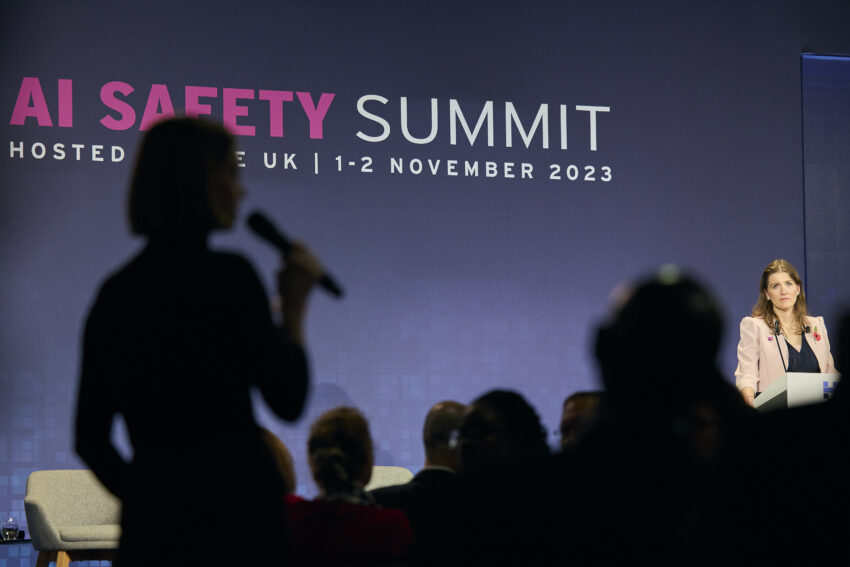
IMAGE: 01/10/2023. London, United Kingdom. Secretary of State for Science, Innovation and Technology Michelle Donelan attends Day one of the UK AI Summit at Bletchley Park. Picture by Marcel Grabowski / UK Government/Identity. Photo: UK Government / Wikimedia, taken 2023-11-01, CC BY 2.0
This article passed automated originality and source-verification checks before publishing.