
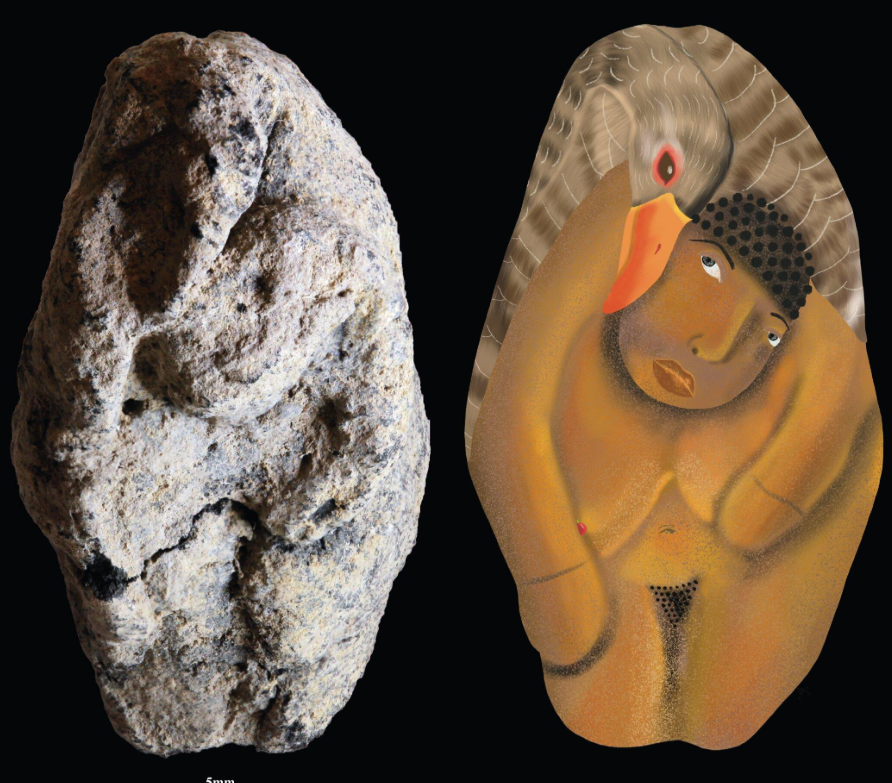
Ancient fingerprints on miniature sculptures discovered in Israel suggest that Natufian hunter-gatherers taught children artistic skills thousands of years before farming and pottery became widespread.
Children living in the Middle East about 15,000 years ago helped adults create miniature clay sculptures, according to new archaeological research published November 11, 2026. Fingerprints preserved on the ancient objects provide rare physical evidence that young people participated in artistic activities long before agriculture transformed human settlements.
Researchers identified 154 clay artifacts from three archaeological sites in present-day Israel. The collection includes small representations of birds, gazelles and human figures, some carrying fingerprints attributed to both adults and children.
The findings were published in the scientific journal PLOS One by archaeologist Laurent Davin of the Hebrew University of Jerusalem and an international research team. Their work offers new evidence about how prehistoric communities created symbolic objects and shared knowledge between generations.
Ancient Fingerprints Reveal Children’s Participation
The most revealing discovery involved a small clay sculpture representing a human body. Researchers identified an adult fingerprint on the figure’s back that had been partly covered by a child’s fingerprint while the clay was still soft.
The overlapping impressions suggest that an adult and child handled the same object during its creation. Scientists believe this may represent a moment of hands-on instruction, with an older person demonstrating a technique while a child participated.
The sculpture dates to approximately 15,000 years ago and came from Eynan-Mallaha, an archaeological settlement in the Upper Jordan Valley. Its preserved fingerprints offer an unusually direct connection to the people who shaped it.
The researchers examined fingerprints by studying the spacing between their ridges. These measurements can provide clues about the age and possible sex of the people who left them, although they cannot establish individual identities with certainty.
According to Science News, approximately 60 clay pieces preserved fingerprints or similar impressions. The analysis suggested that women and children accounted for many of the identifiable marks, with some attributed to children younger than 10.
Fingerprints associated with adult men were less common among the examined artifacts. However, researchers cautioned that interpreting prehistoric fingerprints involves uncertainty because ridge measurements can overlap between different age groups.
The evidence indicates that children were not simply watching adults make objects. At least some appear to have handled and shaped the clay themselves, participating in activities that may have combined artistic expression, social interaction and learning.
More Than 150 Clay Artifacts Found in Israel
The research involved clay objects recovered from three sites associated with the Natufian culture, which existed in the Levant between approximately 15,000 and 11,650 years ago.
Archaeologists studied material collected during earlier excavations, examining thousands of clay fragments and lumps for signs of deliberate shaping. Their analysis identified 154 figurative artifacts, including about 15 recognizable sculptures.
The figures depict animals and humans, sometimes combining recognizable features in unusual ways. Among the discoveries were representations of waterfowl, birds of prey and a possible interaction between a woman and a goose.
Other objects include small mammals, with one fragment representing the head of a gazelle. Its horns may originally have been made from twigs or other perishable materials that disappeared over thousands of years.
Some of the sculptures were decorated with reddish or orange coloring. One gazelle head showed evidence of a coating made from liquid clay mixed with ochre, a naturally occurring mineral pigment.
The coloring appears to have been used to emphasize features such as the animal’s eyes and fur patterns. This suggests that the people making the objects paid attention to recognizable details rather than simply producing rough clay shapes.
Many sculptures measured less than two centimeters across. Their small size and limited evidence of wear suggest they may not have been objects intended for extensive handling over many years.
Researchers have not established exactly how the figurines were used. They may have helped communicate stories, represent animals important to the community or express beliefs that archaeologists cannot directly recover from the surviving objects.
Natufian Communities Lived Before Agriculture
The people responsible for these sculptures belonged to the Natufian culture, which occupied parts of the eastern Mediterranean during the final stages of the last Ice Age.
Natufian communities were hunter-gatherers who relied on wild plants, animals and other natural resources. Unlike earlier groups that frequently moved between temporary camps, some Natufian populations established settlements occupied for extended periods.
Their settlements included stone structures, food-processing equipment and burial areas. These discoveries indicate increasingly complex community life before the widespread adoption of farming in the region.
The transition toward more permanent settlements was an important development in human history. Living together for longer periods created opportunities for shared activities, specialized knowledge and new ways of expressing group identity.
Clay was one material available to these communities. Unlike stone or bone, soft clay could be pressed, pinched and reshaped without elaborate equipment.
The newly analyzed figurines show that people were exploring its artistic possibilities well before fired pottery became common in Southwest Asia. Their work challenges the assumption that elaborate clay traditions developed primarily alongside agricultural societies.
Researchers emphasize that these sculptures were not necessarily pottery in the familiar sense. They were small symbolic objects rather than containers used to store food, cook meals or transport liquids.
Art May Have Helped Pass Knowledge Between Generations
The preserved fingerprints raise questions about how children learned important skills in prehistoric communities. Researchers believe artistic activities may have created opportunities for younger people to observe adults and practice techniques themselves.
Clay is particularly useful for this type of learning because it responds immediately to touch. A child can imitate an adult’s movements, change a shape and experiment without needing complex tools.
The overlapping fingerprints on the human figurine provide possible evidence of such interaction. However, they do not prove that formal teaching occurred or establish exactly what the adult and child were doing together.
Davin has suggested that the objects may also have helped transmit stories and cultural knowledge. Learning to represent a bird or gazelle could have introduced children to ideas about animals, community traditions and the natural environment.
Steven Dorland, an archaeologist at Grand Valley State University who studies craft learning, told Science News that the findings demonstrate the value of examining children’s contributions to ancient material culture.
Archaeological interpretations have often concentrated on activities associated with adults, particularly hunting, toolmaking and construction. The Natufian fingerprints provide another perspective by preserving evidence of younger community members.
The findings also suggest that creating symbolic objects may have been a shared social activity rather than work performed exclusively by skilled specialists.
New Findings Build on Earlier Clay Discoveries
The November study follows related research published earlier in 2026 that examined prehistoric clay ornaments from Natufian settlements.
That investigation identified 142 beads and pendants from five archaeological sites in Israel. Some were decorated with red ochre, while others preserved fingerprints attributed to children, adolescents and adults.
Published in Science Advances, the earlier research demonstrated that Natufian communities were using clay to create personal decorations long before pottery production became widespread.
The new study expands that understanding by examining sculptures representing living creatures rather than mainly objects intended for personal adornment.
Together, the discoveries suggest that clay had several cultural purposes before farming became established. It could be used to create ornaments, represent familiar animals and produce objects that may have carried symbolic meaning.
The researchers still cannot determine whether these sculptures served ceremonial, educational or recreational purposes. Their meaning must be interpreted from physical evidence because no written records survive from Natufian communities.
What the artifacts preserve is the direct impression of human hands, including those of children. The November 11 study establishes that young people participated in making some of Southwest Asia’s earliest known clay figurines, thousands of years before agricultural villages became widespread.
IMAGE: Laurent Davin / CC BY 4.0 Cropped from original