
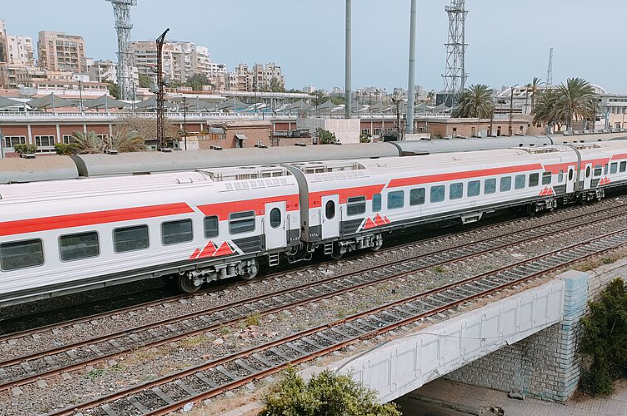
Two passenger trains collided near Al-Ayyat in Egypt’s Giza province on November 8, 2026. President Abdel Fattah el-Sisi has ordered an investigation as emergency crews treat the injured and authorities examine what caused the crash.
Seven people were killed and 125 others injured when two passenger trains collided south of Cairo on Sunday, November 8, 2026. The crash occurred near Al-Ayyat in Egypt’s Giza province, approximately 52 kilometers (32 miles) from the capital, after one train struck the rear of another that had stopped on the same track.
Egyptian authorities launched an investigation into the collision, which caused several train carriages to derail and left passengers trapped in the wreckage. President Abdel Fattah el-Sisi ordered a prompt inquiry and called for those responsible for any negligence to be held accountable.
The Egyptian Ministry of Health confirmed the updated casualty figures Sunday evening. At least 71 injured passengers had been discharged from hospitals after receiving treatment, while dozens of others remained under medical observation.
How the Train Collision Happened
The crash occurred between Kafr Ammar and Al-Raqqa railway stations in the Al-Ayyat district, an area southwest of Cairo served by heavily used passenger routes.
According to Egyptian National Railways, train No. 134 was traveling from Giza toward Fayoum when it struck the rear of train No. 2010, which was operating between Cairo and Aswan.
The Cairo-to-Aswan train had stopped on the same track when the collision occurred. Initial examinations indicated that the front of the Fayoum-bound train hit the last carriage of the stationary train.
The impact damaged the rear of the stopped train and caused several carriages to leave the tracks. Some sections of the wreckage were left close to the Cairo-Aswan agricultural road, complicating access for emergency workers.
Investigators are examining why both trains were occupying the same section of track and what circumstances caused the first train to stop. Authorities have not yet established whether signaling problems, human error, mechanical failure, or another factor contributed to the accident.
The Egyptian Public Prosecution has ordered a technical investigation into the collision. Officials are examining the damaged carriages, railway infrastructure, operating procedures, and available evidence to determine exactly what happened.
Residents Rush to Help Trapped Passengers
People living near the railway were among the first to reach the accident scene. Witnesses described hearing the collision before rushing toward the damaged carriages to help passengers escape.
Ayman Gamal, a resident of Kafr Girza in the Al-Ayyat district, told the Associated Press that villagers quickly began pulling survivors from the wreckage and contacting emergency services.
Some passengers were trapped inside badly damaged carriages. Gamal said several people were already dead when rescuers managed to reach them.
Emergency workers arrived with ambulances and specialized equipment as local residents continued helping survivors. The damaged coaches required careful rescue operations because passengers were trapped among twisted metal and debris.
Egyptian authorities dispatched cranes and railway recovery equipment to the scene. Workers were assigned to remove damaged carriages, clear the tracks, and prepare the line for the eventual restoration of passenger services.
The emergency response continued as investigators began examining the wreckage. Rescue teams also worked to ensure that no additional passengers remained trapped inside the damaged sections of the trains.
Health Ministry Confirms 125 Injuries
Egypt’s Ministry of Health and Population reported that 72 ambulances participated in the emergency response, transporting injured passengers to hospitals in Giza and neighboring Beni Suef province.
The ministry’s updated figures showed that seven people had died and 125 others had been injured. Earlier reports had placed the number of deaths at four and injuries at 88 before the totals increased as more information became available.
Al-Wasta Central Hospital received 87 casualties, including three people who died. El-Ayyat Central Hospital treated 34 injured passengers, while Atfih Central Hospital received 11 cases, including four fatalities.
The reported injuries included broken bones, cuts, bruises, and injuries affecting the head, chest, pelvis, and spine. Medical teams conducted examinations and imaging studies to determine the severity of patients’ conditions.
By Sunday evening, 71 injured passengers had been discharged after their conditions improved. Another 43 remained hospitalized for monitoring, while 11 patients had been transferred to specialist medical facilities for further treatment.
Health and Population Minister Khaled Abdel-Ghaffar directed medical facilities in the affected governorates to maintain emergency readiness. His deputy, Amr Kandil, was instructed to visit hospitals and review the treatment being provided.
The ministry said healthcare teams would continue monitoring patients and providing necessary medical assistance. Authorities also warned that casualty information could change as investigations and hospital assessments continued.
Train Driver Among Those Killed
Egypt’s Public Prosecution confirmed that the driver of the Fayoum-bound train was among the seven people killed. The identities of the other victims were not immediately released in the reporting reviewed.
Prosecutors sent investigative teams to the crash site and hospitals to interview witnesses, examine evidence, and establish the circumstances surrounding the deaths and injuries.
The investigation is being led by the chief prosecutor of the South Giza Prosecution Office. Other prosecutors were assigned to visit hospitals in Atfih, El-Ayyat, and Al-Wasta to interview injured passengers.
A specialized technical committee will study the railway tracks and damaged train carriages. Its responsibilities include identifying possible failures in operating procedures and determining whether established safety requirements were followed.
The inquiry may also examine communications between railway personnel and the operation of signaling systems before the collision. Officials have not announced preliminary findings establishing fault.
President el-Sisi expressed condolences to the families of those killed and wished the injured a speedy recovery. He directed government agencies to ensure medical assistance and investigate the circumstances without delay.
Prime Minister Mostafa Madbouly also contacted senior ministers to coordinate medical care, assistance for affected families, and recovery operations. The Transport Ministry was asked to oversee efforts to restore normal railway services.
Rail Services Disrupted After Crash
The collision disrupted railway operations in the affected section of Giza province. Authorities arranged alternative transportation while recovery teams worked to clear the damaged trains from the tracks.
The Ministry of Transport dispatched buses to carry passengers between Al-Wasta and El-Ayyat stations. Additional buses were arranged between El-Moneib and El-Ayyat to help maintain transportation links.
Railway officials said the priority was securing the accident scene and removing the damaged equipment before services could resume safely. The investigation also required access to the wreckage and surrounding infrastructure.
Egypt’s Financial Regulatory Authority announced that compensation procedures would be expedited for affected families. The Railway and Metro Accident Insurance Pool was instructed to increase compensation for deaths and permanent total disability from 30,000 Egyptian pounds to 50,000 pounds.
Officials said payments would be processed once the required documentation was submitted. Additional assistance may depend on individual circumstances and the results of the ongoing legal proceedings.
Egypt’s Troubled Railway Safety Record
The crash has renewed attention to safety problems affecting Egypt’s extensive railway network. The country’s trains transport large numbers of passengers between Cairo, the Nile Delta, Upper Egypt, and other regions.
Al-Ayyat has experienced serious railway accidents before. In 2002, a fire aboard an overcrowded passenger train traveling south from Cairo killed more than 370 people in what remains Egypt’s deadliest railway disaster.
Another collision occurred in the district in October 2009, killing dozens of passengers. More recently, a September 10, 2026, collision involving two freight trains at Al-Balyada station injured a driver and his assistant.
Egypt has undertaken major railway modernization projects intended to replace aging equipment, improve signaling systems, and increase transportation capacity. Officials have reported investments totaling hundreds of billions of Egyptian pounds.
Despite those efforts, accidents continue to occur. Figures from Egypt’s Central Agency for Public Mobilization and Statistics recorded 170 train accidents in 2025, down from 220 in 2024.
The decrease suggests fewer recorded accidents during that period, but Sunday’s collision shows that serious safety risks remain. Investigators will need to determine whether the latest crash involved problems previously identified elsewhere in the network.
Investigation Continues as Families Await Answers
The Public Prosecution’s investigation will determine the technical and operational circumstances surrounding the collision. Authorities have not provided a timetable for completing their inquiry.
The recovery operation also remains important for restoring transportation along the affected route. Railway officials must remove the wreckage and assess the condition of tracks and associated equipment before normal service can resume.
Families of those killed and injured are awaiting further information about the crash and the steps authorities will take. Government agencies have promised medical support, compensation procedures, and accountability if negligence is established.
The immediate focus remains on treating injured passengers and establishing why the Fayoum-bound train struck the stationary Aswan service. The findings of the technical investigation will determine whether the collision leads to additional safety measures or legal action.
IMAGE: Source Own work Author Abdelrhman 1990 CC4