
Southeastern Conference leaders will meet on December 3 to consider terminating LSU’s membership following a legal battle over the eligibility of former professional basketball player RJ Luis Jr.
The Southeastern Conference has scheduled a special meeting for December 3, 2026, to consider removing Louisiana State University from the conference. The announcement followed a federal court filing on Monday, November 23, outlining the league’s escalating dispute with LSU over the eligibility of former professional basketball player RJ Luis Jr. The meeting places the future of one of the SEC’s founding members in question.
Although expulsion is not certain, the conference has indicated that LSU’s recent decision to stop playing Luis will not prevent its leadership from considering termination of the university’s membership.
SEC Escalates Legal Battle With LSU
The dispute centers on the conference’s rules governing college athletes who have previously entered professional sports.
SEC Commissioner Greg Sankey formally notified university presidents and chancellors of the December 3 meeting. Conference leaders will consider whether LSU should remain a member following several disputes involving its football and men’s basketball programs.
According to Field Level Media, in a report published by Reuters, terminating a university’s membership requires support from two-thirds of the SEC’s 16 university presidents and chancellors.
The conference argues that LSU has repeatedly challenged policies that its member institutions previously agreed to follow. Its federal lawsuit seeks to protect the league’s authority to establish and enforce its own membership requirements.
In a statement released Monday, the SEC emphasized its right to maintain standards for member universities and require appropriate institutional oversight of athletic programs.
The conference has also questioned whether LSU’s recent changes in leadership have affected its ability to comply consistently with those requirements.
These assertions represent the SEC’s position in an ongoing legal dispute, rather than findings of wrongdoing by a court.
RJ Luis Jr. at the Center of the Dispute
Luis was named the Big East Player of the Year in 2025 while playing for St. John’s University. He subsequently entered the NBA draft but was not selected.
He signed a two-way contract with the Utah Jazz and later an Exhibit 10 contract involving the Boston Celtics organization. However, Luis never appeared in an NBA regular-season game.
The 23-year-old committed to LSU in May 2026, seeking another opportunity to compete in college basketball.
His eligibility became a subject of legal disagreement after the SEC adopted additional restrictions in August concerning athletes with professional contracts or unresolved participation in professional drafts.
Luis challenged the restrictions in Louisiana courts. His legal representatives argued that he should be allowed to return to college competition.
On November 13, a judge in Baton Rouge issued a preliminary injunction preventing the NCAA and SEC from declaring Luis ineligible or penalizing LSU for allowing him to participate.
The conference indicated that it would comply with the injunction while continuing to dispute his eligibility under its rules.
LSU Reverses Its Decision to Play Luis
LSU added Luis to its basketball roster on November 17. He made his debut the following evening against Louisiana-Monroe.
Luis recorded 11 points and nine rebounds in 15 minutes as LSU defeated Louisiana-Monroe 79-67.
Head coach Will Wade initially indicated that he intended to continue using Luis while the player remained eligible. The appearance, however, prompted renewed objections from conference officials.
On November 19, LSU President Wade Rousse intervened and instructed Wade not to play Luis again.
The Associated Press subsequently reported that Luis had decided to withdraw from participation rather than risk further consequences for his teammates, coaches or the university.
His attorney, Tony Clayton, communicated the player’s decision after discussions about the escalating dispute.
Another member of Luis’ legal team, Elliot Abrams, criticized the conference’s threats against LSU. He argued that the player had become caught in an institutional conflict despite obtaining a favorable court ruling.
Luis has since been removed from LSU’s online basketball roster.
Disagreement Over the Court’s Order
An important question in the dispute concerns what the Louisiana court actually required LSU to do.
The preliminary injunction protected Luis’ ability to participate in college basketball and restricted the conference’s ability to punish LSU for allowing him to play.
However, the SEC maintains that the injunction did not compel LSU to include Luis in its lineup.
The conference argues that LSU voluntarily decided to play him despite knowing the league’s position. It also contends that the university’s subsequent reversal does not resolve broader concerns about compliance.
Attorneys representing Luis previously filed a motion seeking to hold the conference and Sankey in contempt of court.
According to On3, Luis’ legal representatives indicated that they intended to withdraw that motion following his departure from the team. As of Monday, however, it had not been formally dismissed.
The separate federal litigation remains active.
Earlier Football Disputes Add to Tensions
The basketball controversy follows disagreements between LSU and the SEC involving former professional football players.
Earlier this year, LSU explored adding tight end Dae’Quan Wright and defensive lineman Zxavian Harris to its football roster. Both had spent time in NFL training camps.
The players obtained favorable rulings in Louisiana courts concerning their college eligibility. However, LSU ultimately decided against allowing them to compete for its football team.
The earlier disputes prompted the SEC to pursue federal litigation against LSU in Alabama.
Conference officials have also raised concerns about institutional governance following leadership changes at the university involving Louisiana Governor Jeff Landry.
The SEC contends that LSU must demonstrate sufficient independence and control over its athletic programs to meet conference membership requirements.
Whether those concerns establish a legal basis for the conference’s requested relief remains a matter for the courts.
LSU Faces an Uncertain Conference Future
LSU was among the universities that founded the Southeastern Conference in 1933. Its athletic programs have become prominent participants in conference competition, particularly in football, baseball and basketball.
Expulsion could affect conference scheduling, media revenue distributions and opportunities to participate in SEC championships. The precise consequences would depend on the terms of any membership termination and subsequent arrangements.
A negotiated settlement remains possible before the December meeting. LSU could seek to reassure conference leaders about its future compliance with league policies while the parties address their legal disagreements.
The scheduled meeting comes two days before the SEC football championship game on December 5.
For now, LSU remains a member of the Southeastern Conference. Its status beyond December 3 will depend on the decisions of conference leaders and any further developments in the ongoing litigation.
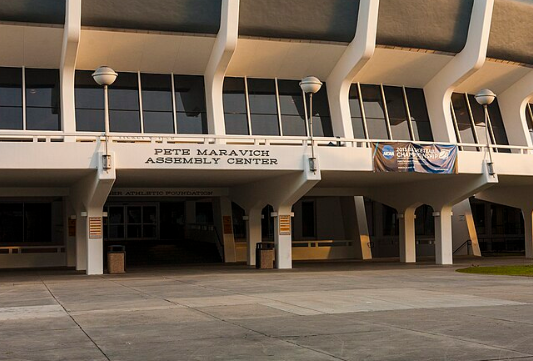
IMAGE: Source Flickr: LSU Basketball PMAC Author Daniel Foster CC2