
Scotland’s narrow Nations League victory over North Macedonia has renewed questions about Pocognoli’s formation and performances ahead of a crucial match against Switzerland.
Scotland head coach Sebastien Pocognoli is facing growing criticism over his tactical approach after a series of inconsistent performances in the UEFA Nations League. Although Scotland defeated North Macedonia 2-1 at Hampden Park on November 13, 2026, the narrow victory did little to settle concerns about the team’s direction. The Belgian manager now faces another important test against Switzerland in St Gallen on November 16.
The victory over North Macedonia gave Pocognoli his first home win since replacing Steve Clarke in August. However, Scotland struggled to turn their attacking opportunities into goals and needed a second-half penalty to secure all three points. Questions about the manager’s preferred formation have become an increasingly prominent part of the discussion surrounding his early tenure.
Scotland Struggles Despite North Macedonia Victory
Scotland entered the North Macedonia match needing a positive result after collecting only four points from their opening four Nations League fixtures. Pocognoli made five changes to his starting lineup, bringing back several experienced players while maintaining a defensive system built around three central defenders.
The home side created several promising opportunities during the first half but failed to convert them. Scott McTominay was denied by goalkeeper Stole Dimitrievski, while Ché Adams also threatened from a set piece. Billy Gilmour then missed an excellent opportunity shortly after halftime, sending his effort over the crossbar.
John McGinn finally broke the deadlock in the 54th minute after Adams helped create an opening. However, Scotland’s advantage lasted just three minutes before Elmin Rastoder headed North Macedonia level from a corner. The quick equalizer exposed another lapse in concentration and increased the pressure on the home side.
Scotland eventually secured victory when goalkeeper Dimitrievski fouled Ben Gannon-Doak inside the penalty area. Following a video assistant referee review, McGinn converted the resulting penalty in the 74th minute. His two goals took his international tally to 24, making him Scotland’s third-highest men’s goalscorer.
The result was especially significant for captain Andy Robertson, who made his 102nd international appearance. That brought him level with Kenny Dalglish’s longstanding Scotland men’s appearance record. However, the milestone came during a performance that left supporters and commentators questioning whether the team was making sufficient progress.
Pocognoli’s Formation Comes Under Pressure
Much of the criticism has focused on Pocognoli’s commitment to using wing-backs and a three-man central defense. The system differs from some of the approaches used under Clarke, requiring players to adjust to unfamiliar responsibilities and attacking patterns.
Critics argue that Scotland sometimes struggles to move the ball quickly enough through midfield. They also question whether playing with one central striker provides sufficient attacking support, particularly against opponents Scotland expects to dominate.
Sky Sports highlighted these concerns following the North Macedonia victory, noting that Scotland’s buildup was often slow despite creating several chances. The analysis also questioned the continued use of wing-backs and a lone striker in a home fixture where supporters had expected a more convincing performance.
Pocognoli has defended the broader process of introducing his methods. Speaking after the victory, he expressed satisfaction with Scotland’s ability to control possession, create opportunities and press opponents into mistakes. However, he acknowledged that the team should have settled the match earlier and needed to improve its concentration after scoring.
The debate reflects a familiar challenge for international managers. Unlike club coaches, national team managers have limited opportunities to work with their players between competitive fixtures. Establishing a new tactical identity can therefore require several international windows, particularly when a squad contains players accustomed to different systems at club level.
Difficult Opening Months Raise Questions
Pocognoli was appointed Scotland manager on August 16, signing an initial two-year contract after Clarke stepped down following the 2026 World Cup. The appointment represented a significant change in direction for the Scottish Football Association, which selected a relatively young coach with experience in Belgium and France.
The 39-year-old arrived with an impressive achievement on his coaching record. He guided Union Saint-Gilloise to the Belgian league championship in 2025, ending the club’s 90-year wait for a domestic title. He subsequently joined Monaco but left the French club in June 2026 after a disappointing finish to the season.
His first four Scotland matches produced one victory, one draw and two defeats. Scotland drew away to Slovenia and defeated North Macedonia in Skopje but suffered home losses against Switzerland and Slovenia. Those results left the national team facing pressure to improve during the November international window.
The 2-1 victory over North Macedonia improved Pocognoli’s record to two wins from five matches. Nevertheless, the performances have raised concerns about whether the squad is adapting quickly enough to his methods. Scotland’s difficulties have been particularly noticeable when opponents defend in numbers and force the team to create openings through sustained possession.
There are also arguments for giving the manager more time. Pocognoli has introduced younger players, adjusted defensive combinations and attempted to establish a more aggressive approach. Changing direction immediately could interrupt that development before the players have fully adapted.
Switzerland Match Provides Another Major Test
Scotland’s final Nations League match of 2026 takes place against Switzerland in St Gallen on November 16. The fixture offers Pocognoli an opportunity to demonstrate progress against a stronger opponent and potentially improve Scotland’s position in Group B1.
Scotland entered the match needing a victory to maintain hopes of securing a promotion play-off place. Even three points would not guarantee that outcome, because Scotland also required Slovenia to drop points against North Macedonia.
The Swiss had already established themselves as the leading team in the group, making the away fixture a demanding assignment. Scotland’s previous home defeat to Switzerland also added significance to the return meeting.
The match carries another potential milestone for Robertson. If selected, the Liverpool defender will make his 103rd appearance and become Scotland’s most-capped male international outright. His experience, alongside that of McGinn and McTominay, could prove important as the team attempts to finish the year positively.
For Pocognoli, the immediate challenge is balancing tactical development with the need for competitive results. Scotland has shown an ability to create chances, but its finishing and defensive concentration have not always matched the opportunities produced.
Young Players Offer Reasons for Optimism
Despite the inconsistent results, Scotland’s developing talent pool offers some encouragement. Pocognoli selected several previously uncapped players for his first international squad and has continued experimenting with personnel during the Nations League campaign.
Young defenders and attacking players have received opportunities alongside established internationals. Luke Graham, for example, started against North Macedonia as part of a revised back three. Ben Gannon-Doak also made an important contribution by winning the penalty that decided the match.
Integrating emerging players remains an important part of Scotland’s longer-term planning. The national team must prepare for future international competitions while maintaining enough experience to compete against established European opponents.
Pocognoli’s initial contract runs for two years, providing a framework for the Scottish Football Association to assess his development of the squad. However, results in competitive matches will remain an important measure of whether his approach is succeeding.
The immediate focus remains on Switzerland, where Scotland faces a difficult final assignment of the calendar year. The result and performance will provide another indication of how successfully Pocognoli’s methods are taking hold.
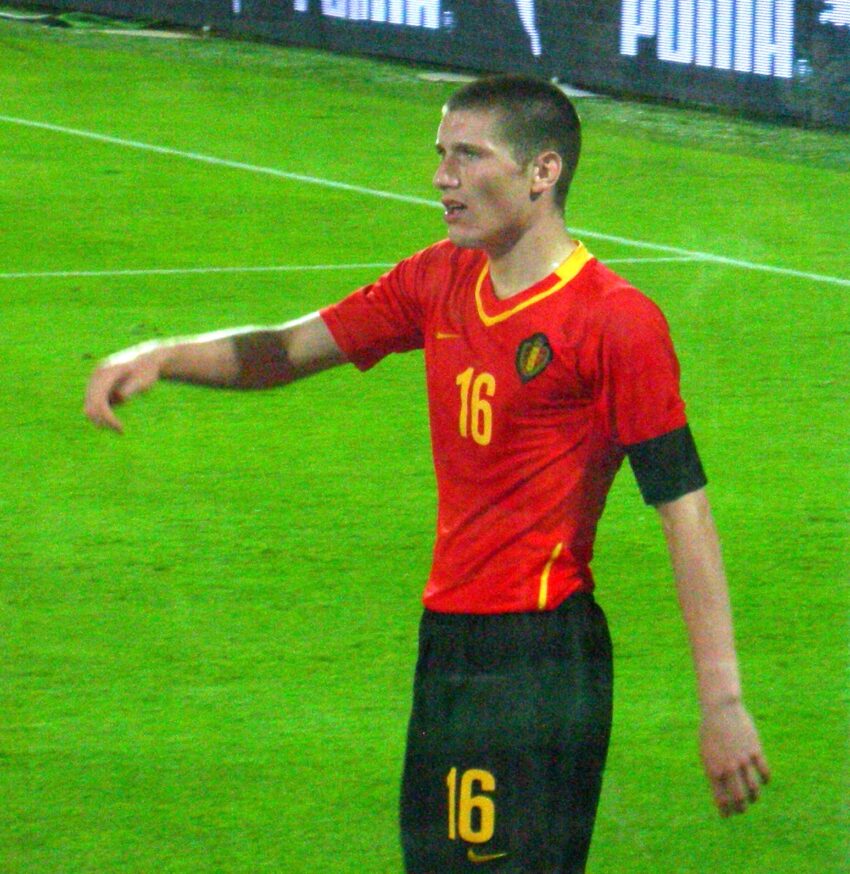
IMAGE: Player photo, made during the friendly football match Italy vs Belgium, played May 30, 2008 in Florence (Italy). Photo: Angelo.romano / Wikimedia, taken 2008-05-30, CC BY-SA 3.0