
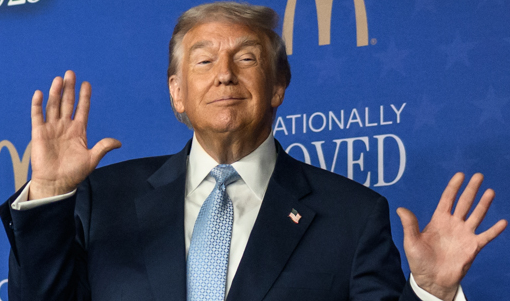
The November 3 elections will determine control of Congress and 36 governorships, while Trump’s comments about emergency powers raise questions about federal authority over state elections.
President Donald Trump faces a major political test in the November 3, 2026, midterm elections, with control of Congress and dozens of state governments at stake. The approaching vote has also renewed debate over presidential authority after Trump entertained the possibility of declaring a national security emergency involving elections.
Republicans currently control both chambers of Congress, but Democrats are seeking to gain enough seats to change that balance. Competitive Senate races in Texas, North Carolina, Georgia, Maine and several other states have drawn national attention, while governors’ contests could reshape political leadership across the country.
The elections arrive amid concerns about the cost of living, immigration, government accountability and the war involving Iran. Questions about election security have also gained attention following Trump’s comments about possible federal intervention.
What Is at Stake in the November 3 Elections?
The 2026 midterms will determine the composition of Congress for the final two years of Trump’s second presidential term.
Voters will choose representatives for all 435 voting seats in the House of Representatives and 35 of the Senate’s 100 seats. Elections for governor will also take place in 36 states.
Republicans hold a 53-47 advantage in the Senate, counting the two independents who caucus with Democrats on the Democratic side. Democrats need a net gain of four seats to secure a Senate majority without relying on the vice president’s tie-breaking vote.
The House is also narrowly divided, with Democrats needing a net gain of four seats to take control.
A Democratic majority in either chamber could change the administration’s legislative priorities and strengthen congressional oversight of federal agencies.
If Republicans retain both chambers, Trump would continue working with congressional leadership from his own party.
The elections will also determine thousands of state legislative seats. Those contests matter for decisions involving education, health care, taxes and future congressional district boundaries.
Important Elections to Watch This November
Several races have become especially important because of their potential influence on congressional control or state leadership.
Major U.S. Senate Elections
- Texas: Republican Ken Paxton faces Democrat James Talarico in an unusually competitive race. Recent polling has shown the candidates separated by only a few percentage points.
- North Carolina: Former Democratic Governor Roy Cooper faces Republican Michael Whatley for the seat being vacated by Senator Thom Tillis.
- Georgia: Democratic Senator Jon Ossoff is seeking another term against Republican Representative Mike Collins.
- Maine: Republican Senator Susan Collins faces Democratic challenger Troy Jackson in a contest drawing substantial national attention.
- Alaska: Republican Senator Dan Sullivan faces former Democratic Representative Mary Peltola, with economic concerns and energy policy prominent in the campaign.
- Michigan: Democrat Abdul El-Sayed is running in the contest to replace retiring Democratic Senator Gary Peters.
- Florida: Republican Senator Ashley Moody faces Democratic state Representative Angie Nixon in a special election.
- Ohio: A special Senate election is among the contests receiving considerable national spending and attention.
Senate campaigns in Iowa, Kansas and New Hampshire are also being closely watched because their results could influence which party controls the chamber.
Major Governor Elections
- Florida: Republican Byron Donalds faces Democrat David Jolly in the race to succeed term-limited Governor Ron DeSantis.
- Texas: Republican Governor Greg Abbott is seeking another term against Democratic state Representative Gina Hinojosa.
- Ohio: Republican Vivek Ramaswamy faces Democrat Amy Acton in an open-seat contest.
- Arizona: Voters will decide whether to retain Democratic leadership or elect a Republican governor.
- Michigan: An open governor’s race will determine who succeeds term-limited Democratic Governor Gretchen Whitmer.
- Georgia: Voters will choose a successor to Republican Governor Brian Kemp, who cannot seek another consecutive term.
- Wisconsin: An open-seat race will determine who succeeds Democratic Governor Tony Evers.
These contests will affect state budgets, education policy, transportation, public safety and other areas that remain largely under state control.
House races in states including California, New York, Pennsylvania, North Carolina and Maine will also help determine which party holds the 218 seats needed for a majority.
Trump’s Emergency Declaration Comments Raise Questions
The election debate intensified after Trump responded to a suggestion that he could declare a national security emergency to impose new voting requirements.
During an August interview, conservative commentator Wayne Allyn Root suggested that an emergency declaration could allow the president to require voter identification and proof of citizenship while restricting mail voting without congressional approval.
Trump did not formally endorse the plan. However, he responded by saying that stranger things had happened, leaving questions about whether he might consider such an approach.
Election law specialists say a national emergency declaration would not automatically allow a president to rewrite voting rules or take control of state elections.
Derek Muller, an election law professor at the University of Notre Dame, explained that state and local officials administer elections, count ballots and certify results.
The federal government can enforce election laws and investigate possible crimes, but it does not have general authority to replace state election administrators or reject certified results.
The Constitution gives state legislatures primary responsibility for setting rules governing congressional elections, subject to Congress’s authority to enact or change federal requirements.
Federal Election Monitors Have Limited Authority
The Justice Department plans to send federal personnel to observe election activities in selected jurisdictions during the midterms.
Federal election monitoring is not new. The department has conducted such operations for decades to help enforce federal voting rights laws.
Monitors may observe whether election procedures comply with applicable laws and report suspected violations. Their presence does not give them authority to decide which candidate wins.
Civil rights organizations have expressed concern that federal personnel could intimidate voters if their activities exceed traditional oversight functions.
The administration has maintained that its election-related actions are intended to strengthen security and prevent fraud.
Federal investigators can pursue legitimate election crimes, but obtaining voting equipment or other evidence generally requires an appropriate legal basis. A presidential emergency declaration alone does not eliminate those requirements.
Texas Senate Race Draws National Attention
Texas has become one of the most closely watched Senate contests despite Republicans having won statewide elections there for more than three decades.
Paxton, the state’s Republican attorney general, is running against Talarico, a Democratic state legislator and former teacher.
A University of Texas poll released in October showed Talarico leading Paxton by three percentage points, within the poll’s margin of error.
Other surveys have also suggested a competitive contest, although the results do not establish which candidate will win.
Paxton has emphasized immigration enforcement, conservative social policies and support for Trump’s political agenda.
Talarico has focused heavily on affordability, health care and concerns about concentrated political and economic power.
The contest has attracted extensive political advertising and national campaign spending because its result could affect Senate control.
Florida Campaigns Highlight Unusual Political Alliances
Florida’s statewide elections have also attracted attention for alliances that cross traditional party lines.
Prominent trial attorney John Morgan, who has historically supported Democratic candidates, hosted a fundraiser for Republican gubernatorial candidate Byron Donalds.
Trump called into the event to express support for Donalds, who is competing against former Republican congressman turned Democrat David Jolly.
Morgan’s support has drawn attention because he has often criticized Republican policies, particularly restrictions affecting lawsuits against insurance companies.
The attorney has supported policies including raising Florida’s minimum wage and legalizing medical marijuana. His support for Donalds demonstrates how candidate preferences do not always follow consistent party lines.
In Florida’s Senate race, Republican Ashley Moody is facing Democrat Angie Nixon. Nixon has campaigned on economic issues, including wage growth and health care.
The two statewide contests offer different choices on state and national policies, even as both are influenced by the broader political environment surrounding Trump.
Economic Concerns Remain Central to the Midterms
A Reuters examination of the midterm campaign identified the cost of living, immigration and Trump’s leadership as major issues shaping voter attitudes.
High housing costs, food prices, health care expenses and fuel prices have become prominent subjects in campaigns across the country.
Republicans are emphasizing immigration enforcement, tax policy and the administration’s economic priorities.
Democrats are focusing on affordability, access to health care and opposition to several Trump administration policies.
Foreign policy has also entered the campaign, particularly as the conflict involving Iran continues to affect energy markets and political debate.
Candidates differ in how they connect national developments to local concerns, and the importance of each issue varies considerably by state and district.
November Results Will Determine Congressional Power
The November 3 elections will establish the balance of power in Washington for the next two years.
A change in House control could lead to additional congressional investigations and different spending priorities. A change in Senate control could affect the confirmation of federal judges and senior administration officials.
State election outcomes will carry their own consequences, particularly where governors and legislatures disagree over policy.
The final results will depend on ballots counted and certified through the procedures established in each state.
With the election approaching, the most immediate unresolved questions involve which party will control Congress, whether closely contested statewide races will change longstanding political patterns and how election officials will address disputes that arise during the counting process.
IMAGE: President Trump Official White House Photo by Daniel Torok) CC0