
Nvidia’s board reverses its earlier decision after receiving input from the US government, prompting renewed questions about corporate accountability and national security.
Nvidia has reinstated co-founder Jensen Huang as chief executive following an unexpected reversal by its board of directors. The decision, announced on Monday, November 23, 2026, came less than two weeks after Huang resigned amid allegations of personal misconduct and concerns involving national security. His return triggered a historic stock market rally, although Nvidia shares fell again Tuesday as investors considered the company’s remaining legal and regulatory challenges.
The leadership change has raised questions about corporate governance, political influence, and the technology industry’s dependence on a small number of influential executives.
Nvidia Board Reverses Earlier Decision
Nvidia announced that its board had unanimously approved Huang’s return as president, chief executive officer, and board member.
The decision followed discussions between Huang and the company’s directors. Nvidia also acknowledged receiving input from senior US government officials during its deliberations.
The company said it was confident that Huang’s return presented no national security risk. Board Chairman Harvey Jones expressed support for Huang’s leadership and said the decision served the interests of shareholders, employees, and business partners.
Huang’s reinstatement marked a significant departure from the board’s earlier position. On November 17, Jones had indicated that the company did not intend to restore Huang as chief executive.
Chief Financial Officer Colette Kress had served as interim CEO following Huang’s departure. His reinstatement ended that temporary leadership arrangement.
Trump Claims Credit for Huang’s Return
President Donald Trump publicly supported efforts to restore Huang to his leadership position.
During an interview with CNBC, Trump said his involvement had helped secure Huang’s return. He also expressed confidence that the executive did not present a threat to national security.
However, Huang reportedly disputed the suggestion that political pressure had determined the board’s decision. During a Tuesday meeting with employees, he maintained that directors had evaluated the circumstances surrounding his departure.
Trump’s involvement has attracted attention partly because of his financial interests in Nvidia.
A Reuters examination of presidential financial disclosures placed Trump’s Nvidia holdings between $11 million and $55 million.
The White House responded that independent financial institutions managed the president’s investment portfolio. It said neither Trump nor his family controlled individual investment decisions.
Nvidia Shares Surge Before Falling Again
Financial markets responded strongly to the announcement of Huang’s return.
Nvidia shares closed Monday at $165.05, an increase of approximately 31.5% from Friday’s closing price of $125.53.
The rally restored approximately $952 billion in market capitalization, according to CNN Business. It also helped drive gains across the wider technology sector.
However, the recovery did not erase all the losses Nvidia experienced during the leadership crisis.
Shares subsequently closed 5.9% lower on Tuesday as investors reassessed the company’s legal exposure and governance concerns.
The dramatic fluctuations demonstrate how uncertainty surrounding a single executive can influence the value of one of the world’s largest technology companies.
Market capitalization represents the combined market value of a company’s outstanding shares. Changes in that figure do not represent equivalent amounts of cash entering or leaving the business.
Misconduct and National Security Investigations Continue
Huang’s original departure followed reports of extramarital relationships, including one involving a businesswoman suspected by US authorities of having connections to Chinese intelligence.
The allegations have raised questions about potential national security risks because Nvidia develops advanced computing technology subject to US export restrictions.
China has denied the espionage allegations.
Nvidia’s assessment that Huang’s reinstatement presents no national security risk does not mean that every investigation has been completed.
The company’s directors continue examining possible efforts by foreign intelligence organizations to target Huang. Federal authorities are also investigating matters involving the executive and the company.
During Tuesday’s employee meeting, Huang reportedly acknowledged violating elements of Nvidia’s code of conduct and expressed regret for his actions.
The existence of investigations does not establish criminal wrongdoing. Their findings and any subsequent legal action remain uncertain.
Nvidia’s Dependence on Its Co-Founder
Huang helped establish Nvidia in 1993 and guided its development from a graphics technology business into a major supplier of artificial intelligence computing equipment.
The company’s graphics processing units are widely used to train and operate AI systems. Its technology supports data centers, cloud computing companies, research institutions, and developers of advanced AI applications.
That position has made Nvidia an important participant in the global expansion of artificial intelligence infrastructure.
The leadership crisis demonstrated the confidence many investors place in Huang’s ability to direct the company. His departure also exposed concerns about how effectively Nvidia could manage a leadership transition.
Succession planning is particularly important for companies whose public identity and business strategy are closely associated with their founders.
Boards must consider how unexpected departures could affect operations, investor confidence, employee retention, and relationships with major customers.
Lawmakers Question Corporate Accountability
Members of Congress from both major political parties have raised concerns about Huang’s reinstatement.
Democratic Senate Minority Leader Chuck Schumer questioned Trump’s involvement, while Republican Senator Pete Ricketts emphasized the need for continued scrutiny of national security and export-control issues.
CBS News reported that Huang remains scheduled to appear before Congress following his return.
The controversy has also drawn attention to the responsibilities of corporate directors. Boards must consider shareholder interests while maintaining appropriate standards of executive conduct and regulatory compliance.
Supporters of Huang’s reinstatement point to his technical experience, business relationships, and role in Nvidia’s development. Critics argue that commercial success should not prevent executives from being held accountable for misconduct.
The competing concerns have placed Nvidia’s directors under increased scrutiny as investors assess the company’s long-term stability.
AI Investment Faces Renewed Uncertainty
Nvidia’s leadership difficulties have emerged during a period of significant investment in artificial intelligence infrastructure.
Technology companies are spending substantial amounts on computing equipment and data centers. Nvidia supplies essential hardware for many of those projects while also investing in businesses involved in developing AI technology.
These interconnected commercial relationships have generated questions about the sustainability of current investment levels and technology company valuations.
Nvidia’s recent stock movements illustrate how quickly investor confidence can change when major uncertainties emerge.
Although Huang’s return has resolved the immediate leadership question, regulatory investigations and concerns about corporate oversight remain.
The next major development is expected on December 3, when Huang is scheduled to testify at a public Senate hearing. Lawmakers will have an opportunity to question the reinstated chief executive about matters involving national security, export restrictions, and Nvidia’s corporate responsibilities.
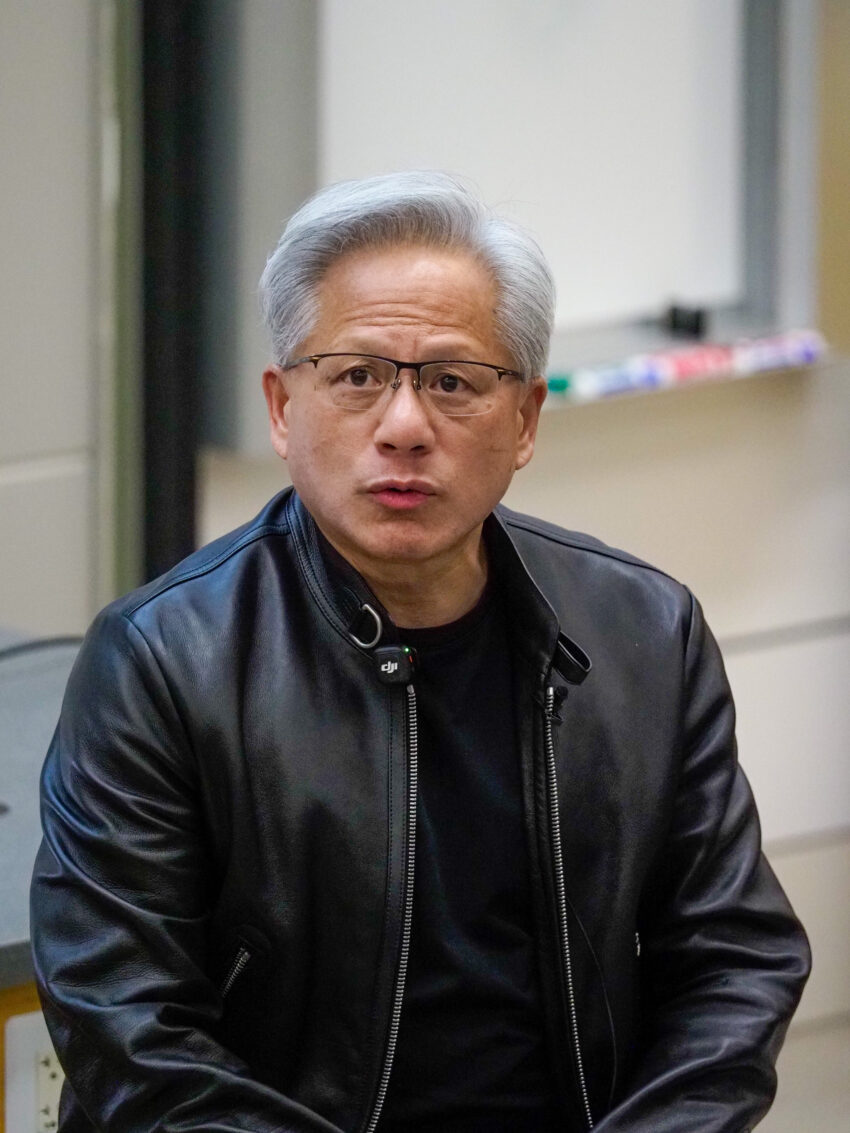
IMAGE: Jensen Huang, co-founder and CEO of Nvidia, during a fireside chat in Stanford University’s CS 153 course on April 30, 2026.. Photo: Anders Eidesvik / Wikimedia, taken 2026-04-30, CC BY 4.0