
The chipmaker’s directors rule out reinstating its longtime chief executive despite support from Donald Trump and Elon Musk, while record quarterly earnings demonstrate continued demand for artificial intelligence technology.
Nvidia’s board of directors has rejected former CEO Jensen Huang’s offer to return to the company, confirming that it will move forward with finding a permanent replacement. The decision was announced Tuesday, November 17, 2026, during Nvidia’s first quarterly earnings call since Huang resigned amid controversy involving his relationship with a Chinese businesswoman.
Board chairman Harvey Jones said directors had unanimously accepted Huang’s resignation and did not intend to reinstate him. The announcement came as Nvidia reported record third-quarter revenue of $115.8 billion, demonstrating that demand for its artificial intelligence processors remained strong despite the leadership disruption.
Nvidia Board Rules Out Huang’s Reinstatement
Jones addressed Huang’s future at the beginning of the earnings conference call, leaving little uncertainty about the board’s position. His remarks followed several days of public speculation about whether Nvidia’s co-founder could return to the company he had led for more than three decades.
Earlier Tuesday, Huang indicated that he would be willing to resume his position if the board believed his return would benefit Nvidia. The statement prompted renewed discussion among supporters who believed his leadership remained essential to the company’s long-term success.
The board rejected that possibility and confirmed that its search for a new chief executive would continue. Jones also declined to discuss the circumstances surrounding Huang’s resignation or answer questions about the ongoing investigation.
Nvidia has retained executive recruitment firm Heidrick & Struggles to help identify a permanent successor. The search will consider candidates from both inside and outside the company, although directors have not announced a deadline for selecting the next CEO.
Colette Kress, Nvidia’s longtime chief financial officer, is serving as interim chief executive. She will continue overseeing operations while retaining her responsibilities as CFO.
Jones expressed confidence in her ability to lead the company during the transition. Kress joined Nvidia in 2013 and has played an important role in managing its finances throughout the rapid expansion of the artificial intelligence industry.
Huang’s Resignation Followed Intelligence Allegations
Huang resigned from Nvidia on November 11 following reports about an extramarital relationship with Alice Huang, a Chinese businesswoman whose alleged connections to Chinese intelligence agencies have attracted scrutiny from American authorities.
The controversy intensified after reports suggested that US intelligence officials were investigating whether the businesswoman had provided information to Beijing. These suspicions have not been established as fact, and Chinese authorities have denied that she was involved in espionage.
On November 12, US Attorney General Todd Blanche said the Justice Department had not reached a determination that Alice Huang was a Chinese spy. Reuters also reported that it could not independently verify the intelligence allegations.
Separately, Reuters reported that Jensen Huang had misled senior Nvidia executives about the nature of his relationship with the businesswoman. That account was based on people familiar with the matter and internal correspondence reviewed by the news organization.
Nvidia’s independent directors began examining the situation before Huang resigned. The company retained outside legal counsel to investigate questions raised by the relationship and related national security concerns.
The findings of that investigation have not been publicly disclosed. No official determination has established that Huang knowingly disclosed sensitive information to a foreign intelligence service.
Trump and Elon Musk Supported Huang’s Return
The board’s decision came despite public support for Huang from several influential figures in politics and technology. President Donald Trump and Tesla CEO Elon Musk were among those who expressed support for the possibility of his reinstatement.
Musk endorsed a campaign calling for Huang’s return, while other technology executives and Nvidia supporters questioned whether his departure had been handled fairly.
An online petition titled Stand with Jensen attracted more than 100,000 signatures within days of its creation. Organizers argued that Huang deserved a fair opportunity to respond to allegations before losing his position.
The petition also questioned whether sufficient evidence had been presented to establish the alleged intelligence connections at the center of the controversy.
Trump publicly expressed sympathy for Huang and suggested that he would not object to his return. However, the president did not have authority over Nvidia’s board or its executive appointments.
The controversy has also produced different responses within the administration. Treasury Secretary Scott Bessent raised questions about whether Nvidia properly monitored companies suspected of helping restricted semiconductor technology reach China.
Those concerns involve broader export-control investigations and should not be treated as proof that Huang personally participated in illegal shipments.
Nvidia Reports Record Quarterly Earnings
Despite the turmoil, Nvidia’s financial results exceeded Wall Street expectations. The company reported third-quarter revenue of $115.8 billion, an increase of 103% from the same period a year earlier and 20% from the preceding quarter.
Its data center business generated $107.6 billion, accounting for most of the company’s total revenue. The segment benefited from continued spending by technology companies building infrastructure for artificial intelligence applications.
Nvidia also projected fourth-quarter revenue of approximately $130 billion, with a possible variation of 3% in either direction. The forecast exceeded analysts’ average expectation of roughly $125.25 billion.
The company raised its fiscal 2028 revenue growth forecast to approximately 75%, compared with its previous projection of 70%. The increase reflected expectations of continued demand for advanced AI computing systems.
Shares rose more than 4% in after-hours trading following the earnings announcement. The market reaction suggested that investors were encouraged by the results, although the company’s stock remained sensitive to uncertainty surrounding its leadership.
Kress emphasized that Nvidia’s technology roadmap and customer commitments remained on track. She also reported strong early demand for the company’s next-generation Vera Rubin computing platform.
The financial performance provided an important measure of stability during a difficult period. However, the latest quarter ended October 25, before Huang’s resignation, so the results do not establish the longer-term effects of the leadership transition.
Congressional Hearings Scheduled for December
Huang’s resignation has attracted attention from congressional committees investigating national security risks and restrictions on advanced semiconductor exports.
On November 17, three House committee chairmen announced that Huang had voluntarily agreed to participate in a transcribed interview on December 1. Nvidia general counsel Tim Teter is scheduled to appear the following day.
The interviews will involve the House Permanent Select Committee on Intelligence, the House Foreign Affairs Committee and the House Select Committee on the Chinese Communist Party.
Lawmakers are expected to examine questions surrounding Nvidia’s sales of advanced AI processors, access to restricted technology and Huang’s relationship with the businesswoman.
The interviews are part of congressional oversight rather than criminal proceedings. No findings from the scheduled testimony have yet been made, and the officials involved have not established that Huang knowingly assisted a foreign intelligence operation.
The hearings could provide additional information about Nvidia’s internal controls and its dealings with companies operating in international semiconductor markets.
Nvidia Creates National Security Oversight Committee
Alongside its earnings announcement, Nvidia established a new board committee focused on national security, export controls and global trade risks.
The National Security and Export Control Oversight Committee will review company policies involving sensitive technology and compliance with US export regulations. It will also oversee engagement with government agencies responsible for national security matters.
Director Suzanne Nora Johnson will chair the committee, with Stephen Neal and John Dabiri serving as additional members.
Its creation comes as American authorities continue examining the movement of advanced processors through international supply chains. Restrictions on certain chip exports to China remain an important challenge for Nvidia and other semiconductor companies.
The committee’s responsibilities are separate from the ongoing investigation into Huang’s conduct. Nvidia has not announced that establishing the committee resolves any outstanding regulatory concerns.
The company must now address those questions while maintaining its relationships with major technology customers and expanding production of its newest AI systems.
Search for a New CEO Continues
Huang co-founded Nvidia in 1993 and guided its development from a graphics chip manufacturer into one of the world’s leading suppliers of artificial intelligence computing technology. His departure represents the most significant leadership change in the company’s history.
For Kress, the immediate responsibility is maintaining operational stability while the board considers permanent leadership candidates. The company must also continue executing its product roadmap and managing demand from large cloud computing customers.
The board has indicated that it will not reconsider Huang’s reinstatement, even as supporters continue advocating for his return. That decision leaves the CEO search as Nvidia’s primary leadership priority.
Huang’s scheduled December 1 congressional interview could bring further scrutiny to the circumstances of his departure and Nvidia’s export compliance practices. Until then, Kress remains responsible for leading the company through a period of record financial performance and unresolved governance questions.
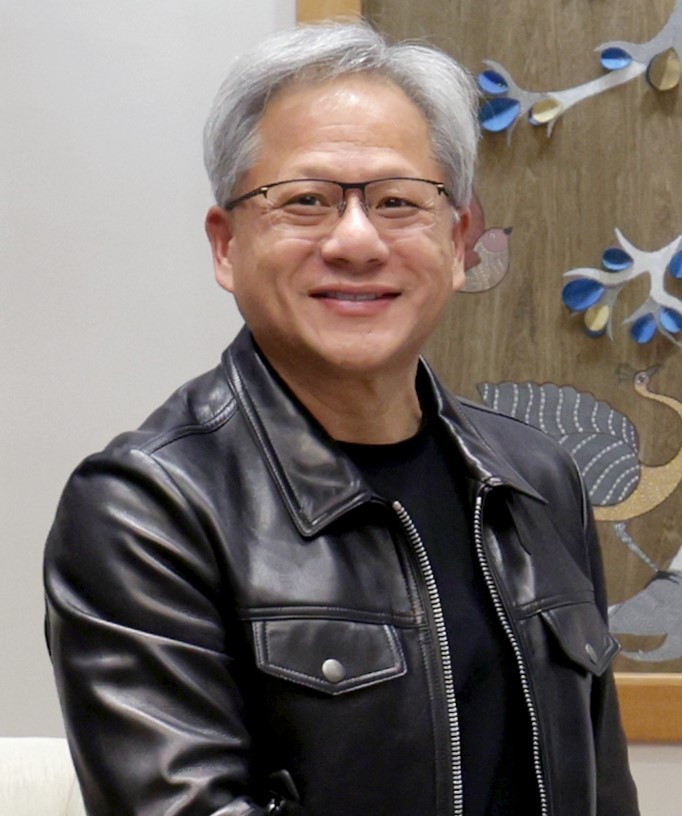
IMAGE: Mr. Jensen Huang, the CEO of Nvidia met the Prime Minister, Shri Narendra Modi, at Prime Minister’s Office in New Delhi, India.. Photo: Prime Minister’s Office
/ Wikimedia, taken 2023-09-04, GODL-India