
New research published in Nature Neuroscience identifies a protein that disrupts cholesterol movement inside the brain, damaging nerve cells. Experiments in mice suggest that blocking the protein could open a new approach to treating Parkinson’s disease.
Scientists have discovered a previously underappreciated mechanism that may contribute to Parkinson’s disease, linking the destruction of brain cells to problems with cholesterol transport. The findings suggest that controlling how cholesterol moves between and within brain cells could eventually help slow the disease.
The research, published October 20, 2026, in Nature Neuroscience, identified a protein called ABCA1 that appears to play an important role in the damage associated with Parkinson’s disease.
Researchers found unusually high levels of the protein in brain tissue from people who had died with Parkinson’s disease. Experiments in mice showed that reducing its activity protected nerve cells and improved some movement-related problems.
The scientists also identified magnesium citrate as a substance capable of inhibiting ABCA1 in their experimental models.
Although the findings are encouraging, the researchers have not demonstrated that magnesium citrate or other ABCA1 inhibitors can slow Parkinson’s disease in humans.
A Different Way of Looking at Parkinson’s Disease
Parkinson’s disease is a progressive neurological disorder that affects movement, balance and many other bodily functions.
The condition develops as nerve cells in a region of the brain called the substantia nigra become damaged or die. These cells produce dopamine, a chemical messenger essential for controlling smooth and coordinated movements.
As dopamine-producing cells disappear, patients may develop tremors, muscle stiffness, slow movement and difficulty walking.
Approximately one million Americans are living with Parkinson’s disease, according to the National Institute of Environmental Health Sciences.
Current medications can improve symptoms by increasing dopamine activity or helping the brain use its remaining dopamine more effectively. However, they do not reliably stop the underlying destruction of nerve cells.
Researchers have therefore been searching for biological processes that cause or accelerate the disease.
One important suspect has been alpha-synuclein, a protein that can accumulate in abnormal clumps inside affected neurons.
The new study suggests that disturbed cholesterol transport may help create conditions that allow these harmful protein deposits to accumulate.
The Brain Needs Cholesterol, but Location Matters
Cholesterol is commonly associated with cardiovascular disease, but it is also essential for normal brain function.
The brain uses cholesterol to build cell membranes, maintain communication between neurons and support the insulating material surrounding nerve fibers.
Unlike cholesterol circulating in the bloodstream, much of the brain’s cholesterol is produced and managed locally.
Brain cells must carefully control where cholesterol is stored, how much they release and how much neighboring cells receive.
The new research indicates that problems can arise when this carefully regulated system becomes unbalanced.
The scientists focused on ABCA1, short for ATP-binding cassette transporter A1, a protein involved in moving cholesterol and other fats.
Under normal conditions, ABCA1 helps cells maintain healthy cholesterol levels.
However, the researchers found evidence that excessive ABCA1 activity can have harmful consequences in certain brain cells.
How One Protein May Damage Two Types of Brain Cells
The research identified two connected problems involving astrocytes and neurons.
Astrocytes are support cells that help maintain the chemical environment surrounding neurons. They also participate in providing and regulating cholesterol within the brain.
In the Parkinson’s mouse model, excessive ABCA1 activity caused astrocytes to release too much cholesterol.
That cholesterol could then contribute to an overload in nearby neurons.
The researchers also discovered that ABCA1 was active inside neuronal structures called lysosomes.
Lysosomes function as cellular recycling centers. They help break down damaged proteins and other unwanted materials so their components can be reused or removed.
Inside these structures, ABCA1 promoted cholesterol accumulation.
The buildup interfered with autophagy, the cellular process responsible for clearing damaged material.
When that cleanup system failed, abnormal alpha-synuclein accumulated, contributing to neuronal damage.
The investigators identified a cholesterol-sensing protein called GPR155 as part of the mechanism connecting cholesterol accumulation to disrupted cellular recycling.
Together, these findings suggest that cholesterol movement, rather than simply total cholesterol production, can influence whether vulnerable brain cells survive.
Scientists Protect Brain Cells by Reducing ABCA1
To investigate whether ABCA1 was directly involved in the damage, researchers used genetic techniques to reduce the protein’s activity.
They conducted experiments in both astrocytes and dopamine-producing neurons.
Reducing ABCA1 in either cell type lessened neurodegeneration in the mouse model.
The treated animals also showed improvements in some behavioral measurements associated with the experimental disease.
These results are important because they go beyond finding a protein associated with Parkinson’s disease.
By changing ABCA1 activity and observing less nerve-cell damage, the researchers provided experimental evidence that the protein contributes to harmful biological processes.
Nevertheless, animal models reproduce only selected features of human Parkinson’s disease.
The results do not establish that ABCA1 inhibition will produce similar benefits in people.
Magnesium Citrate Produces an Unexpected Result
One of the more intriguing findings involved magnesium citrate, a compound already used in certain medical and consumer products.
Researchers identified the substance while investigating compounds that might inhibit ABCA1.
In laboratory experiments, magnesium citrate reduced the protein’s activity and helped limit cholesterol-related damage.
The scientists then tested it in mice with experimentally induced Parkinson’s-like pathology.
Treatment reduced the loss of dopamine-producing neurons and improved certain movement-related measurements.
These findings raise the possibility that ABCA1 could become a target for drugs intended to protect vulnerable neurons.
However, the experiment does not mean that commercially available magnesium citrate supplements can treat Parkinson’s disease.
The dose, delivery method, safety and effectiveness required for any potential human treatment remain unknown.
Magnesium citrate can also cause diarrhea, dehydration and electrolyte disturbances, particularly when taken in excessive amounts or by people with certain medical conditions.
Patients should not begin taking magnesium citrate for Parkinson’s disease based on these preliminary findings.
Why This Discovery Could Be Important
Many Parkinson’s treatments focus on replacing missing dopamine or improving its effects.
Such treatments can substantially improve quality of life, but they generally do not prevent the disease from progressing.
The newly identified cholesterol pathway offers a different potential strategy.
Rather than compensating for damaged neurons, researchers could attempt to protect them before they die.
If future studies confirm the mechanism in people, drugs targeting ABCA1 might help preserve dopamine-producing cells.
Another possibility is that cholesterol transport abnormalities could help identify patients who might benefit from particular treatments.
Both approaches remain experimental.
The findings also reinforce a broader change in neuroscience research, where scientists are examining the relationship between metabolic activity, cellular recycling and abnormal protein accumulation.
Similar biological processes are being investigated in Alzheimer’s disease and other neurodegenerative disorders.
The Cholesterol Question Is More Complicated Than It Appears
The research does not suggest that all cholesterol is harmful to the brain.
In fact, a separate study published in Cell Reports in 2026 found that cholesterol could support the removal of abnormal alpha-synuclein in experimental models involving a particular Parkinson’s-associated genetic mutation.
That study examined alterations involving the GBA gene, which affects cellular recycling.
Its findings suggest that cholesterol can sometimes help restore important cellular processes, depending on the disease mechanism and the location of cholesterol within cells.
The two studies therefore address different situations rather than establishing a simple rule that brain cholesterol should always be lowered.
For researchers, the distinction is important.
A treatment that changes cholesterol movement in one part of a cell may produce different effects from a treatment that reduces cholesterol throughout the brain.
This complexity helps explain why earlier attempts to target cholesterol production have shown limited success against Parkinson’s disease.
What Researchers Need to Determine Next
The new study was conducted by scientists including Feng-xia Ma, Xin-xin Zhao and Lei Cao, with researchers affiliated with Nanjing Medical University in China.
Their work combined examinations of postmortem human brain tissue with experiments involving cultured cells and mice.
The human tissue findings showed an association between Parkinson’s disease and increased ABCA1 expression in vulnerable brain regions.
The experimental work provided additional evidence about how that protein could contribute to cellular damage.
However, scientists still need to establish whether excessive ABCA1 activity is an early cause of Parkinson’s disease, a response to other damage or part of a more complicated process.
Researchers must also determine whether blocking ABCA1 over long periods could interfere with the protein’s normal functions.
Any proposed treatment would require additional testing for safety, delivery into the brain and effectiveness before clinical use.
No human clinical trial demonstrating that ABCA1 inhibition slows Parkinson’s disease was reported in the study.
The next challenge is translating the protective effects observed in experimental models into treatments that can be safely tested in people.
For patients and researchers, the discovery identifies a promising biological target, but it does not yet offer a new treatment. The importance of the finding lies in showing how misplaced cholesterol may contribute to the destruction of dopamine-producing neurons.
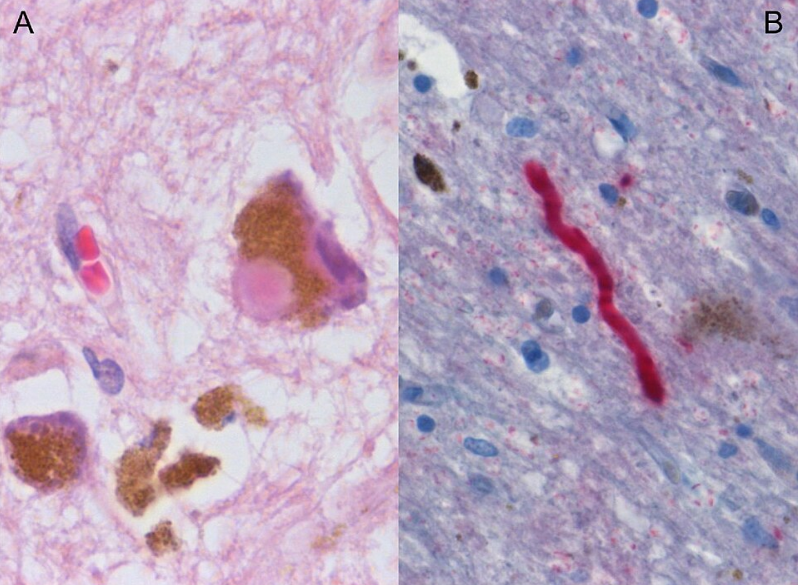
IMAGE: Source Werner CJ., Heyny-von Haussen R., Mall G., Wolf S. Proteome analysis of human substantia nigra in Parkinson’s disease.. Proteome Sci. 6, 8. 2008. doi:10.1186/1477-5956-6-8. PMID 18275612. Author Werner CJ., Heyny-von Haussen R., Mall G., Wolf S. CC2