
Doctors say the 71-year-old pontiff is recovering normally after removal of the lower lobe of his right lung, while pathology results will determine whether further treatment is needed.
Pope Leo XIV is recovering at Rome’s Gemelli Hospital after surgeons removed the lower lobe of his right lung and confirmed a diagnosis of lung adenocarcinoma. The Vatican said Wednesday that the 71-year-old pontiff’s recovery was proceeding normally one day after the operation.
Leo underwent a video-assisted lobectomy Tuesday, October 13. Surgeons used small incisions and a camera to remove the affected lobe during an operation that lasted about 90 minutes. The Vatican said the procedure was successful and there were no complications.
An examination of tissue during the surgery confirmed pulmonary adenocarcinoma, a common form of non-small cell lung cancer. Doctors had suspected cancer from tests performed before the operation, but the diagnosis was not confirmed until the tissue was examined. The pope had announced Sunday that doctors had found a small, localized lung nodule and recommended its removal.
Blood tests and a chest X-ray Wednesday showed results within the expected range for this type of surgery. Leo began respiratory physiotherapy, walked around his hospital room and returned to a regular diet. The Associated Press also reported that he celebrated Mass while hospitalized.
The next major question is whether the cancer had spread beyond the removed part of the lung. Pathology tests on the lung tissue and nearby lymph nodes are expected to help doctors determine the cancer’s stage and whether any additional treatment is needed. Those results had not been announced as of Wednesday evening.
Dr. Lorenzo Spaggiari, director of the Lung Program at the European Institute of Oncology in Milan, told Religion News Service that surgery could be considered curative if the tumor was confined to the lung. Other specialists have said additional therapy could be considered if cancer is found in the lymph nodes or elsewhere. Treatment options for lung adenocarcinoma can include chemotherapy, radiation, immunotherapy or targeted drugs, depending on the stage and characteristics of the tumor.
The Vatican has not announced that Leo will need any of those treatments.
Lung adenocarcinoma is the most common form of lung cancer, accounting for about 40 percent of cases, according to Reuters. It can occur in people who have never smoked, and Leo is not known to have been a smoker. When the disease is found while still localized, surgery is often the main treatment.
Leo is expected to remain at Gemelli for about a week. The Vatican canceled his public audiences and events through October 20, giving him time to recover from the operation. The pope remains able to govern the Catholic Church from the hospital unless he becomes incapacitated.
His planned November trip to South America is still officially on the calendar. Leo is scheduled to visit Uruguay, Argentina and Peru from November 6 through 17, although his medical recovery could affect those plans. The journey would be his longest trip as pope and would include multiple flights and substantial travel within the three countries.
The trip would begin a little more than three weeks after surgery. Medical specialists have noted that patients recovering from a lobectomy may need several weeks before long-distance air travel, depending on healing, lung function and other factors. Vatican spokesman Matteo Bruni said Wednesday that no changes had been announced to the itinerary.
Peruvian President Keiko Fujimori suggested Leo’s recovery might take longer than originally expected, but the Vatican has not announced a postponement. Peru has particular importance for Leo, who spent years there as a missionary and later served as a bishop. He greeted Peruvian pilgrims in St. Peter’s Square shortly before his hospitalization and had previously spoken about his intention to return to the country as pope.
Cardinal Tarcisius Kikuchi, who met with Leo before the surgery, said the pope wanted the procedure performed quickly so it would interfere as little as possible with future travel. The remark reflected Leo’s desire to maintain a demanding schedule, but doctors have emphasized that his recovery and final pathology results will guide the next steps.
The illness is the first publicly disclosed major health problem of Leo’s papacy. He previously suffered typhoid fever while working as a missionary in Peru in 1985, an illness that required hospitalization. The experience later became an important part of his account of his early missionary years.
Cancer has also affected members of his family. His mother, Mildred, died of cancer in 1990, and his father, Louis, died in 1997 from colon cancer and heart disease. Leo’s older brother, Louis Prevost, is being treated for multiple myeloma, according to CBS News, but no medical evidence released by the Vatican has linked the pope’s lung cancer to his family history.
Leo’s decision to discuss the lung nodule before surgery and the Vatican’s detailed medical updates have drawn attention because papal health has not always been handled so openly. Pope Francis was hospitalized several times during his papacy, and Vatican communications about his condition sometimes expanded only as treatment continued. Leo’s team has so far released the type of surgery, the cancer diagnosis and several details about his postoperative progress.
The pope’s recovery is also being watched closely in Chicago, where he was born. The Coalition for Spiritual and Public Leadership plans to send a 25-member Catholic delegation to Rome from October 26 through 31. The group is scheduled to attend Leo’s general audience on October 28 and said its plans had not changed because of the surgery.
The delegation intends to bring concerns connected to immigrant pastoral care and the Broadview detention facility to Vatican officials. Organizers have said they still hope to greet Leo if his health allows. Students at Our Lady of Mount Carmel Academy in Chicago have also prepared a care package for the pope that includes get-well cards and a White Sox blanket, according to local reporting.
For now, the Vatican’s medical updates indicate that Leo is meeting the expected milestones after surgery.
The more important medical questions will be answered by the pathology results. Those findings will show whether the cancer was fully contained in the removed lung tissue and help doctors decide whether Leo needs treatment beyond surgery. They may also determine whether the pope can safely keep his planned South America trip next month.
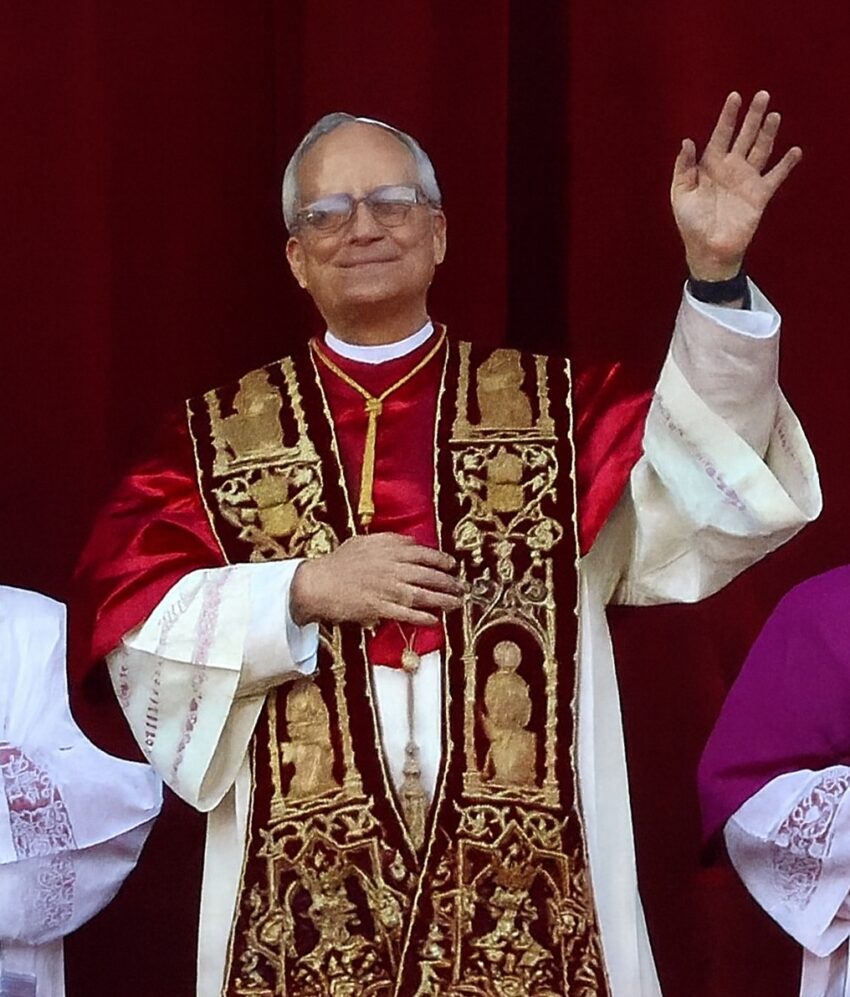
IMAGE: Pope Leo XIV on the loggia after his election. Photo: Edgar Beltrán / The Pillar / Wikimedia, taken 2025-05-08, CC BY-SA 4.0