
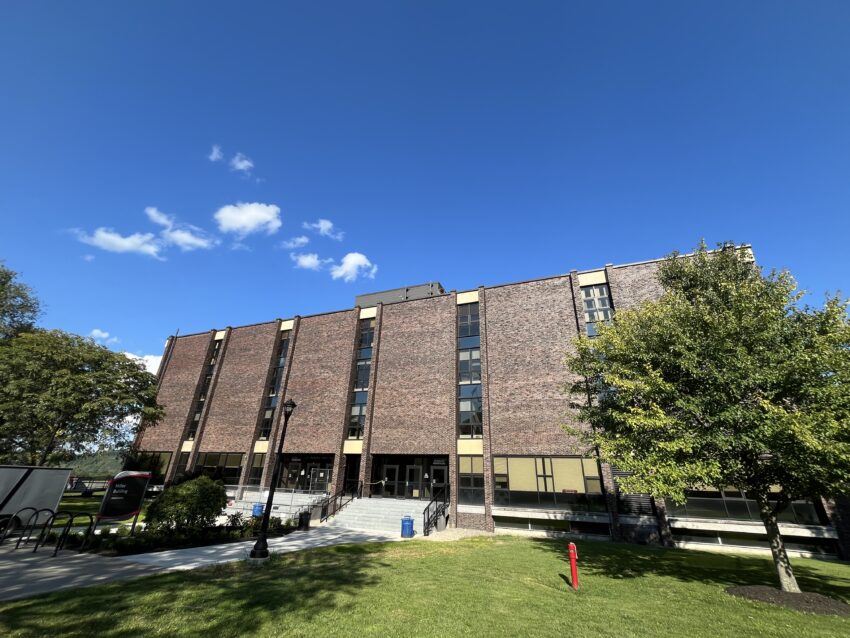
SUNY Cortland’s new bachelor’s degree combines biology, chemistry, geology, field research and internships to prepare students for careers protecting natural resources and addressing environmental problems.
SUNY Cortland has introduced a new bachelor’s degree in environmental science designed to prepare students for careers addressing climate change, air pollution, water scarcity and other environmental challenges. The program combines classroom instruction with field research, laboratory work and professional internships across New York state.
Announced on October 13, 2026, the Bachelor of Science program allows students to explore environmental problems through biology, chemistry, geology and related scientific fields. University officials say the interdisciplinary approach will help graduates understand how natural systems interact and develop practical solutions to environmental problems.
The new major expands SUNY Cortland’s existing environmental education offerings while giving students greater flexibility to pursue their scientific interests. It also makes use of the university’s outdoor research facilities, including Hoxie Gorge, Brauer Field Station and Raquette Lake.
New Degree Offers Greater Flexibility
The environmental science major was developed in response to student interest in studying environmental issues from several scientific perspectives.
Gayle Gleason, associate professor and chair of SUNY Cortland’s Geology Department, said students previously expressed interest in an academic program that extended beyond traditional geology courses.
The university already offers an environmental geoscience major emphasizing earth science and geological processes. That degree will remain available, while the new environmental science program broadens opportunities to study biology, chemistry and other disciplines.
Students will be able to select advanced science courses that reflect their individual interests while completing a common foundation in environmental studies.
According to the university’s official program description, the degree requires 120 credit hours and leads to a Bachelor of Science.
The curriculum emphasizes scientific reasoning, problem-solving and the ability to investigate environmental conditions using laboratory and field-based methods.
Students may examine water pollution, chemical contamination, soil conditions, ecosystems and the relationships between environmental quality and public health.
Gleason said the program is particularly relevant for students who enjoyed Advanced Placement Environmental Science in high school or previously studied environmental health.
The major provides an opportunity for those students to continue exploring environmental questions through university-level scientific research.
Outdoor Research Provides Hands-On Experience
A central feature of the program is required fieldwork at facilities operated by SUNY Cortland’s W.H. Parks Family Center for Environmental and Outdoor Education.
The university maintains several outdoor research locations that allow students to investigate environmental systems beyond traditional classrooms.
One important site is Hoxie Gorge, a nature preserve approximately seven miles from the main campus.
The preserve provides opportunities to examine local ecosystems, geological formations and the relationships between natural habitats and environmental conditions.
Students can also conduct fieldwork at Brauer Field Station near Albany, located close to the base of the Helderberg Escarpment.
The station offers access to diverse plant communities and geological features, making it useful for studying environmental science from several perspectives.
Recent improvements include the installation of groundwater monitoring wells. These facilities allow students to conduct pump tests and investigate how water moves through underground rock and soil.
Understanding groundwater movement is important for studying drinking water supplies, contamination and the availability of water during periods of drought.
Another major research location is Raquette Lake in the Adirondack Mountains.
SUNY Cortland’s outdoor campus in the Adirondacks covers more than 440 acres and includes facilities designated as a National Historic Landmark.
The university describes the property as the only National Historic Landmark within the State University of New York system.
Together, these locations allow students to compare different ecosystems and examine environmental conditions in forests, waterways, geological formations and other natural settings.
Students Will Investigate Local Environmental Problems
The new major places considerable emphasis on undergraduate research.
Students may participate in investigations examining the effects of road salt on water quality in the Tioughnioga River, which flows through Cortland.
Road salt is commonly used to improve winter driving conditions, but runoff can introduce chloride into rivers, lakes and groundwater.
Environmental scientists study these changes because elevated salt concentrations can affect freshwater organisms and alter water chemistry.
Other potential projects include examining soil health, land development, nitrates and additional pollutants.
Students may also investigate how animal behavior, plant communities and environmental conditions provide evidence about the health of an ecosystem.
These projects require combining scientific knowledge from several disciplines.
For example, evaluating a polluted river may involve chemical testing, biological assessments and an understanding of how groundwater and surface water interact.
The university believes such experiences will help students develop skills that are useful in environmental research and resource management.
Faculty members from multiple departments will support the program, allowing students to work with researchers whose expertise extends beyond a single scientific field.
Li Jin, a professor of geology, will serve as program coordinator.
The university credits the program’s development to collaboration among faculty in the sciences, geographic information systems and mathematics.
Internships Connect Students With Environmental Careers
In addition to academic research and fieldwork, students pursuing the new major must complete an internship.
The requirement follows the model used by SUNY Cortland’s established environmental geoscience program.
Potential internship placements include the New York State Department of Environmental Conservation and local soil and water conservation districts.
These organizations work on projects involving natural resource protection, environmental monitoring, land management and pollution prevention.
Students may gain experience collecting samples, analyzing environmental information, participating in conservation projects or observing how scientific findings influence public policy.
The university also identifies the U.S. Geological Survey as a potential employer for graduates.
Gleason said internship experiences have played an important role in helping students become more confident and prepared for professional employment.
The practical training component allows students to apply classroom knowledge while learning how environmental organizations operate.
It may also help students develop professional contacts and identify career opportunities before graduation.
SUNY Cortland lists environmental consulting, climate science, sustainability management, renewable energy development, natural resource management and environmental education among possible career paths.
Graduates may also pursue additional education in environmental science or related disciplines.
Environmental Health and Human Health Are Connected
The university’s decision to establish the program comes as environmental challenges continue to affect communities worldwide.
Climate change, changing precipitation patterns, air pollution and the degradation of natural resources create problems that require scientific investigation.
Environmental scientists help communities understand these issues by measuring conditions, evaluating risks and identifying potential responses.
For example, water quality testing can reveal contamination that threatens aquatic ecosystems or drinking water supplies.
Soil analysis can help determine whether land is suitable for agriculture, development or habitat restoration.
Air quality monitoring can identify pollutants that may harm human health, particularly among people with respiratory conditions.
The new program is designed to give students a foundation for contributing to this work while developing specialized interests.
Gleason emphasized that concerns about environmental conditions are closely connected to the well-being of communities.
She said many young adults are worried about the future of the planet and want opportunities to contribute to meaningful improvements.
The degree provides one possible route for turning those concerns into scientific research, environmental protection and professional work.
SUNY Cortland Expands Environmental Education
The environmental science major joins several existing academic programs that address the natural world, including geology and environmental geoscience.
Unlike programs focused primarily on geological processes, the new degree allows students to explore a broader combination of biological, chemical and physical sciences.
Its required fieldwork and internships are intended to ensure that students graduate with experience beyond lectures and laboratory exercises.
The university has published information about the program, including its 120-credit requirement, academic opportunities and potential career paths.
Prospective students can learn more through SUNY Cortland’s Geology Department and the university’s environmental science program website.
For students interested in climate science, pollution monitoring or natural resource conservation, the new major offers a way to study environmental problems while gaining experience in the field.
The program’s next important measure will be how students use those opportunities, from investigating local waterways and soil conditions to completing internships with agencies responsible for protecting New York’s environment.
IMAGE: admission building at SUNY Cortland. Photo: J. Passepartout / Wikimedia, taken 2025-09-03, CC BY-SA 4.0