
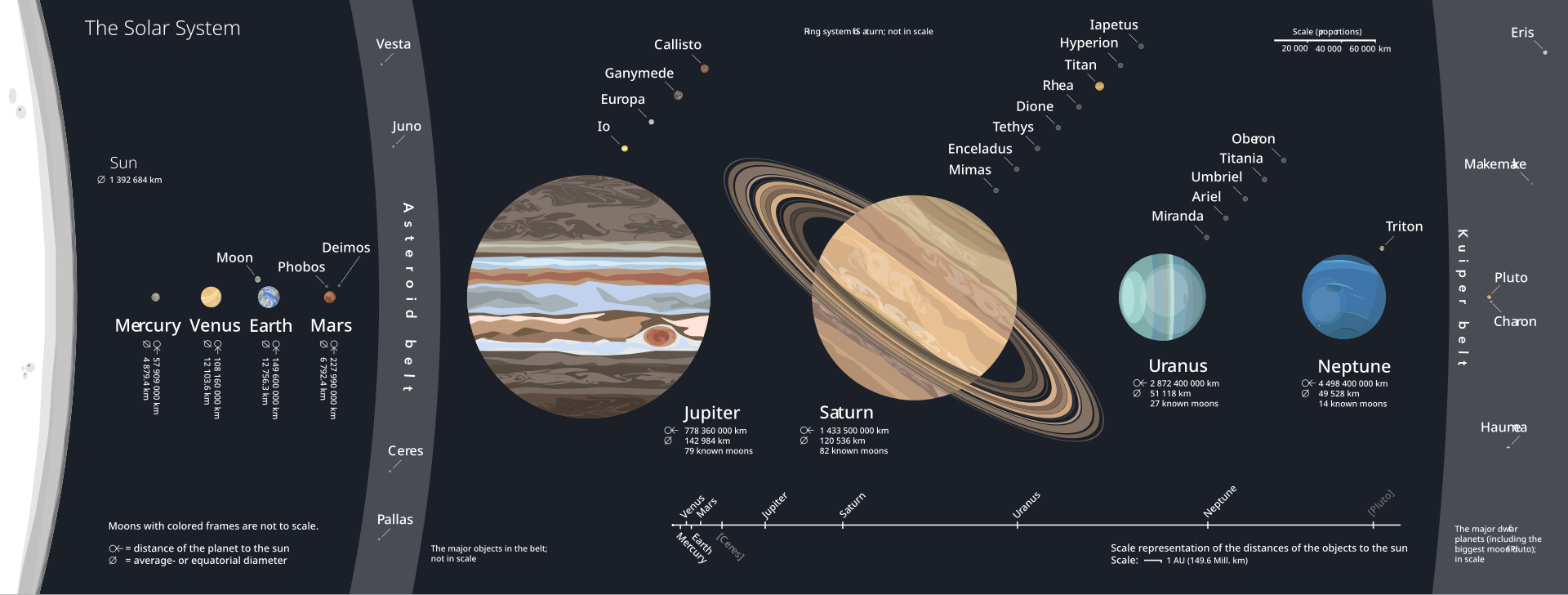
At the center of our solar system lies the Sun, which plays a major role in shaping conditions on every planet that orbits it. Scientists at NASA’s SHIELD (Solar Wind with Hydrogen Ion charge Exchange and Large-Scale Dynamics) center are now tracing how the heliosphere — the vast bubble created by our Sun — has moved through our galaxy over millions of years.
This research aims to understand how the environment the heliosphere passed through may have affected Earth’s climate and atmospheric conditions, according to miragenews.com. Earth has experienced dramatic shifts in climate over tens of millions of years, including multiple ice ages where global temperatures dropped significantly.
Scientists have long considered factors like Earth’s orbital changes and greenhouse gases to explain these climate swings. Just as Earth is surrounded by an atmosphere, the entire solar system is enclosed in a kind of cosmic atmosphere formed by the Sun’s activity.
The heliosphere moves around the center of our galaxy, the Milky Way, and has traveled through different kinds of space during its six-billion-year journey, according to a report from science.nasa.gov. In a paper published in August in Annual Review of Astronomy and Astrophysics, researchers at SHIELD used computer modeling to trace the path of the heliosphere.
Merav Opher, principal investigator at Boston University, and her team found that the Sun has encountered cold gas and dust clouds at least three times in recent millions of years. These encounters occurred approximately two to three million years ago, six to seven million years ago, and thirteen to fourteen million years ago.
During these times, Earth’s atmosphere was exposed to different galactic conditions that may have influenced its climate. Simulations showed that when Earth’s atmosphere met cold, dense hydrogen clouds, it caused changes in water vapor and upper-atmospheric behavior.
These atmospheric shifts likely altered surface conditions and may have helped drive climate changes on Earth. The SHIELD center is one of several that NASA funds to unlock the next generation of heliospheric research. As a DRIVE Science Center, SHIELD builds a team of researchers with differing expertise, approaches, and opinions to develop a model, or “digital twin,” of the heliosphere that helps reveal how the heliosphere interacts with its surroundings, including dense interstellar clouds.
The team works on creating a digital twin of the heliosphere to better understand how it interacts with space around it, including dense interstellar clouds. Another study by Vladimir Airapetian at NASA’s Goddard Space Flight Center looks into how early Earth stayed warm despite a dimmer Sun.
Three billion years ago, the young Sun was only about seventy percent as bright as it is today. Under those conditions, Earth should have been frozen solid, but geological evidence shows liquid water existed much earlier.
Scientists found a clue by studying young stars similar to the Sun in other parts of the galaxy. These stars, sometimes called ‘toddler’ stars, often experience violent outbursts known as superflares.
Data from NASA’s Kepler space telescope shows that these young stars regularly emit high-energy particles in all directions. Airapetian and his team simulated early Earth’s atmosphere in a sealed chamber using gases like nitrogen, ammonia, carbon dioxide, and carbon monoxide.
They then bombarded the mixture with protons to mimic the effect of superflares from the young Sun. This process led to the formation of nitrous oxide, a greenhouse gas much more powerful than carbon dioxide.
The findings were published in Astrophysical Journal Letters and suggest that early superflares may have helped warm Earth enough for life to begin. However, not all the nitrous oxide produced would remain in the atmosphere long-term.
IMAGE: Beinahegut / Wikimedia Commons (CC BY-SA 4.0)