
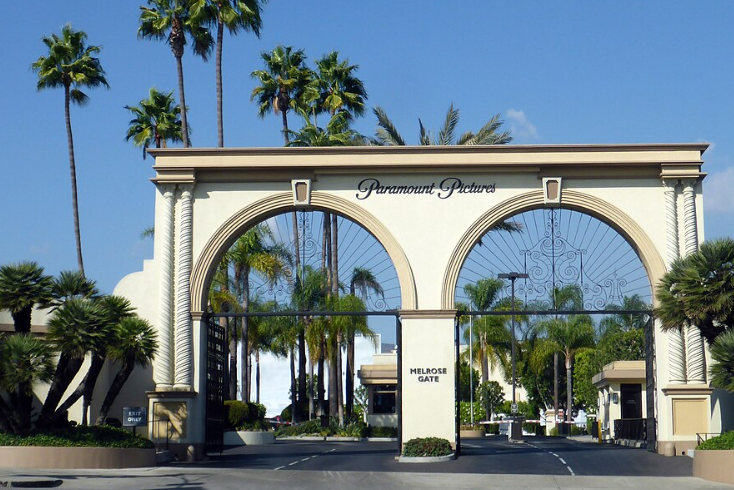
Paramount has reached an agreement with twelve states to settle their antitrust lawsuits over the company’s planned acquisition of Warner Bros. Discovery. The deal allows the $81 billion merger to move forward while requiring Paramount to make certain commitments to preserve competition in the entertainment industry. The states involved include California, Oregon, Arizona, Colorado, Connecticut, Massachusetts, Minnesota, Nevada, New Jersey, New Mexico, New York, and Washington.
California Attorney General Rob Bonta said the settlement was not a vote of support for the merger but a way to protect jobs and ensure continued film production, according to ijpr.org. The agreement requires the merged company to release 30 films per year in theaters for the first two years after the merger. After those initial years, the company must distribute 32 films annually for the next three years. At least four films each year must be independent releases. The agreement also calls for at least 20 wide releases in each of the first two years and 21 wide releases in each of the following three years.
Paramount also agreed to spend at least an additional $1.5 billion on U.S. film production over the next five years compared with 2025 spending levels. The states are seeking to protect consumer prices and maintain competition between basic cable channels that Paramount will own. Oregon Attorney General Dan Rayfield emphasized the importance of keeping real competition in place and protecting journalism independence.
The agreement requires Paramount and Warner Bros. to negotiate distribution agreements for their basic cable channels separately for five years. State officials said the restriction is intended to preserve competition and help prevent higher prices for consumers. Paramount must also continue offering a free streaming service such as Pluto TV during the five-year period.
The Writers Guild of America had also filed a lawsuit challenging the deal and was preparing for a trial scheduled for March, ABC News reported. The WGA separately settled its lawsuit on Monday. The guild said it still believes the merger will damage writers and the entertainment industry but said continuing the complex antitrust case without government backing would cost millions of dollars. Paramount agreed not to lay off writers at CBS News for five years and agreed to contribute $17.5 million to the WGA health fund.
Paramount previously delayed its acquisition plans to allow legal challenges to proceed through the courts. The settlement still needs approval from a judge before it can be finalized.
Some critics have questioned whether the agreement goes far enough to ensure new films are actually made under the Paramount label. Former Federal Trade Commission Commissioner Alvaro Bedoya warned that the requirement to distribute 30 films per year may include re-releases and acquisitions rather than new productions.
The final agreement includes stronger penalties than were known during earlier negotiations. If the merged company misses its annual film-release requirement it must pay $30 million for each missed film and divest Miramax Studios. The money would go in part to health care and retirement trust funds connected to entertainment industry unions and to additional antitrust enforcement.
Some observers believe the states may have been too quick to settle given that Paramount had threatened to relocate its operations from Hollywood to Nashville. Paramount had considered moving operations out of California and Tennessee officials had encouraged the company to relocate there. Other possible destinations reportedly included Texas and Georgia.
Paramount also faced a financial deadline. A fee of about $7 million per day was scheduled to begin if the deal had not closed by October 1. The fee was to be paid to Warner Bros. Discovery shareholders and could total about $650 million per quarter.
The agreement also includes a commitment to establish a board of journalists to maintain the independence of news organizations. The News Editorial Independence Board will oversee journalistic standards involving CBS News and CNN. The board is expected to consist of five experienced current or former journalists.
The settlement also requires Paramount to maintain the Paramount studio lot in Los Angeles and the Warner Bros. lot in Burbank during the five-year agreement. The merged company must honor existing collective bargaining agreements and bargain in good faith with unions. It will also establish a $47.5 million workforce fund for training and career development for workers affected by the merger.
The merger would reduce the number of major Hollywood studios from five to four, according to the source. Despite the settlement, concerns remain about potential job losses and industry impacts from the consolidation. The American Economic Liberties Project’s senior adviser Alvaro Bedoya criticized the outcome as a form of corporate influence over regulatory processes.
Bedoya said the settlement would lead to layoffs and higher prices. Those claims represent his organization’s position on the agreement. Paramount has rejected claims that its acquisition would reduce competition and has argued that the combined company would increase output and compete more effectively.
The deal marks a significant shift in the landscape of American entertainment and media ownership. It also raises questions about how much influence large corporations will have in shaping future industry standards and practices.
IMAGE: Source Own work Author Coolcaesar CC4