
NASA’s Chandra X-ray Observatory has unveiled a new gallery of 16 galactic images that highlight the diversity in size, shape, and high-energy features of galaxies across the universe. NASA released the gallery on Aug. 25, 2026. These cosmic gems are drawn from decades of data collected by Chandra, combined with information from other telescopes such as Hubble, Webb, Swift, and NuSTAR. The objects range from about 3 million to 490 million light-years from Earth. Astronomers classify galaxies into three main types: spirals like the Milky Way with arms extending from their cores, ellipticals that are often older and formed through mergers, and irregulars that show a wide range of galactic behaviors. Each image in the gallery contains X-ray data from Chandra, which reveals superheated gas and other high-energy phenomena that visible-light observations alone cannot show. The X-ray observations help scientists understand how galaxies form, evolve, and interact with one another over billions of years.
Spiral galaxies such as Messier 33 and NGC 3938 show energetic binary star systems and supernova remnants along their spiral arms, according to cerebral-overload.com. Barred spirals like NGC 1672 and NGC 1385 demonstrate how central bars funnel gas inward to trigger bursts of star formation, according to a report from hothardware.com. Edge-on views of galaxies like NGC 4631 and Messier 82 reveal halos of million-degree gas being blown thousands of light-years into space by starburst winds. Active galactic nuclei are also featured in the gallery, showing how supermassive black holes influence their host galaxies through jets and outflows. In Centaurus A, Chandra and IXPE data trace high-energy particle jets extending tens of thousands of light-years from the galaxy’s core. Messier 106 shows how black hole jets heat surrounding gas to create spiral arms that differ from typical galactic structures. The Sombrero Galaxy displays a diffuse X-ray glow mapping stellar remnants and superheated gas around its central bulge and dust lanes. The gallery also includes galaxies undergoing violent collisions or mergers, such as Arp 143 and NGC 3256, which offer insights into early universe dynamics. Arp 143 is about 191 million light-years from Earth while NGC 3256 is about 120 million light-years away. These cosmic disruptions help astronomers understand how galaxies like the Milky Way might change in the future, including what could happen if the Milky Way eventually merges with Andromeda. NGC 1569 provides a nearby laboratory for studying early-universe starbursts, while Messier 90 shows how a galaxy can lose star-forming gas as it moves through the Virgo Cluster.
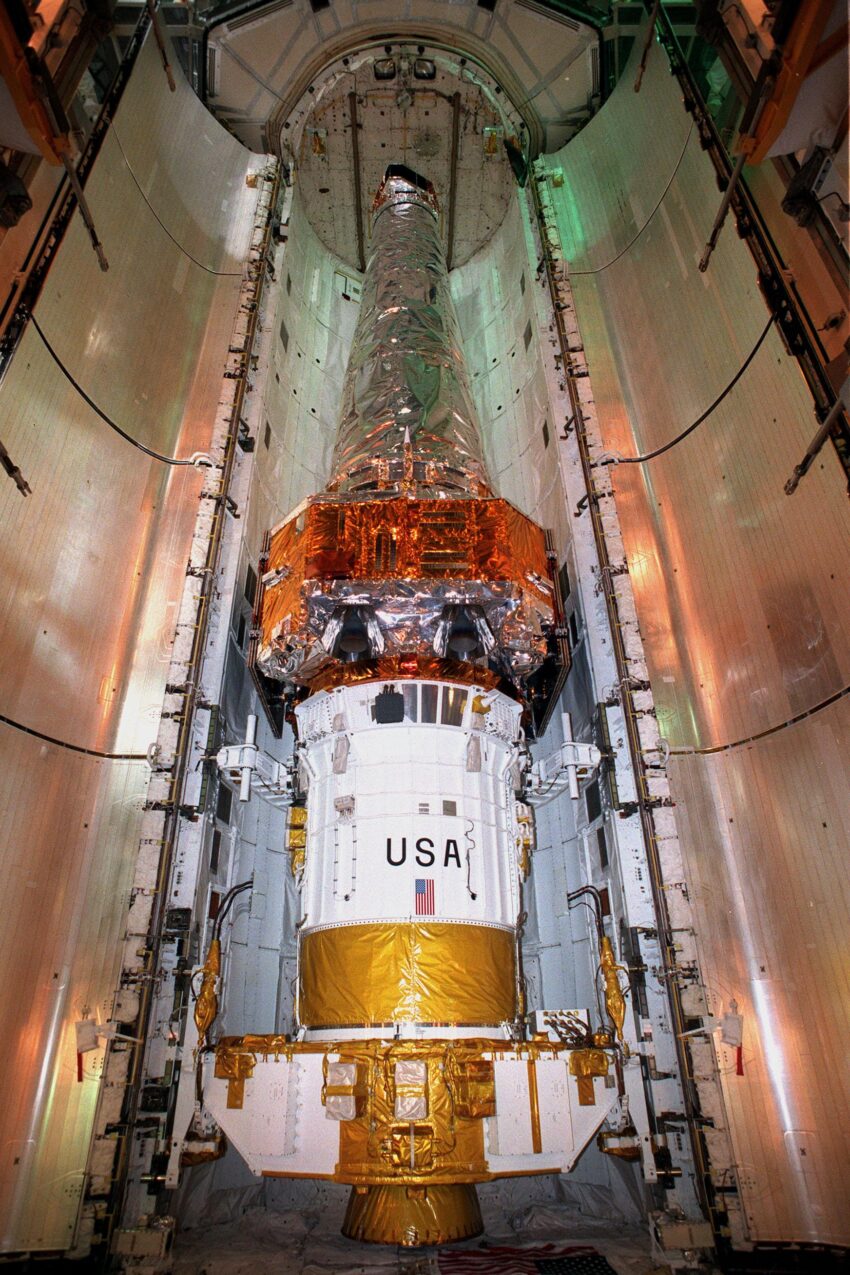
The Chandra program is managed by NASA’s Marshall Space Flight Center, while science operations are controlled from the Smithsonian Astrophysical Observatory’s Chandra X-ray Center from Cambridge, Massachusetts, and flight operations from Burlington, Massachusetts. Chandra was launched aboard Space Shuttle Columbia in July 1999 and has spent more than 27 years studying the X-ray universe. By combining X-ray data with optical and infrared imaging, scientists can see through dust clouds to observe phenomena like superheated plasma and star-forming regions. This multi-spectrum approach allows researchers to gain a fuller picture of how galaxies live, interact, and evolve over time.
The new gallery is part of ongoing efforts to explore the universe’s structure and history through advanced space-based telescopes, goodnewsnetwork.org reported. These images not only provide educational value but also inspire interest in astronomy among students and the public.
IMAGE: At Launch Pad 39-B, the Chandra X-ray Observatory sits inside the payload bay of Space Shuttle Columbia, waiting for the doors to close. Chandra is the primary payload on mission STS-93, scheduled to launch aboard Columbia July 20 at 12:36 a.m. EDT. The combined Chandra/Inertial Upper Stage, seen here, measures 57 feet long and weighs 50,162 pounds. Fully deployed with solar arrays extended, the observatory measures 45.3 feet long and 64 feet wide. The world’s most powerful X-ray telescope, Chandra will allow scientists from around the world to see previously invisible black holes and high-temperature gas clouds, giving the observatory the potential to rewrite the books on the structure and evolution of our universe. Photo: NASA / Wikimedia, Public domain