
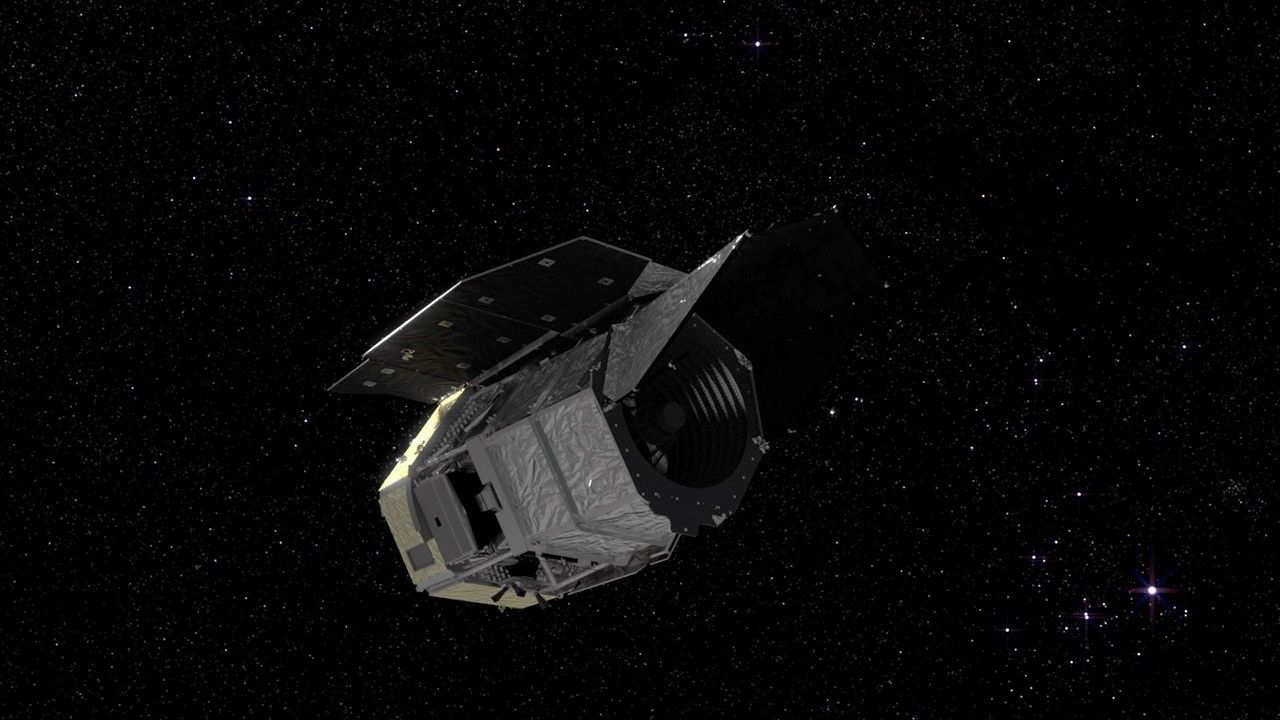
NASA has successfully launched the Nancy Grace Roman Space Telescope from Kennedy Space Center’s Launch Complex 39A on Sunday morning. The mission is part of NASA’s long-standing effort to explore space through orbital observatories. This telescope costs about a quarter as much as the Hubble Space Telescope but can survey the universe a thousand times faster. The launch took place aboard a SpaceX Falcon Heavy rocket. Roman’s total cost was $4 billion in 2021 dollars, which is about $5 billion today.
The telescope carries two major instruments designed to study the cosmos in new ways, according to extremetech.com. The first is the Wide Field Instrument, which includes a high-resolution camera with a 300-megapixel array of sensors. This instrument will be able to map large areas of space much faster than Hubble and also help researchers study dark matter on the largest scales. The second instrument is the Coronagraph Instrument, designed to block out light from stars so that fainter objects like exoplanets can be seen directly. It uses an electron-multiplying CCD sensor to detect even tiny amounts of reflected starlight from distant planets.
NASA is now moving the telescope into its final orbit about one million miles from Earth at the second Sun-Earth Lagrange point. The commissioning phase will last about three months, and NASA expects to release the first images in early 2027, according to a report from Engadget.
The telescope is expected to produce a large volume of data, around 4 terabytes per day. According to NASA officials, Roman will help answer fundamental questions about the history and structure of the universe. It will also observe exoplanets and planet-forming discs, in addition to investigating dark matter and dark energy. Over the course of its mission, Roman may measure light from a billion galaxies.
Teledyne Space Imaging provided key detector technologies for both instruments aboard the telescope, dispatch.com reported. The company has now supplied more than 1,000 imaging sensors to space missions, including those on Hubble and James Webb. For the Wide Field Instrument, Teledyne delivered H4RG-10 infrared detector arrays that make up the telescope’s focal plane. These detectors feature more than 16 million pixels each and together form a mosaic of over 300 million pixels. Teledyne also provided three CCD311-20 detectors for the Coronagraph Instrument. This instrument combines several advanced technologies to suppress starlight and enable direct imaging of exoplanets. The mission is expected to help pave the way for future missions that could directly image Earth-like planets around nearby stars.
Teledyne has a long history of supporting major space science projects and continues to be a key supplier for NASA and other agencies. Roman will survey billions of galaxies and observe stellar explosions to help scientists understand dark energy. It will also identify thousands of exoplanets beyond our solar system on a scale never before possible. The telescope’s field of view is about 200 times larger than that of Hubble in infrared observations. Beyond its main goals, Roman will support research into star formation, black holes, and the environments where planets form. It will also contribute to understanding objects within our own solar system.
IMAGE: NASA