
Efforts by officials in President Donald Trump’s administration who are skeptical of vaccines have been paused. Federal guidance on new vaccines has come to a halt.
Public discussion of vaccine policy issues that might cross political lines has also diminished. Health Secretary Robert F. Kennedy Jr. has led a campaign to change vaccine policy, but legal action has blocked key parts of his changes. The Trump administration has appealed the March court ruling, and the case remains pending.
The disruption has affected how Americans receive crucial health guidance on vaccines.
Jason Schwartz, a Yale University researcher who studies government health agencies, said the situation leaves room for credible evidence to exist without clear mechanisms to implement it.
For decades, the Advisory Committee on Immunization Practices set vaccine recommendations for the CDC. The committee met publicly and reviewed data before making decisions that were usually adopted by the CDC director.
President Trump appointed Kennedy to oversee federal health agencies within the Department of Health and Human Services, including the CDC. Kennedy replaced the committee with a new group that included several members who had publicly questioned vaccines or federal vaccine policy.
Controversial decisions followed, prompting lawsuits from medical groups like the American Academy of Pediatrics. In March, a federal judge ruled that Kennedy likely broke federal procedures and suspended his panel’s meetings. The judge also stopped Kennedy from reducing the number of vaccines recommended for children.
Many in the medical community welcomed this decision as a pause on what they saw as an assault on vaccines.
With Kennedy’s panel shut down by court order, doctors’ groups that once worked with the ACIP have started making their own decisions. These organizations are now debating medical evidence behind vaccine use and issuing their own guidance.
Private health insurers have chosen to follow these recommendations instead of waiting for the CDC. Some of the groups’ choices match earlier CDC guidance, but others include new updates.
For example, a vaccine for respiratory syncytial virus (RSV) was previously recommended to be given late in pregnancy. But because RSV season can extend longer, these groups now recommend offering the shot through the beginning of March.
Chris Regal, who leads clinical innovation at America’s Health Insurance Plans, said the guidance needs to evolve with new information. The official CDC guidance has not changed.
Another example of the stalled process is the mFlusiva flu vaccine. It is the first flu vaccine made using the mRNA technology also used in COVID-19 vaccines.
Kennedy has criticized mRNA vaccines and canceled contracts for their development last year. The vaccine went through a difficult approval process at the FDA before receiving traditional approval for people ages 50 to 64. The FDA also approved mFlusiva for people 65 and older through its accelerated approval pathway.
The CDC has continued its previous flu vaccine recommendations for the 2026-2027 season because of legal uncertainties. As a result, mFlusiva is not listed among the flu vaccines recommended by the CDC for public use this fall. However, medical societies are recommending it as an option.
Another function of the ACIP was to decide if certain vaccines should be covered by the Vaccines for Children program. The FDA approved updated COVID-19 vaccines, but uncertainty over whether those shots would be available through the VFC program continued into September.
It was only recently that officials confirmed orders could be placed through that program. The CDC has also issued updated COVID-19 guidance while continuing to rely on recommendations from the July 2025 immunization schedule because of the ongoing legal dispute.
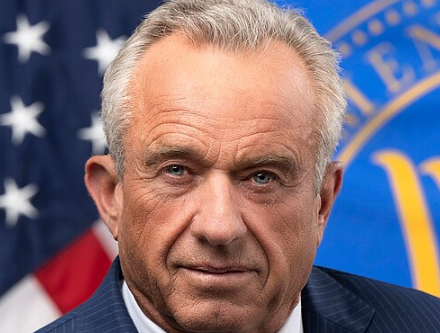
IMAGE: Author U.S. Department of Health and Human Services CC0