
Some parents in Colorado are questioning the safety and necessity of vaccines given to their children, according to interviews conducted by a researcher. The researcher has spoken with dozens of Colorado parents, pediatricians, researchers and policymakers, and has observed vaccine clinics and educational events. These parents value independence and believe they know their children better than medical experts who create vaccine schedules. The researcher is Jennifer Reich, a sociology professor at the University of Colorado Denver who has studied vaccine decisions for nearly two decades.
President Donald Trump signed an executive order on August 10 that said federal vaccine policy should give parents more choice and align childhood vaccine recommendations with practices in other developed countries. However, Reich argues that separating vaccines could make it harder for families to get them because separate products would have to be manufactured, stocked and covered. Reich described the executive order as more symbolic than practical because single-antigen measles, mumps and rubella vaccines are not currently available in the United States.
The Centers for Disease Control and Prevention recommends that children receive one dose of MMR vaccine between 12 and 15 months of age. A second dose is recommended at ages four to six, and the trivalent MMR vaccine has been combined since 1971. Separating the combination into individual shots is not supported by scientific evidence, according to the CDC. Current CDC guidance says single-antigen measles vaccine is not available in the United States.
In her research for a book titled ‘Calling the Shots: Why Parents Reject Vaccines,’ a scholar found that some parents were concerned about too many vaccines. Parents feared vaccines might overwhelm their children’s immune systems or increase the risk of complications.
This view was common among parents, and Colorado law allows them to opt out of required vaccines for school attendance. Since the pandemic, the number of parents filing exemptions has increased in Colorado, with the state’s rate higher than the national average.
About 87.7% of kindergartners in Colorado had received both measles shots during the 2025-26 school year, placing the state sixth-lowest in the country. The original article incorrectly said only 7% had received both shots. Colorado’s rate remains well below the 95% level public health officials use as a target for preventing sustained measles transmission.
A slower vaccine schedule might sound cautious but can create real-world challenges for parents and providers. One mother in the researcher’s study explained her approach, showing how some families try to manage vaccine timing.
Mothers often take on the burden of making many health decisions for their children, including vaccines. Vaccines feel like high-stakes choices now, but public health messages are often confusing and contradictory.
More choices in vaccines do not always mean more availability or ease of access. Changing from a combined MMR to three separate vaccines would require changes in the vaccine supply chain. Current CDC guidance says single-antigen measles vaccine is not available in the United States, so carrying out the order would require manufacturers to produce separate measles, mumps and rubella shots.
Pediatricians already face challenges in supplying and administering vaccines due to cost.
A Senate hearing in September 2025 brought together different views on vaccine safety and policy, according to a report from Rolling Stone. Toby Rogers, a political economist with no medical background, testified that vaccine safety systems are not detecting chronic illness. Stanford infectious-disease specialist Jake Scott responded by pointing to extensive scientific evidence supporting vaccine safety. He added that if vaccines caused widespread chronic disease, safety systems would have identified it. The Senate record confirms that Rogers and Scott both testified at the September 9 hearing.
Rogers was later invited to speak before a CDC committee that sets the national vaccine schedule. His appearances in federal settings have drawn attention because he has challenged parts of the established vaccine schedule. CDC meeting records show that Rogers argued against universal hepatitis B vaccination during a December 2025 Advisory Committee on Immunization Practices meeting.
Robert F. Kennedy Jr. became secretary of the Department of Health and Human Services in February 2025 and has pushed for major changes in federal vaccine policy.
Rogers had a peer-reviewed paper retracted due to data misrepresentation, but he was still invited to speak. The retraction notice said the paper used unrepresentative data and misrepresented autism incidence, among other problems, while Rogers and his co-authors disagreed with the decision.
Kennedy has argued that federal vaccine policy should put more weight on informed consent, parental choice and continuing review of vaccine safety. The August executive order reflects that position by keeping measles, mumps and rubella among vaccines recommended for all children while calling for the combined MMR shot to be split into three separate shots once those products become available. The order also says federal agencies should preserve access to vaccines that are currently available.
The order directs HHS to study vaccine timing and sequencing, compare alternative adjuvants and continue reviewing vaccine risks and benefits. Kennedy and the White House say the changes are meant to restore trust and give parents more control over medical decisions for their children. They also say the United States should compare its childhood schedule with those used in peer developed countries.
Critics of the changes say separating shots and reducing universal recommendations could create confusion and lower vaccination rates. Ezekiel Emanuel, a former health policy adviser for the Obama White House, noted that the administration may be trying to avoid controversy.
The August order supports maximal parental choice over vaccines and places some childhood vaccines into risk-based or shared-decision categories instead of recommending all of them universally. It also advises states to reconsider vaccine requirements and directs the Justice Department to support legal challenges to state laws when federal officials believe those laws conflict with constitutional or federal protections.
White House officials said many parents had concerns about vaccine schedules that were often ignored or dismissed.
For measles specifically, the administration has not removed the recommendation that children be vaccinated. The main dispute is over whether the three diseases should continue to be covered by one MMR shot or eventually by separate shots, and whether spreading vaccines across more visits gives families meaningful choice or creates new barriers. The CDC continues to recommend two MMR doses and says two doses are about 97% effective at preventing measles.
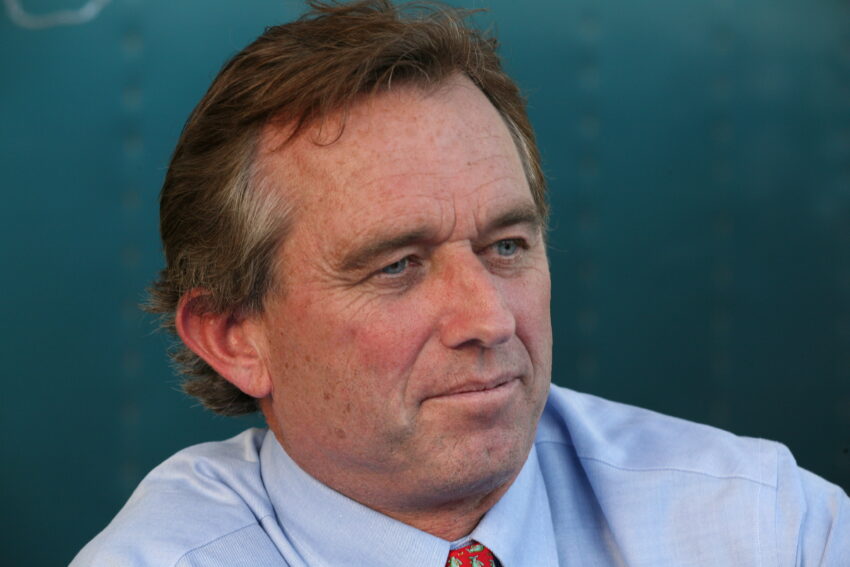
IMAGE: Robert Kennedy Jr. in Urbana, IL. Photo: Daniel Schwen / Wikimedia, CC BY-SA 4.0