
Britain’s economy grew in June after showing no change the previous month, according to new data from the Office for National Statistics. The economy expanded by 0.3% in June, putting the country on track for the strongest growth among Group of Seven nations in the first half of 2026. Economists had expected no change in the economy for that month, making the result a surprise.
The growth came as businesses faced less disruption from the Iran war, which had previously caused concern, according to Yahoo Finance. The temporary ceasefire in the region helped ease worries about supply chain issues and energy costs. Some industries saw a boost from the men’s soccer World Cup, including producers of alcoholic drinks and food companies, according to a report from EconoTimes.
Television production and advertising also benefited, along with retailers who saw increased sales during the hot weather. Construction activity fell by 0.1% in June, showing a slight decline in that sector. The first quarter of the year saw growth of 0.6%, which matched expectations from economists.
Household consumption and business investment both rose, contributing to the overall increase. Economists say that while the economy has held up well so far, this pattern may not continue into the second half of the year. They warn that the economy could slow down in the July-to-September period, possibly to zero growth.
The second quarter included a period of political instability that led to Prime Minister Keir Starmer resigning in July. New Prime Minister Andy Burnham has pledged to tackle household cost-of-living pressures. Energy prices have risen due to renewed conflict with Iran, which has affected fuel imports.
Inflation-adjusted UK fuel imports hit their highest level since December 2022 in June, showing continued exposure to global energy market volatility. Analysts also point out that uncertainty around Finance Minister John Healey’s upcoming budget on October 28 could weigh on economic activity. Some experts believe seasonal factors may have inflated growth in the early months of the year, trustnet.com reported.
They suggest that momentum from these early gains might fade as economic conditions become clearer. The International Monetary Fund previously forecast 1% growth for the UK economy in 2026, but second-quarter GDP growth suggests the country is on track to beat this forecast. Economists like George Brown from Schroders say that continued pressure from the Middle East conflict could affect households and spending.
He also noted that the labor market has not shown strong signs of change, which may limit inflationary pressures from external shocks. Brown added that a more expansionary fiscal stance could eventually force the Bank of England to raise interest rates towards the end of next year. Despite these concerns, the UK economy has shown resilience during a time of global uncertainty and political change.
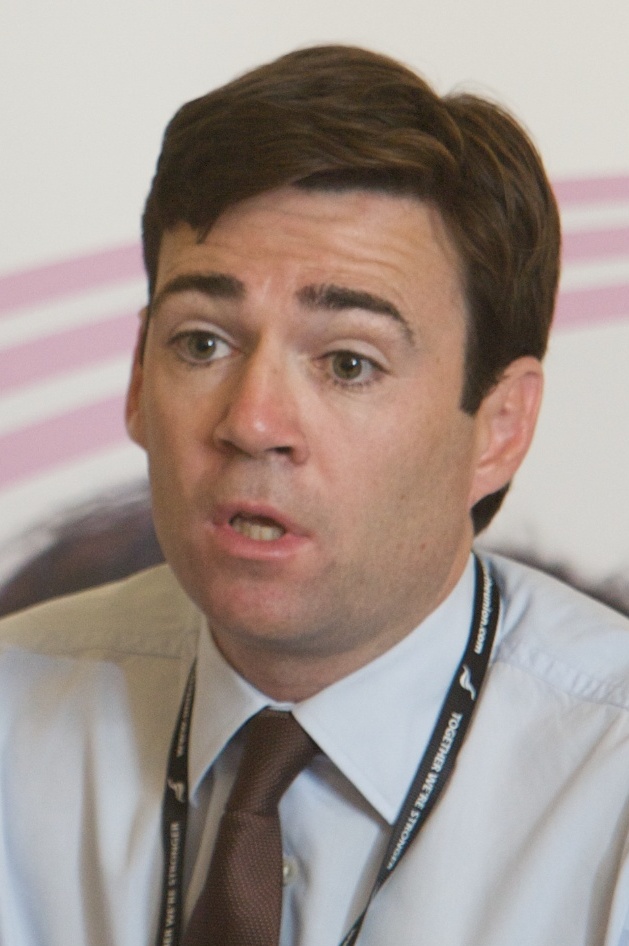
IMAGE: Andrew Burnham, British (New PM) politician and Secretary of State for Health, speaking during the Health Hotel session “One in three: Tackling cancer is an election issue” at the Hilton Metropole, Brighton, during the Labour Party Conference 2009.. Photo: Credit: http://www.acumenimages.com. Uploaded to Flickr by The Health Hotel. / Wikimedia, taken 2009-09-29, CC BY-SA 2.0