
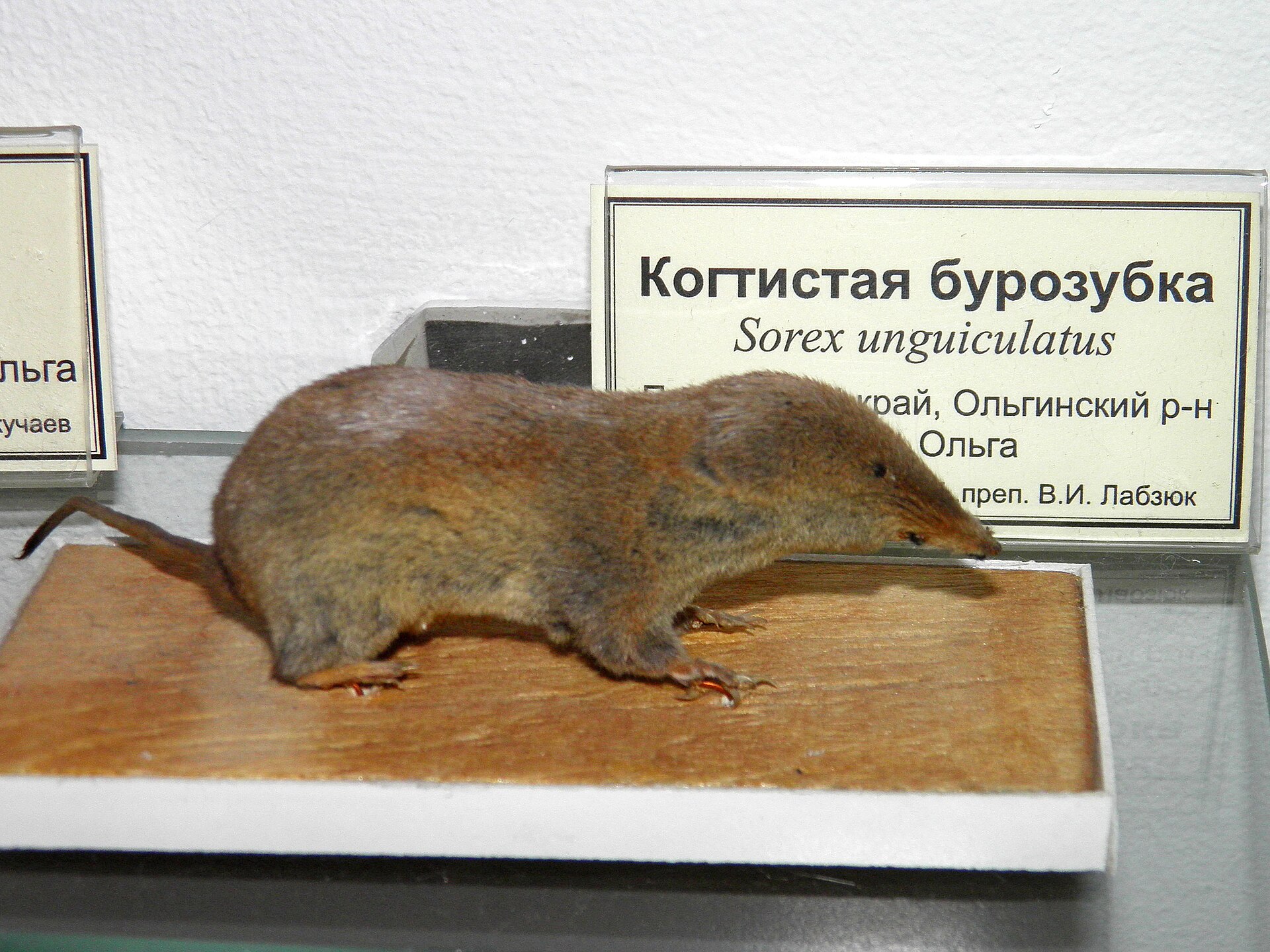
Long-clawed shrews in Japan undergo surprising seasonal changes to their skulls during the cold months. These small mammals grow larger snouts while their braincases shrink, a pattern that reverses what was previously known about winter adaptations in shrews. The findings were reported by Yugo Ikeda and his team from Toyo University in Tokyo.
They studied skulls of long-clawed shrews (Sorex unguiculatus) collected between 1948 and 1988 on Hokkaido island, according to Science News. The researchers used digital imaging to measure various parts of the skulls in detail. They confirmed that braincase size reduced during winter months, as expected from Dehnel’s phenomenon.
But they also noticed that snout size increased during the same period, which was unexpected. The snouts returned to normal size in spring, showing that this change is temporary and reversible. Ikeda suggests the larger nose helps warm cold air before it reaches the brain.
A bigger snout may also increase the surface area of nasal tissues, improving how well the shrew detects odors. This discovery challenges previous assumptions about how these animals adapt to winter conditions. The phenomenon is part of a broader pattern called Dehnel’s phenomenon, first described in 1949 by Polish zoologist August Dehnel.
It involves shrinking body parts and internal organs to save energy during harsh winters when food is scarce. The new research adds a twist to this pattern by showing that some shrews may actually expand certain parts of their skull in winter. Wild long-clawed shrews are born between spring and autumn and usually do not survive past their second winter, according to a report from The Guardian.
Shrews collected during winter had braincase heights that were 12% smaller than those from the previous summer. The change in skull shape was not just a matter of size but involved actual physical restructuring of the bone. Shrews that lived through winter and were collected in their second year had larger braincases again.
The expansion of the nasal cavity may allow for more blood vessels to develop inside the nose. This could help warm air before it reaches sensitive brain tissues. Scientists are now curious to see if similar changes occur in shrews living in milder climates.
Ikeda plans to study how the inside of the nasal cavity changes throughout the year. Tracking these animals in the wild would be difficult but could offer more insight into their behavior and physiology. The research was published in Proceedings of the Royal Society B.
IMAGE: A. C. Tatarinov / Wikimedia Commons (CC BY-SA 3.0)
This article passed automated originality and source-verification checks before publishing.