
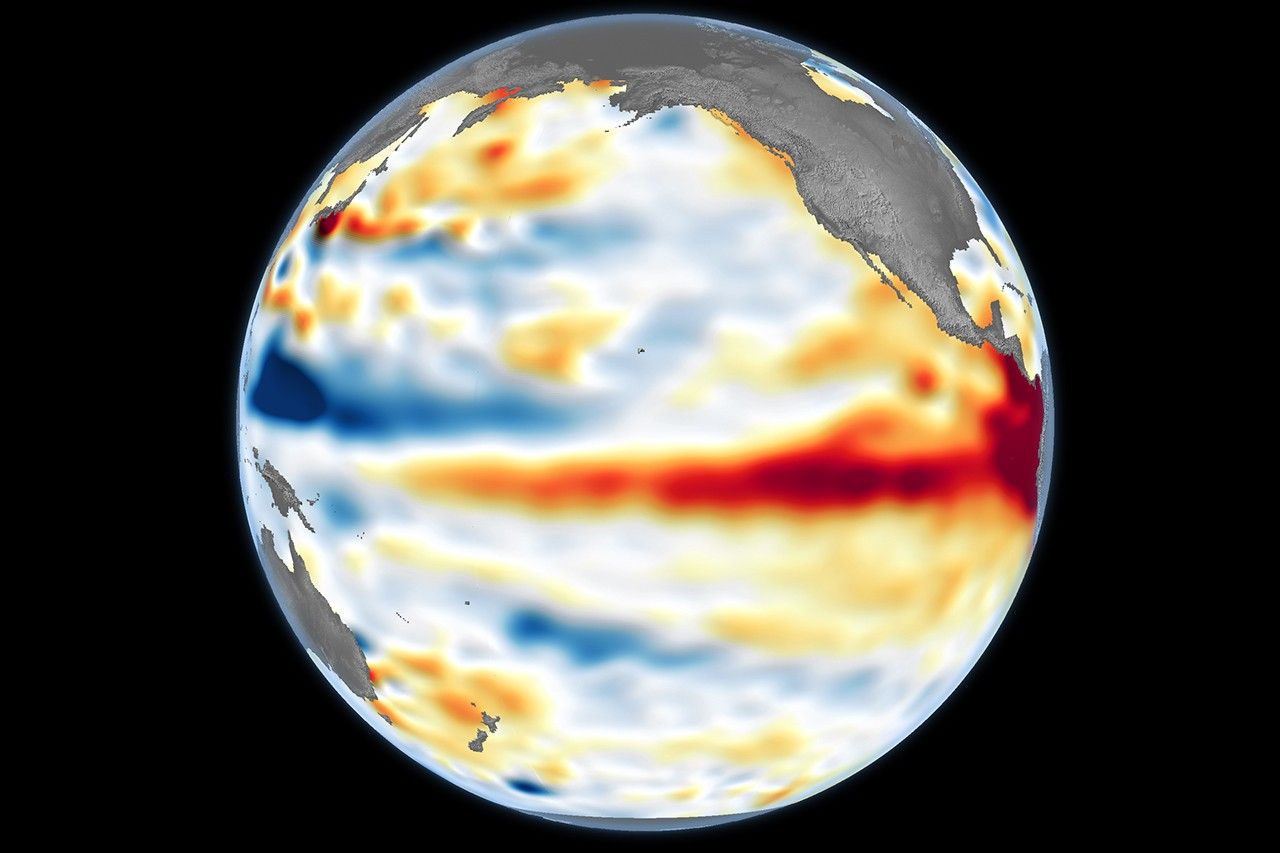
The world’s oceans have reached their hottest temperatures ever recorded, according to a major climate service. This rise is being caused by both a strong El Niño and human-driven climate change.
El Niño is a natural climate pattern that involves warming in the central and eastern tropical Pacific Ocean, according to The Conversation. It begins when trade winds weaken, allowing warm surface water to flow back eastward across the Pacific. This shift in ocean heat can take several months to fully develop and affects weather patterns far beyond the tropical regions.
The current El Niño is already showing signs of being one for the record books. Scientists have noted that sea surface temperatures in the central and eastern Pacific are now more than three degrees Celsius above average.
This event is unfolding against a backdrop of increasing global warming, which has led to record ocean heat content every year since 2017. The 1997-98 El Niño helped make 1998 the warmest year of the twentieth century. The 2015-16 El Niño also pushed global temperatures to new levels, and similar patterns are now emerging.
Global temperatures are expected to rise even further in 2026 and possibly 2027 due to this El Niño event. Experts like former meteorologist Ben Noll have warned that the current El Niño could become a strong El Niño.
The warming of the Pacific Ocean has already affected rainfall and weather in many parts of the world. Dry conditions have disrupted agriculture in Southeast Asia and Central America, leading to food shortages. The UN World Food Programme estimates nearly 50 million more people could face hunger by the end of the year due to El Niño.
Changes in rainfall patterns also increase wildfire risk and can affect diseases like malaria and cholera. El Niño shifts tropical cyclone activity, increasing storms in the eastern Pacific while reducing them in the Atlantic. The phenomenon also disrupts marine ecosystems by reducing cold, nutrient-rich water near South America.
These disruptions can lead to major declines in fish and seabird populations. The economic effects of El Niño can last for years, with possible losses reaching into the trillions of dollars.
Climate scientist James Hansen has described this El Niño as a super-duper event that is far beyond what was seen before, according to a report from popularresistance.org. He said the heat anomaly in the Equatorial Pacific already exceeds previous super El Niño events. Hansen warned that this event is happening on a planet already suffering from human-caused warming.
Extreme heat waves have already caused deaths and damaged infrastructure in Europe and North America. Some regions are seeing surface temperatures that could reach as high as 7°C above normal by 2027. Drought conditions have worsened in many parts of the world, including parts of Europe and the United States.
The situation is expected to get worse unless governments take action to address climate change. Scientists have long warned that global warming is making extreme weather events more frequent and severe. The failure of world leaders to act on climate warnings has left many areas vulnerable to the impacts of these powerful systems.
The effects of this El Niño are visible in ecosystems and human communities around the globe.
IMAGE: NASA Earth Observatory/Lauren Dauphin / Wikimedia Commons (Public domain)