Destruction and Annexation
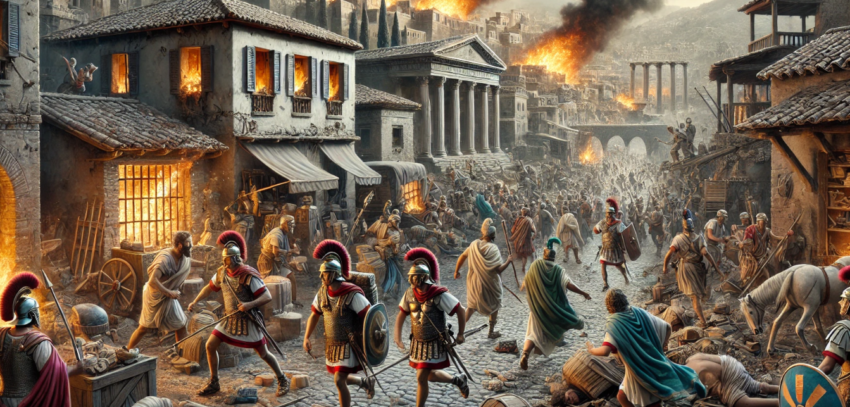
The destruction of Carthage and its subsequent annexation by Rome was a brutal and definitive end to the Third Punic War. After the Roman forces, led by Scipio Aemilianus, breached Carthage’s defenses in 146 BCE, the city was subjected to a systematic and thorough destruction. The Roman soldiers, fueled by years of enmity and orders to leave no stone unturned, razed Carthage to the ground.
The devastation was comprehensive. Historical accounts describe Roman soldiers setting fire to buildings, homes, and temples, with flames engulfing the city. The destruction was so extensive that Carthage, once a thriving hub of commerce and culture, was reduced to smoldering ruins. The Romans sought to obliterate any trace of Carthaginian civilization, ensuring that the city could never rise again to challenge Roman power.
In addition to the physical destruction, the Romans committed acts of profound cruelty against the surviving Carthaginians. Thousands of men, women, and children were slaughtered during the final assault, and those who survived the initial onslaught were captured and sold into slavery. The systematic extermination and enslavement of the Carthaginian population marked one of the darkest chapters in ancient warfare, showcasing the brutal lengths to which Rome would go to secure its dominance.
Following the destruction, the Romans took steps to prevent any possibility of Carthage’s resurgence. According to some sources, they even sowed the land with salt to render it infertile, symbolically ensuring that nothing would grow where Carthage once stood. This act, whether literal or metaphorical, emphasized Rome’s intention to erase Carthage from the map permanently.
The annexation of Carthaginian territory into the Roman Republic followed swiftly. The former Carthaginian lands were reorganized into the Roman province of Africa, with Utica serving as the provincial capital. This new province became an important part of Rome’s burgeoning empire, providing valuable agricultural land and serving as a base for further expansion into North Africa.
The destruction and annexation of Carthage had far-reaching consequences. It not only marked the end of the Punic Wars but also solidified Rome’s position as the dominant power in the western Mediterranean. The fall of Carthage removed a significant rival, allowing Rome to focus its military and political efforts on other regions. The brutal methods employed during the siege and subsequent annexation also sent a clear message to other potential adversaries about the might and ruthlessness of Roman power.
In the broader context of Roman history, the destruction of Carthage stands as a stark example of the consequences of imperial ambition. It highlights the lengths to which Rome was willing to go to eliminate threats and expand its influence. The events following the fall of Carthage also underscore the transformative impact of conquest on the Roman Republic, as it transitioned from a regional power to an imperial force with vast territories under its control.
Despite the complete obliteration of Carthage, its legacy endured in Roman memory. The phrase ‘Carthago delenda est’ (Carthage must be destroyed) attributed to the Roman senator Cato the Elder, became emblematic of Rome’s uncompromising stance toward its enemies. The destruction of Carthage served as both a cautionary tale and a symbol of Roman determination, shaping the course of Roman policy and military strategy for generations to come.
 |
 |
 |