Carthage’s Revival and Rome’s Suspicion
In the years following the Second Punic War, Carthage experienced a remarkable economic revival, despite the severe restrictions imposed by the Treaty of Zama. The Carthaginian spirit of resilience and ingenuity came to the forefront as they began to rebuild their economy and society. Carthage leveraged its strategic location and longstanding maritime expertise to reinvigorate trade across the Mediterranean. The city-state’s merchants re-established commercial networks, trading goods such as grain, olive oil, and textiles, which brought a steady influx of wealth into Carthage.
Agricultural innovation also played a crucial role in Carthage’s revival. The fertile lands surrounding the city were extensively cultivated, employing advanced farming techniques that increased productivity. The resulting agricultural surplus not only supported the local population but also provided goods for export, further bolstering Carthage’s economic recovery. Additionally, Carthage’s ability to attract skilled artisans and laborers contributed to the restoration of its infrastructure and the construction of new public buildings, enhancing the city’s appeal and functionality.
Despite these positive developments, Carthage’s revival did not go unnoticed by Rome. The Roman Senate, ever wary of a potential Carthaginian resurgence, viewed the city’s economic recovery with suspicion and apprehension. The memory of Hannibal’s near-victory over Rome during the Second Punic War lingered in the Roman consciousness, fueling a persistent distrust of Carthage. Reports of Carthaginian prosperity and the city’s apparent defiance of Roman-imposed limitations exacerbated these fears.
Roman suspicion was further heightened by Carthage’s diplomatic activities. The Carthaginians sought to navigate the complex political landscape of the Mediterranean by forming alliances and engaging in diplomacy with other states. While these efforts were primarily aimed at securing economic partnerships and protecting their interests, Rome interpreted them as potential threats to its dominance. Roman envoys closely monitored Carthaginian actions, and any sign of military rearmament or territorial ambitions was met with immediate concern.
Tensions between Rome and Carthage escalated when Numidian King Masinissa, Rome’s ally, began encroaching on Carthaginian territory. Masinissa’s aggressive expansion was often justified by Rome as a means to keep Carthage in check, but it placed Carthage in a precarious position. The Carthaginians appealed to Rome for intervention, but the Senate’s responses were tepid at best, revealing their ambivalence toward Carthage’s plight. This lack of decisive Roman support emboldened Masinissa, leading to repeated border conflicts and further destabilizing the region.
The situation reached a critical point in 151 BCE when Carthage, in desperation, took military action against Numidia without Roman consent, thereby violating the terms of the Treaty of Zama. This act of defiance provided Rome with the pretext it needed to address the ‘Carthaginian problem’ once and for all. Influential Roman senators, particularly the elder statesman Cato the Elder, who famously ended his speeches with ‘Carthago delenda est’ (Carthage must be destroyed), seized upon this opportunity to advocate for a final war against Carthage.
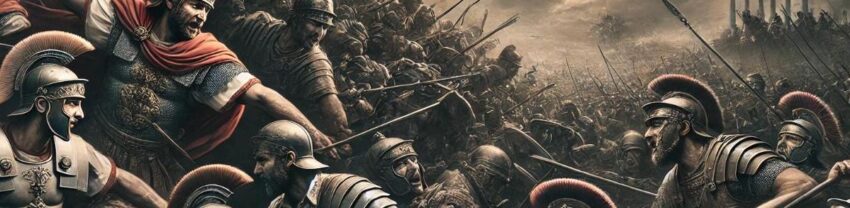
In 149 BCE, Rome declared war on Carthage, initiating the Third Punic War. The conflict, characterized by brutal sieges and fierce battles, culminated in the complete destruction of Carthage in 146 BCE. The city was razed, its inhabitants sold into slavery, and its territory annexed by Rome, marking the end of Carthage as a significant power. This decisive action eliminated any future threat from Carthage and solidified Rome’s unchallenged supremacy in the western Mediterranean.
Carthage’s revival and the subsequent Roman suspicion illustrate the fragile nature of power dynamics in the ancient world. Despite Carthage’s efforts to rebuild and prosper, the lingering distrust and strategic interests of Rome ultimately led to its downfall. The story of Carthage’s resurgence and demise underscores the complexities of international relations and the relentless pursuit of security and dominance that characterized Roman policy.
 |
 |
 |